Get ready to tackle Urban Migration: Lakshmi Puri
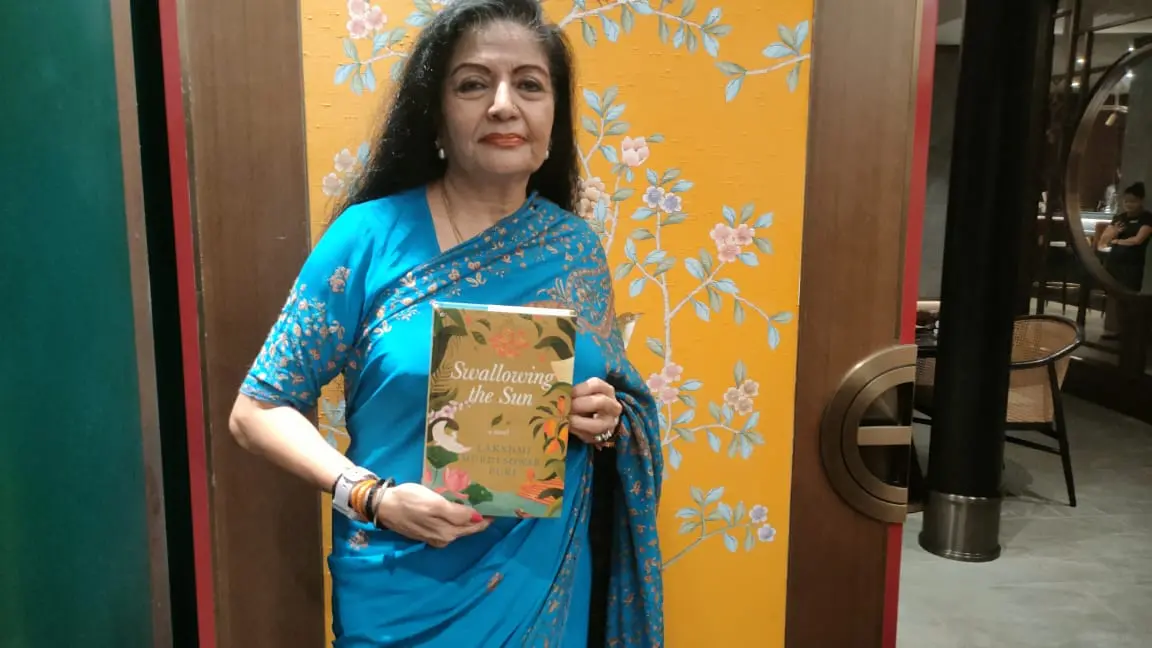
Former diplomat Lakshmi Murdeshwar Puri, who has wide experience in economic and development policy making, has been in the forefront advocating for gender equality and women’s empowerment. Wearing many hats – a diplomat, a gender rights activist, a writer, wife of a Union minister and daughter of a freedom fighter – Puri retired from the United Nations as assistant secretary-general after also serving as Executive Director, UN Women. During her illustrious career, Puri served as the Ambassador of India to Hungary and was accredited to Bosnia and Herzegovina from 1999 to 2002. Puri talks to Mathrubhumi Online on a wide range of subjects, like gender equality, international relations, and needless to say on her debut book `Swallowing the Sun’.
What were the significant challenges you faced during your term in the UN body?
I have been driven by a profound commitment to serve the global public in line with the United Nations' objectives, in areas such as peace and security, sustainable development, climate action, environmental protection, human rights, and democracy. Throughout my role at the UN, I straddled various facets, including policy development, advocacy, movement building, convening, and on-the-ground programs.
India, not being a member of the permanent five in the UN Security Council, faces challenges in exerting influence on peace and security matters. Despite this, we have advocated for global attention to counter-terrorism issues. During my tenure as Assistant Secretary-General at the United Nations, I played a pivotal role in establishing the first global organization dedicated to promoting gender equality and women's empowerment.
The main challenge is how member states can work together when they have different ideologies and different interests, particularly in the context of mediation between nations. This task has become increasingly daunting with the ongoing conflicts and the world is getting increasingly divided. The dysfunctionality of the multilateral system, acknowledged by the Secretary-General of the UN, underscores the urgency of addressing these issues within the UN and other multilateral institutions, including the WTO. The main challenge is how do we bring the voices of people worldwide into the UN discourse.
In a recent development, at the G20 Summit, India actively pursued reforms to the multilateral system, advocating for changes that align with the interests of humanity.
As Ambassador to Hungary, how did you promote diplomatic relations? Did your efforts lead to a positive outcome?
I landed in Hungary 12 days after the Kosovo war, during which Hungary served as a base for launching attacks in Kosovo? And Hungary joined NATO and became a member of the European Union. Despite being a small country, Hungary is often considered the heart of Europe. During my tenure as ambassador of Hungary, I focussed on fostering good cultural relations. I tried to strengthen Sanskrit studies and facilitated the recognition and inclusion of Ayurvedic medicines in local pharmacies and include Ayurvedic treatments for health insurance. I also played a pivotal role in the practice of Yoga. Another achievement during my time was securing a $100 million investment from Tata Consultancy Services to establish the Global Offshore Development Center in Hungary.
Another very interesting part of my tenure was India's involvement in Bosnia and Herzegovina, where we led the largest international police task force. This mission aimed at addressing the aftermath of ethnic conflict and rebuilding peace. I collaborated closely with the UN andthe Organization for Security and Cooperation in Europe (OSCE) to coordinate efforts with European contingents.
With your wide global experience in international affairs, what are the most pressing global issues at present?
There are many challenges which confront us. Geopolitically we are in very dangerous times. Conflicts such as those in Palestine and Gaza, along with many smaller disputes unfolding. Security is a major concern. Ensuring the attainment of sustainable development goals poses yet another formidable task. There are issues of climate change, pandemics and potential bio engineering disasters. Majority of the population are projected to move to urban areas by 2030. And by 2050, they say an estimated 70 % of the population will be in urban areas. How do you create those ecosystems which are necessary to support populations of that magnitude, particularly in India?
India has taken a lead in addressing many of these issues during the recent G20 summit. And India has shown the way no other country did. I had many ambassadors and delegates who participated in the G20 summit who said Indian vaccines are running in their blood because we provided vaccines to 130 countries. India has set an example by adhering to the Biological Weapons Convention which prohibits manufacturing of biological weapons so that member states do not secretly develop and use them. During my tenure in the UN body, I have advocated for robust biosecurity and health security measures.
During your tenure at the UN as the head of the women's body, were there any projects that you were particularly proud of? What is your opinion on women leading such organizations?
The UN Women played a pivotal role in shaping the concept of care work and the care economy. Recognizing the value of women's care work is a crucial step forward. In 2015, we organized a historic summit with the participation of 72 heads of state and government. This summit focused on making commitments to advance gender equality, emphasizing the importance of global collaboration on this crucial issue.
I tried to strengthen and develop global norms and standards on gender equality. We ran the campaign for gender equality. Many campaigns like ringing the Nasdaq bell for gender equality formed part of the movement. I am very pleased that I contributed to the inclusion of a dedicated goal on gender equality.
I firmly believe that women can eventually lead the United Nations. With Kamala Harris as the first female vice president of the United States, it's evident that progress is being made, and there may be other capable women waiting for their opportunity. I am hopeful that women will shatter the remaining glass ceilings. Prime Minister Modi's initiatives have positively impacted the lives of women, and the Women's Bill in parliament marks the next crucial step.Looking ahead to the 2027 census and 2029 elections, where women will have 33% reservation in parliament and state assemblies, political parties should start preparing now. This move will contribute significantly to gender equality in leadership roles.
Your first book was published recently. Did you imbibe the quality of writing from your father, who was a legal luminary?
Yes. My father B.G Murdeshwar played a significant role in inspiring my book, "Swallowing the Sun." A poet, writer, and staunch feminist, his influence shaped both my perspective and the narrative. I believe that men embracing feminism is crucial, as they can either become transmitters of patriarchy or support the rights of women and girls.
The protagonist of my novel, Malati, mirrors my mother (Malati Desai) in various aspects, adding a personal touch to the story. Set against the backdrop of one of the most tumultuous periods in modern Indian history—the struggle for Independence—the book explores the complexities of man-woman relationships. Despite being rooted in historical fiction, the novel appeals to readers of all ages, particularly the younger generation.
The initial draft of this book was done years ago while I held the position of India's Ambassador. Amid the challenges posed by the Covid era, I returned to the manuscript and completed it.