From John to Adoor and Aravindan; The Malayalam masters who put Kerala cinema on global map
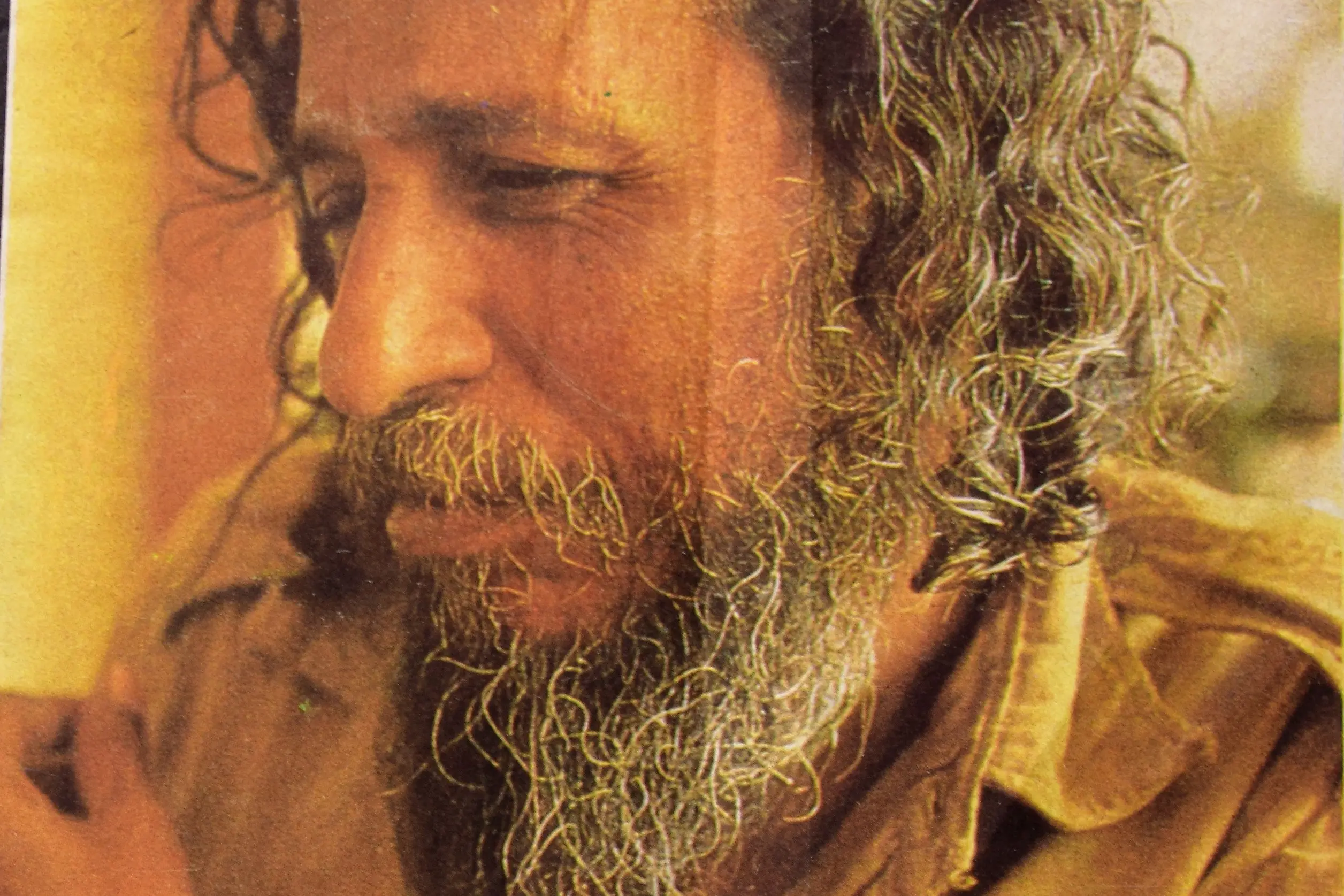
John Abraham’s last film. Amma Ariyan, ( Report to Mother) is being screened at Cannes film festival starting this week. The film will be part of restored classics of world and was restored by Film Heritage Foundation of India (FHFI). Once again, one of the trio of films, who ensured Malayalam film reached the global maps is still being marked by the world of films. Earlier Aravindan’s Thampu was also screened in the same sector. The others who got their films in Cannes film festival in the past from Malayalam films, included Adoor Gopalakrishnan with his Elipathayam (1981) and Shaji N Karun, with his Swaham.
Just prior to his untimely demise, John made his last film Amma Ariyan (Report to Mother)(1986),which garnered the maximum scholarly discourse from critics of all stripes. The film depicts Kerala’s disenchantment with the Naxalite movement of the 70s in a fashion reminiscent of the Latin American radical films corresponding to that period. Once again, John the humanist takes the stage in the story. A friend is on the way to inform the mother of the dead activist about the death, but encounters many events from the past before reaching her. “Though the period and the background that the film is set against are not much different from the previous film, it is marked by a shift from the inward-looking subjectivity to the dispassionate style of docu-fiction in which by its very manner references to objective social reality are no longer background details or sidelights but are integral to the progression of a freewheeling narrative. Through the motif of the journey – the archetypal voyage of self-discovery which incidentally, is strongly reminiscent of Ritwik Ghatak’s Jukti, Takko aar Gappo – is unfolded a whole perspective in which the life of the narrator in the present and the lived past of the protagonist cross and mix”, observed his friend and critic R Nandakumar.
John’s global perspective is evident throughout the film, despite the local theme. According to Derek Bose, another critic. “The film juxtaposes personal accounts and documents issues with an insight into a historical past and cross connections in the macro structure of global reality. There are stirring shots of napalm bombing in Cambodia, young men practicing karate in Kerala beaches, slogans in support of Nelson Mandela, reference to Phoenician traders and Vasco De Gama. In fact there is hardly any trick in the trade which Abraham has not used from the sound effects of the hospital mortuary to the ordinary symbolism of the little girl hanging by her hair behind the windscreen of the car, Amma Ariyan proves to be one of the most evocative docudramas created in our times”.
An attempt by John and his companions who helped him produce the inaugural people’s film in Kerala, Amma Ariyan, was shockingly hampered on May 31, 1987, during an Eid celebration. The film-maker plummeted from a building’s parapet while singing a song after downing a few pegs. After taking him to medical school, his frantic friends abandoned John to his fate; he was only 48. However, tributes to John the Baptist of Kerala’s film Renaissance may still be witnessed across the film fraternity today. An annual debut film award in his honour, presented by the Kerala branch of the Federation of Film Societies, serves as a constant reminder to aspiring film-makers of the legendary figure who shaped their domain. Similar to his mentor Ritwik Ghatak in Bengal, John was the first member of the triumvirate comprising the A team of Malayalam Renaissance, Adoor and Aravindan, to enter history.
John Abraham’s film oeuvre is small compared to his contemporaries, but his presence marks a significant milestone in Malayalam film history. Despite being junior to Adoor in FTII, John was the first to enter the perilous realm of feature films. In 1969, he filmed, Vidhyarthikale Ithile ithile (Students this way, this way), which was apparently for children, but he later disowned the film vehemently after falling out with the producer, a film journalist in Madras. As a schoolboy, this author was granted permission to view the film in a conventional theatre due to its classification as a children’s film. As I distinctly remember, it was a moralistic tale that advised students to be imaginative and virtuous. What really hit me hard about the film was the dream sequence with comedian Adoor Bhasi who rode a two-wheeler in his imaginary world- specifically, out of a single machine. The film, however, depicts him navigating barbed wires and other obstacles. Years later, cinematographer Ramachandra Babu clarified that the image was inert but was animated in the lab via movements. John seems to have exploited his flight of fancy in his debut film, with this sequence.
John’s desire to shoot a sequence in which each crew member disavowed the film to include it later is intriguing because the producer had forbidden such a move. John had created the sequence in complete defiance of the producer’s strident demand that it be “viewer friendly”. As far as I can recall, the film features a cinematic tribal dance and few musical number. Although it is John’s first film historically, nobody in Kerala has ever watched it again or discussed it, even after he rose to cult status. John took exception to the film and retitled it Vidharthikale athile, ithile (Students , this way that way)”in his own jocular way.
Vidyarthikale Ithile Ithile was, on Abraham’s own admission, the outcome of a desperate urge for him and a group of his FTII friends to get started after concluding their studies and seeking a breakthrough. On the surface, the film appears to be a typical moralising and didactic children’s film. At the conclusion, a surprise twist in the plot reverses the impression and redeems it from becoming a run-of- the-mill production in the genre. It is characteristically a John Abraham touch, probably after Nazarin by Bunuel, a film author whom Abraham greatly admired and was in perfect vibe with,” wrote R Nandakumar, eminent art writer analysing his film Agraharathil Kazhuthai (Donkey in a Brahmin village).
In 1977, John Abraham achieved cult status with the release of his second film, Agraharathil Kazhuthai (Donkey in a Brahmin village). Despite bagging the best Tamil film award of the year, it was never distributed in the Tamil speaking world, but was the toast of film society circuits across India. The rationale behind this (informal ban in Tamil Nadu) was that the film mocked the conservative lifestyle of Tamil Brahmins. The script had been turned down for funding by the Film Finance Corporation. “I was working on a script Joseph a priest with writer Paul Zacharia and staying with him in Coimbatore and the theme of Kazhuthai stuck me there. On an evening I saw Zacharia coming through a Brahmin colony. There were too many donkeys there. The donkey calf herds makes an interesting picture too. We were talking about it. It struck me then why do humans who rear many animals, don’t have a donkey in their houses. What will happen if a member of a Brahmin colony decides to rear a donkey? The film story was born out of that thought,” John recalled later in an interview.
The film’s plot was straightforward. A humorous series of events ensue when the protagonist, a Brahmin professor, decides to rear a donkey calf in his residence in a Brahmin village. Everything that goes wrong in the village is attributed to the donkey’s presence, which ultimately results in the calf’s execution. A local cult develops around the resurrected donkey.
The Madras film industry did not take the National Film Awards’ decision to name John’s Donkey the best Tamil film casually; it ridiculed the achievement. Being a producer himself, the then-Minister of Information for Tamil Nadu questioned how an unreleased film in theatres could have received the award. They forbade its distribution in theatres and on Doordarshan, the national television network, effectively banning it via protest letters. Nevertheless, the film became a cult classic among the active film society circuits across India at the time, elevating John to the status of a cult icon, both within and beyond his native Kerala.
Cheriyachante kroorakrithyagal
John’s third film, Cheriyachante Kroorakrithangal (Evil deeds of Cherian) (1980), was made in Malayalam and produced by the CPI(M)-sponsored Janashakthi films. The film, which was based on the 1960s’ farm labour uprising in Kuttanad, John’s birthplace, and the middle class morality that becomes entangled in the ensuing violence, hilariously and accurately depicts the hinterland economy and politics of Kerala of that time. This film highlights John’s uncanny ability to lighten even the direst of circumstances through his lighthearted disposition. “It is Abraham’s achievement that this figure [Cheriyachan], steeped in the local mix of feudal and Christian traditions, and becomes understandable as a frightened victim of history whereas most films would cast him as a one-dimensional villain or a grotesquely comic character. The film is Abraham’s most controlled, opening with a series of sweeping shots on the famed backwaters of the region as it establishes both the strongly realist and the quasi-mythic flavour necessary to allow for the transference of economic oppression into the condition of Cheriyachan’s guilt. It also leads the film into a far more contentious aspect of Kerala’s political cinema and literature, addressing the common phenomenon of presenting the responsibility of intervention in highly romanticized and even directly sexualized terms, or in other ways implicating individual responsibility towards history in the voyeuristic, infantile guilt of the passive observer,” noted Ashish Rajadhyaksha, a film writer.
As someone who was more firmly rooted in humanism than in politics, John appeared to conceal his skepticism regarding the Left movements behind his political persona. “Abraham was always over critical of the future of communist movements in the country. For instance, in a potentially radical film Cheriayanchante kroorakrithangal, he betrays his sympathies with the peasants being massacred, but never offers a clue as to why and when things went wrong”, wrote Derek Bose.
There are few filmmakers in India or world of films who remains a legend even after his life time like John Abraham. Reason more than his film, his commitment and passion for new films had inspired a generations. His colleague and cinematographer late Ramachandra Babu, told this writer in an interview that the best film of John was yet to be made, as John was always ideating films in his mind. The meaningful film lovers hence still celebrate the ideator or John even after four decades of his death.
(Edited excerpts from the book Noon films and Magical Renaissance of Malayalam films, by the author).
.