EXPLAINED: How INS Arighat lives up to 'Destroyer of the Enemy' tag
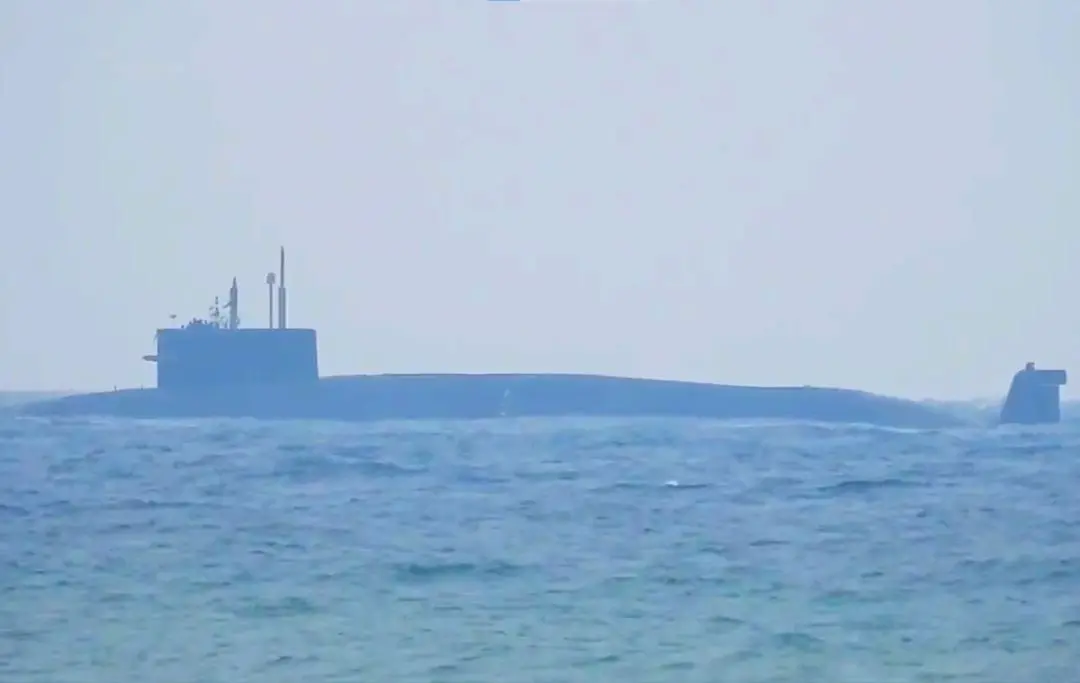
The Indian Navy commissioned its second nuclear-powered ballistic missile submarine (SSBN), INS Arighat or S3, on Thursday, August 29, in Visakhapatnam. INS Arighat is the second submarine in the Arihant class, which is a series of indigenous nuclear-powered submarines.
Arighat joins INS Arihant, which was commissioned in 2009. The Navy has already successfully tested long-range nuclear missiles from these submarines and is preparing to induct a third one soon, with plans to add two more by 2035-36.
The Arihant class submarines are named after a Sanskrit word that means 'Destroyer of the Enemy,' reflecting their strategic importance as nuclear-powered vessels.
The name 'Arihant' was chosen from many options and approved at all levels because it effectively and appropriatel communicates the country's determination.
India's submarine plans
The Indian government has a long-term plan to build both nuclear and conventional submarines to enhance its naval capabilities.
India aims to have five Arihant-class submarines, along with six nuclear attack submarines, which will be constructed in three phases.
The Indian Navy currently has six Kalvari-class conventional submarines and plans to acquire 15 more through Project 75 India, Project-76, and Project-75 AS.
INS Arighat's Features
The 6,000-tonne INS Arighat is preparing for a long-range patrol in the Indo-Pacific region, armed with K-15 nuclear ballistic missiles that have a range of 750 kilometers.
India's third nuclear-powered ballistic missile submarine, INS Aridaman (also known as S4), is expected to be commissioned next year, with a fourth submarine, codenamed S4, following soon after, according to sources who spoke anonymously.
Arighat has a length of 111.6 meters, a beam of 11 meters, and a draught of 9.5 meters. It is constructed using Russian steel comparable to the US HY-80 grade.
The submarine is divided into seven compartments, with the main sections dedicated to the propulsion system, combat management systems, platform management center, and the torpedo room.
Given India's central position in the Indo-Pacific, these two SSBNs (nuclear-powered ballistic missile submarines) provide significant strategic advantage and serve as a strong deterrent against any naval forces attempting to assert dominance in the region.
Made-in-India nuclear reactor
Both submarines in the INS Arihant class are fitted with homegrown nuclear reactors and missiles.
The INS Arihant and INS Arighat are powered by strong 83 MW pressurized light-water reactors.
Thanks to the compact nuclear reactors inside their hulls, these submarines can remain submerged for months at a time, unlike conventional diesel-electric submarines, which must surface or use a snorkel every few days to recharge their batteries with oxygen.
The new submarine is similar in size, length, and displacement to the INS Arihant but has the ability to carry more K-15 missiles.
A source mentioned that this new submarine features significantly improved capabilities, better efficiency, and enhanced stealth.
What the future holds
After the S4 SSBN is commissioned, India plans to launch a new class of larger submarines that will be capable of carrying nuclear ballistic missiles with a range of 3,000 kilometers and will have additional missile tubes, according to sources.
With India already possessing land-based nuclear missiles like the Agni series and the ability to launch nuclear weapons from the air, the SSBNs become the most powerful component of the country's nuclear triad.