Explained: Why are Israel and Lebanon's Hezbollah staring at an all-out war?
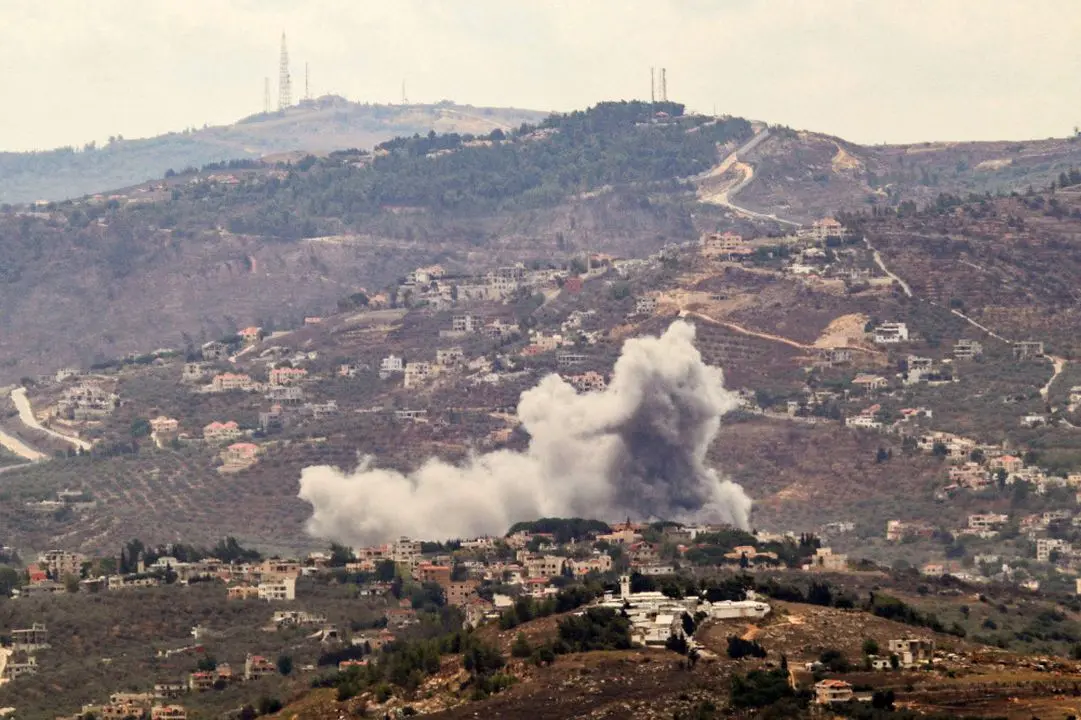
This week saw a sharp escalation in the ongoing conflict between Israel and Lebanon's Hezbollah, which has lasted for nearly a year.
The tension began with two days of bombings that targeted pagers and walkie-talkies used by Hezbollah, leaving civilians injured across Lebanon. These attacks, attributed to Israel, led to Hezbollah's vow of retaliation.
On Friday, the militant group launched dozens of rockets into northern Israel. Later that day, Israel conducted an airstrike in Beirut, reportedly killing the commander of Hezbollah’s elite unit and at least 14 others.
Fears of All-Out War
The recent developments have heightened concerns about a full-scale war between Israel and Hezbollah, which is backed by Iran and considered Lebanon’s most powerful armed force.
A broader conflict could devastate Lebanon, bring missile strikes into Israeli cities, and destabilize a region already shaken by the Gaza war.
Israeli Airstrikes and Hezbollah Response
On Friday, an Israeli airstrike destroyed a high-rise building in Beirut's southern suburbs, killing 14 people, including Ibrahim Akil, the leader of Hezbollah’s elite Radwan unit.
Akil was reportedly behind Hezbollah's rocket and drone attacks on northern Israel. The airstrike followed a series of bombings earlier in the week that targeted Hezbollah communications, resulting in over 3,000 injuries, including civilians.
Hezbollah responded by firing 140 rockets into northern Israel.
Casualties and Ongoing Exchanges
The exchanges of fire along the Lebanese-Israeli border have resulted in significant casualties. In Lebanon, approximately 600 people, mostly fighters but including around 100 civilians, have died.
On the Israeli side, around 50 soldiers and civilians have been killed. Thousands of residents from both countries have been displaced due to the violence.
Hezbollah's Connection to Gaza
Hezbollah's leader, Hassan Nasrallah, has vowed to continue attacks in solidarity with Hamas, saying Israel's northern residents won't be able to return home until its Gaza campaign ends.
As Israel shifts focus to Hezbollah, it has deployed additional military forces along the Lebanese border. While Israeli officials have not yet decided on an expanded military operation, some have called for a ground invasion of Lebanon.
History and Potential for Larger Conflict
The current conflict has echoes of the 2006 Israel-Hezbollah war, which caused significant devastation in Lebanon, leaving large areas in southern Lebanon and Beirut in ruins.
Israeli military strategy during that time -- dubbed the 'Dahiyeh Doctrine' -- involved inflicting maximum damage to deter Hezbollah from future attacks.
A Buffer Zone in Southern Lebanon?
Some Israeli officials are now suggesting that a new conflict could aim to seize a buffer zone in southern Lebanon, pushing Hezbollah fighters further from the border. Such a move could lead to a prolonged and more destructive war, reminiscent of Israel's occupation of southern Lebanon from 1982 to 2000.
Hezbollah's Arsenal and Israel's Defenses
Hezbollah is believed to possess around 150,000 rockets, including precision-guided missiles that could reach all of Israel. While Israel has bolstered its air defenses, it remains uncertain whether they could withstand the barrage expected in a future conflict.
Israeli leaders have warned that Hezbollah's embedded forces and weapons along the border could turn southern Lebanon into a full-fledged battle zone, with some even threatening to inflict damage on Lebanon comparable to what Israel has done in Gaza.
As tensions continue to rise, the fear is that a new conflict could be even more destructive than the 2006 war, which was traumatic for both sides and has acted as a deterrent for large-scale warfare since then.
AP