Did SIR really bring down Mamata Banerjee in West Bengal election 2026?
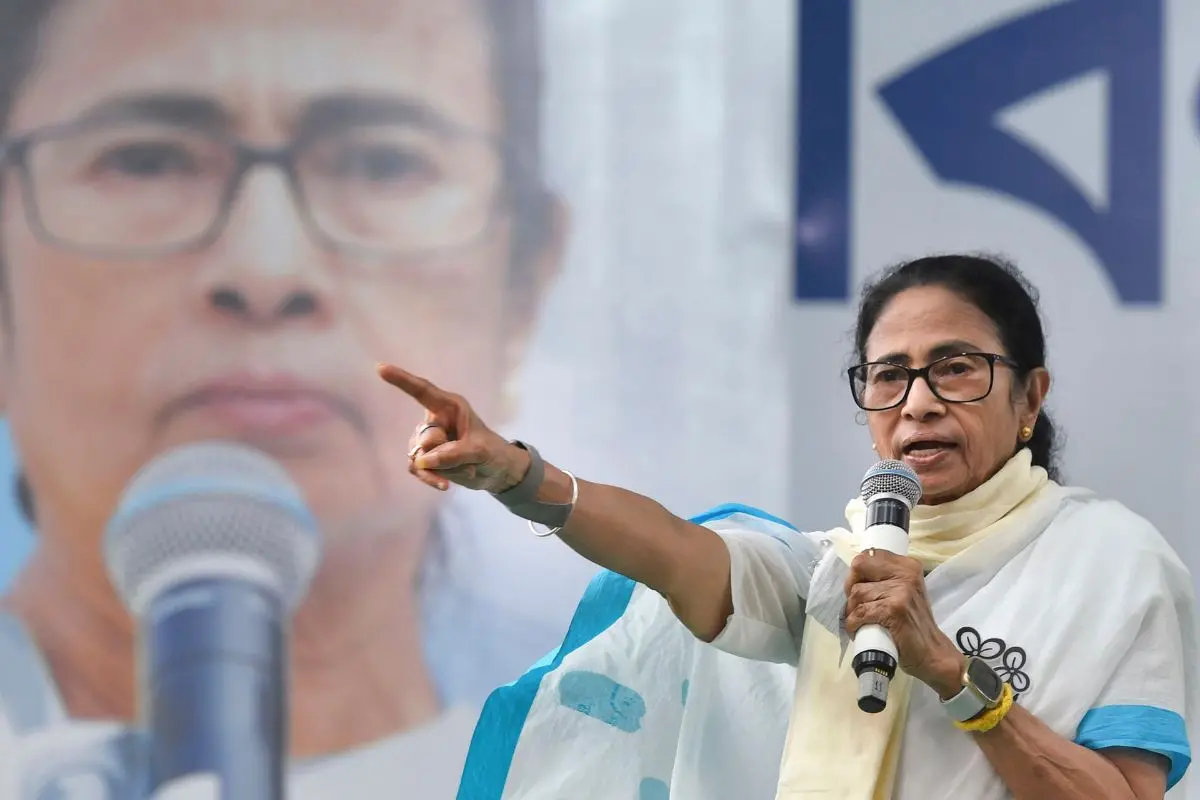
The Bharatiya Janata Party’s (BJP) sweeping victory in West Bengal and Mamata Banerjee's failure to secure a fourth term as chief minister are being widely linked to a single factor: deep, accumulated anti-incumbency against the Trinamool Congress (TMC), not the Special Intensive Revision (SIR) of electoral rolls.
By Monday afternoon, it was clear from counting trends that the TMC chief would not return to Nabanna, with the BJP+ leading decisively in 193 of the state's 294 assembly seats. The saffron surge was visible not just in the 152 constituencies that went to polls in the first phase, but also in the 142 south Bengal seats that voted in the final phase on April 29, underscoring a statewide mood for change that TMC's narratives could not blunt.
Corruption, Fatigue and a 15-year build-up
The most visible driver of this anti-incumbency was the steady accumulation of corruption charges and local resentment over the past decade and a half. Senior TMC leaders were embroiled in chit fund scandals involving companies such as Saradha and Rose Valley, recruitment scams in school education and civic bodies, and coal and cattle smuggling cases.
These controversies, amplified by central agencies and media coverage, fed a growing perception that the ruling establishment was both corrupt and arrogant.
"The corruption factor and the alleged arrogance of TMC leaders definitely played a big role," noted political scientist Maidul Islam of the Centre for Studies in Social Sciences.
His assessment was reflected on the ground: in Kolkata's Rashbehari seat, TMC sitting MLA Debasish Kumar, who had been questioned by the Enforcement Directorate in an alleged illegal land transfer case days before polling, was trailing BJP candidate Swapan Dasgupta, a veteran journalist and former Rajya Sabha MP.
The symbolism was stark -- even in urban, relatively elite constituencies, the TMC's image as a party of entitlement and rent seeking had clearly eroded its appeal.
Local anger over extortion and intimidation by TMC functionaries also appears to have reached a tipping point. "People were tired of the TMC, especially its local leaders who extorted money from us every week," Tapan Maity, a shopkeeper in Kolkata's Gariahat market, told the Hindustan Times. Such voices indicate that beyond big-ticket scams, everyday experiences of harassment were quietly hardening sentiments against the ruling party.
The party's leadership was not oblivious to the anti-incumbent mood. Aware of the risks of fatigue after 15 years in power, the TMC undertook a large-scale candidate reshuffle. Although it had won 213 seats in 2021 against the BJP's 77, the party dropped 74 of those winners and shifted 15 sitting MLAs to new seats, fielding only 135 incumbents from their original constituencies.
It also leaned on social engineering, nominating 78 Scheduled Caste, 17 Scheduled Tribe, 47 Muslim and 55 women candidates, and banking on Mamata Banerjee’s welfare schemes and monthly cash transfers to cushion the anti-incumbency blow. None of this worked.
By afternoon on counting day, almost all TMC ministers were trailing their BJP rivals, signalling a sweeping rejection of the ruling party rather than a marginal shift attributable to technical changes in voter lists.
SIR as a secondary factor, not the trigger
The TMC and sections of the commentariat have argued that the Special Intensive Revision of electoral rolls -- under which an estimated 9.1 million names, including dead and absentee voters, were removed -- skewed the contest against the ruling party.
Islam himself acknowledged that "the polls were held without a large number of voters who were delisted during the SIR". But the broader data and turnout pattern suggest that SIR functioned more as a voter roll clean-up than as the central driver of Mamata’s defeat.
The first two phases saw record turnouts of 93.19% and 92.67%. The BJP framed these extraordinary figures as evidence of an anti-TMC wave; the TMC, conversely, claimed they reflected strong support for the ruling party. But the high participation, despite the deletions, undercuts the idea that SIR suppressed the electorate in a way that structurally predetermined the result.
If anything, the revision made the rolls more accurate and reduced TMC’s past leverage over an unverified list vulnerable to inflated or bogus voting.
The SIR deleted 57 lakh names in its initial round, with the total crossing 90 lakh before polling. Yet, instead of depressing turnout, the exercise coincided with a “big jump” in participation. That suggests two things. First, the electorate that turned up was largely composed of verified, active voters. Second, the anger that had built up against the TMC was strong enough to mobilise this voter base in large numbers, despite any anxiety about deletions.
Rather than being the primary cause of TMC's fall, SIR appears to have levelled the playing field by curbing scope for manipulation that a long-time ruling party might otherwise exploit.
Culture war narrative fails against lived reality
A central plank of Mamata Banerjee's strategy was to label Prime Minister Narendra Modi, Union Home Minister Amit Shah and other BJP leaders as
"bahiragato" (outsiders) and "anti-Bengali", arguing that the BJP represented a cultural invasion incompatible with Bengal's ethos. This "daughter of the soil versus outsiders" frame had worked to her advantage in earlier contests, but it failed to override the anti-incumbency this time.
For years, one of the most beguiling arguments against a BJP breakthrough in Bengal was that the party was a cultural interloper incapable of connecting with the state's "bhadralok" sensibilities. The counting trends told a different story.
The bhadralok sentiment, far from being a firewall, appeared to have shifted decisively; a sizeable section of the urban middle class seemed comfortable rejecting Mamata’s nativist appeal in favour of the BJP's "double engine sarkar" promise of alignment between state and Centre.
Symbolic gestures by BJP leaders during the campaign -- from PM Modi eating "jhal muri" to leaders being seen devouring fish -- reinforced the message that Hindutva politics and Bengali cultural habits were not inherently at odds. This was not mere theatre; it aimed to undercut TMC's warnings that a BJP government would attack Bengali food habits and cultural practices. When juxtaposed with the perception that Bengal had slipped behind even states such as Uttar Pradesh and Bihar in development metrics, the TMC's cultural exceptionalism narrative began to look like a distraction from economic stagnation.
Hindu consolidation and limits of Muslim-centric strategy
The results also highlight the structural limits of TMC's strategy of deep dependence on Muslim consolidation. By midday, the 90-odd seats where the party was leading were largely areas with high Muslim concentrations, reflecting continued minority backing. But this very reliance also underscored how far the party has been pushed into a corner, needing to squeeze every possible Muslim vote to retain a regional presence even as it hemorrhaged Hindu support.
The BJP, on the other hand, appears to have achieved significant Hindu consolidation, including among communities once seen as ambivalent or hostile to it. In constituencies with sizable Matua (Dalit refugee) populations, the party performed strongly despite concerns that the SIR disproportionately affected this community.
In districts such as Murshidabad, where Muslims are numerically dominant, the TMC held its ground; elsewhere, the BJP’s narrative of "infiltration" from Bangladesh, demographic imbalance and criminal impunity resonated with non-Muslim voters who felt their anxieties had been ignored or ridiculed by secular elites.
Over the years, the BJP has absorbed several TMC leaders into its ranks, including key figures such as Suvendu Adhikari. These turncoats, familiar with TMC’s organisational strengths and weaknesses, shaped a campaign that exploited the ruling party's vulnerabilities while mimicking some of its grassroots methods. Their understanding of "what will move voters" and where TMC's appeal had peaked helped the BJP convert latent discontent into a decisive swing.
Security, central forces and a freer poll atmosphere
Another element that weakened TMC's incumbency advantage was the heavy deployment of central paramilitary forces and tighter enforcement by the Election Commission. Viral videos of attempts to intimidate voters being firmly checked by security personnel sent a strong signal that the familiar apparatus of booth control and "good squads" aligned with the ruling party would face consequences.
This contributed to a polling environment where more voters felt safe enough to express their preferences, including those disillusioned with the TMC but previously fearful of retribution if the ruling party returned to power. While that fear could not be entirely exorcised, the mood had already reached a tipping point. In such a context, the role of SIR and central forces was less about engineering an outcome and more about allowing the underlying anti-incumbent sentiment to translate into votes.
Verdict against a regime, not against a voter list
Taken together, the corruption scandals, local-level extortion, fatigue after 15 uninterrupted years in office, the failure of cultural and outsider-insider rhetoric, visible Hindu consolidation and a more neutral polling environment all point in the same direction: Mamata Banerjee's defeat is fundamentally a verdict against an entrenched regime, not a technocratic artifact of electoral roll revision.
The SIR may have altered the composition of the electorate at the margins and curtailed some of the TMC’s organisational advantages. But it did not create the discontent that swept through both rural and urban Bengal.
That discontent was homegrown, built over years of perceived misgovernance and excess. In the end, it was anti-incumbency -- not SIR -- that decisively closed the door on Mamata Banerjee's fourth term.