‘Kuzhalpanam’ conundrum: Why Kerala’s black money pipeline thrives despite crackdowns?
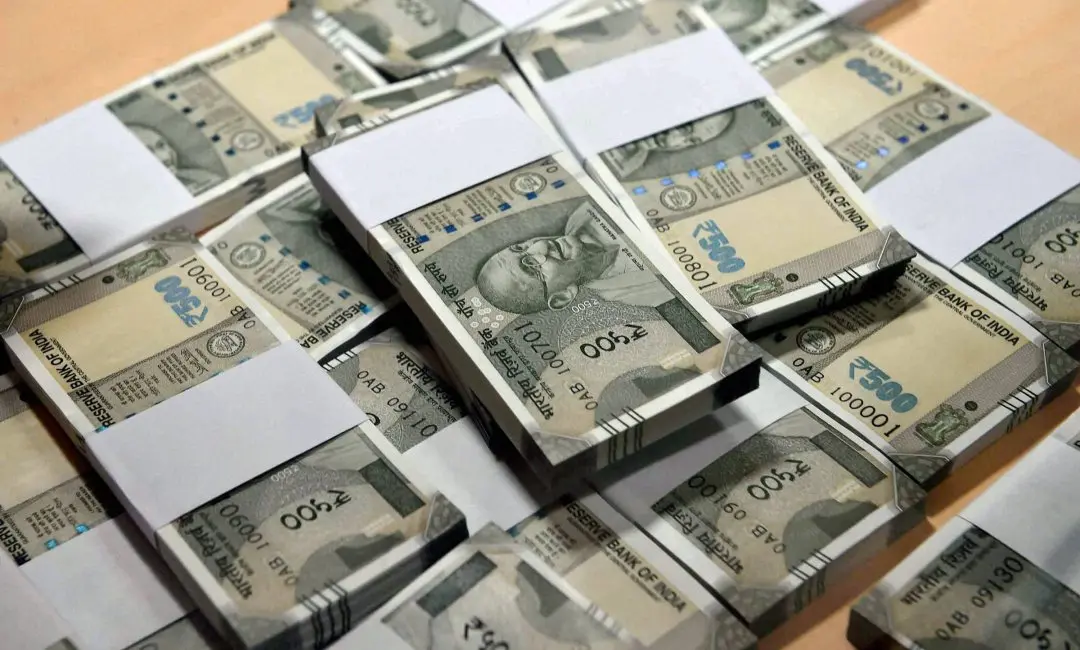
In January 2025, the Income Tax Department launched raids at five locations in Kerala, including an institution in Kozhikode, after finding large-scale cryptocurrency transactions. Authorities uncovered transactions that involved more than 1,500 accounts. These accounts were used to channel massive sums of money into cryptocurrency, which was then sent to Dubai for hawala transactions. Investigations are underway as to the ulterior motives behind such shady transactions, including the extremism angle.
Hawala is an informal way of transferring money without any physical money actually moving. Hawala transactions in India are illegal under the Prevention of Money Laundering Act (PMLA) and the Foreign Exchange Management Act (FEMA).
The Enforcement Directorate estimates that hawala transactions of more than Rs 10,000 crore were conducted in Kerala via more than 20 hawala operators in several districts in Kerala, recently. Kochi city is the most important centre for hawala transactions in Kerala, and there is an estimate that around Rs. 50 crore transactions happen daily. However, the state Police Intelligence reckons that Kasaragod, Kannur, Kozhikode, Malappuram, Malappuram, Thrissur, and Kollam districts, are also important centres of hawala transactions.
Kerala Chief Minister disclosed that 150 kg of gold and hawala money, worth Rs 123 crore, were seized by the state police in the last five years from Malappuram district. A significant portion of the hawala funds is believed to have been funnelled into the state, with the majority of seizures taking place in Malappuram district, according to Kerala Police data.
In June 2023 ED raids held at shops in Edappally, in Kochi led to recovery of Indian and foreign currencies to the tune of Rs 3 crores. Officials said the raid was conducted following inputs about hawala money flowing to different parts of the state with the involvement of shop owners and agents. The raids were held in all districts from Kollam to Kasaragod. Further, the searches also revealed that many persons and entities transacted in illegal exchange of foreign currency and are also involved in arranging cross-border payments to Dubai, USA, Canada, etc through Hawala, bypassing the legal banking channels.
In February 2023 The Directorate of Enforcement (ED) had attached assets worth Rs 305.84 crore of a leading Thrissur-based jewellery group. Hawala transactions are thus rampant in Kerala, involving all categories of businesses and individuals.
Intelligence agencies are probing as to how overseas funds, primarily from Middle-east, are being pumped into India for anti-national activities, through seemingly benign channels which are usually used to send in legitimate money by overseas Indian workers, primarily from Middle-East, back to their homes in Kerala. The modus operandi is simple, fund peddlers who are operating at transnational levels, with India as their designated target zone, are getting hold of Indians working abroad, who send regular monthly amounts to their family. The operators identify these workers and use them to transfer substantial amounts, along with their monthly salary, for which a commission is paid. The substantial money is picked up by agents using verbal codes and phrases. The path of the money cannot be traced precisely, which in most cases is the point of the matter.
Misuse of Citizenship- and Residency-by-Investment Schemes; Money-Laundering/Terrorism Financing (ML/TF) and Cyber-Enabled Fraud; and Crowdfunding for Terrorism Financing, are all different aspects of the hawala system. Smugglers of gold, drugs, sleeper cells, terror operators, handlers and propagators of terrorist ideologies are firming up their finances in India by tapping overseas Indian workers and technicians, who are working in the Middles-east.
Facilitating the growth of the hawala system is the growing cash economy in Kerala, involving vegetable shops, fruit shops, restaurants, wayside eateries, perfume shops, meat shops, mobile phone repair shops, nurseries, bakeries, and catering businesses where all transactions are cash-based. These businesses remain outside the purview of tax authorities, thereby facilitating hawala dealings. The Malayalam translation is “Kuzhalpanam”, meaning a money pipeline. This pipeline has no starting or finishing point, maybe the epicentre is in Mumbai the financial capital of India, and from there spreads out in a multi-directional manner. The pipeline to Kerala, passes through highly sensitive drug and gold markets of Goa, Bhatkal, Mangaluru, entering Kasaragod a major Hawala epicentre, and stretching from there across the length and breadth of Kerala. These transactions operate independently, outside of the regular banking channels, hence, monitoring and detecting by intelligence and security agencies becomes next to impossible.
The March 2024 disclosure by the Kerala Police Intelligence Wing, that hawala transactions to the tune of Rs 264 crores took place within a span of just two months, is quite worrisome. In such a vast cash economy, there are no suspect transactions put through the legal financial banking system. The report also speaks about the use of inland waterways for transporting hawala funds.
Inland waterways are not patrolled extensively, by any agency State and National, hence, the movement of cash, contraband and even criminals, happens unhindered. Stretches of picturesque inland waterways are also facilitating the transportation of contraband money and sensitive materials. This is a big chink in the armour of the nation’s security system.
Hawala enables criminal activity and is necessary to disguise ill-gotten gains. It facilitates crime, distorts markets, and has a devastating economic and social impact on citizens. It also threatens national security as Hawala money allows drug traffickers, financial fraudsters, anti-national organizations, and corrupt officials, to operate and expand their criminal enterprises. The Enforcement Directorate estimates that Delhi has more than 500 regular Hawala operators, and a similar number operates in all the major metros.
In January 2025, ED uncovered a network of Chartered Accountants and hawala operators who sent out a mind-boggling Rs. 10,000 crores of black money to Singapore, Hong Kong and Thailand. The World Bank estimates that informal remittances through systems like Hawala could reach up to $300 billion annually.
In May 2022, the Union Home Minister inaugurated the National Intelligence Grid (NATGRID) in Bengaluru. A national database to monitor hawala transactions, terrorist funding, counterfeit currency, narcotics, bomb threats, illegal arms smuggling and other terrorist activities, would be created by NATGRID. The services of NATGRID solution will be available to 11 central agencies and Police of all States and Union Territories. It will link user agencies with data holders, giving them access to real-time information needed for intelligence services and investigations.
As of now, the diaspora finds the Hawala system to be more attractive than regular banking channels, which demand stiff commission charges, for every transaction. Banks will have to improve their services by reducing the commission charges for remittances as this will bring more people into the formal banking sector. The United Nations Sustainable Development Goals, adopted in September 2015, have, for the first time, put this issue on its agenda by agreeing to reduce to less than 3% the transaction costs of migrant remittances, and to eliminate remittance corridors with costs higher than 5%.
But reducing or eliminating Hawala requires great political and judicial will in India. A system which is also allegedly used by many politicians, of every political party, will be difficult to eradicate. But steps can be taken to weaken it.
The author is former Director General of National Academy of Customs, Indirect Taxes & Narcotics