Why Romans loved bathing in Bath
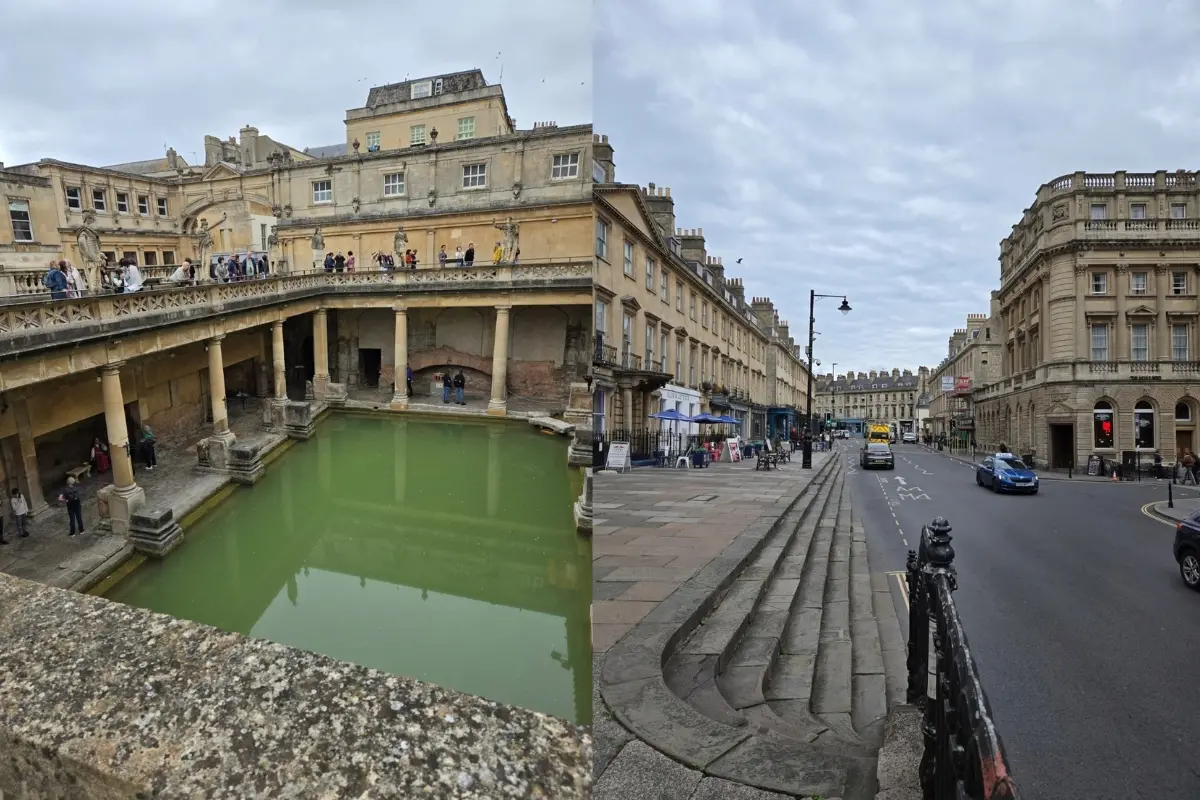
I had been to the UK twice before, but somehow nobody had told me about this remarkable Roman city called Bath. So, when I visited it during my holiday this time, certainly there was no disappointment.
As I entered the city of Bath in the west of England, I felt that I had arrived somewhere different. The busy streets and tall concrete buildings of London seemed far away. The roads leading to Bath were surrounded by green trees and beautiful countryside, and the drive itself was pleasant. But what made Bath special was the way the old and the new existed together. Beautiful stone buildings stood along the streets. The buildings had a similar style, but each one had its own character.
My first stop was the famous Roman Baths, right in the centre of Bath.
Stepping into the Roman world
As I entered the Roman Baths, I felt as if I was stepping back into another time. At the entrance, my ticket was checked and I was given an audio guide. The adult ticket was £27 (Rs 3,500). The audio guide was very useful because it helped me understand what I was seeing and gave me stories about the people who once came here.
The Roman Baths were built around a natural hot spring. The water comes from deep underground and rises naturally to the surface. Even today, the hot spring produces around 1.17 million litres of water every day at about 46°C. The water remains hot always and one could feel it by touching the waters. The large pool was surrounded by stone walls and I could almost see people talking, relaxing and enjoying the warm water.
It was not simply a place to take a bath. For the Romans, bathing was part of everyday life. It was a place to meet people, exercise, relax and, they believed, improve their health.
A sacred place
The story of the baths goes back even further than the Romans. Before the Romans arrived, local people already considered the hot spring a sacred place. They believed it had a special connection with the gods and the underworld.
When the Romans came to Britain, they built a large temple and bathing complex around the spring. They connected the local goddess Sulis with the Roman goddess Minerva and worshipped them together as Sulis Minerva.
Walking through the site, I was thinking about how important this place must have been. People came here not only to bathe but also to worship and leave offerings.
The museum contains many objects found around the spring, including items that people threw into the sacred water.
Walking through the ruins
I climbed the stairs and moved through the different parts of the complex. Some rooms were dark, quiet and filled with old stone walls. The ruins made me wonder what the place must have looked like when it was full of people.
After Roman rule ended in Britain, the baths were no longer used in the same way and the site eventually fell into ruin. For centuries, much of the Roman complex was hidden beneath the city.
Today, it is one of the best-preserved Roman sites in Europe and forms an important part of the UNESCO World Heritage city of Bath.
The Great Bath that we see today is only one part of a much larger complex. As I stood there, I found it amazing that the spring was still flowing after all these centuries.
Walking around Bath
After visiting the Roman Baths, I decided to explore the city on foot. Bath is a wonderful city to walk around because many of its most famous places are close to each other. The roads were easy to walk, and everywhere I looked there were beautiful old buildings.
One of the places I came across was the Royal Crescent, a long curved row of elegant houses built in the 18th century. The buildings looked almost like one huge piece of architecture.
What surprised me was that these are not just historic buildings. People still live in many of these buildings. The houses have kept their historic appearance, and changes to the outside are strictly controlled. Cars were parked along the streets, while tourists walked around taking photographs.
Streets with unusual names
As I continued walking, I came across streets with names that caught my attention. There was Gay Street, Cheap Street, Quiet Street and York Street.
Walking through these streets, I saw tourists from different parts of the world exploring Bath. Some were taking photographs, some were looking at maps, and others were simply enjoying the architecture. The city felt lively, but not rushed.
I continued my walk towards other famous landmarks, including Bath Abbey and Pulteney Bridge.
From what I was told by a former student Ankit who accompanied me, Bath is a relatively small and less crowded city, with a large student population because of the University of Bath. As I walked through the streets, I could see students everywhere—walking between places, meeting friends, stopping for refreshments, and simply enjoying the relaxed atmosphere of the city.
A city where history is still alive
What I enjoyed most about Bath was that its history did not feel locked away inside a museum. I could see it in the streets, the houses, the bridges and even in the names of the roads. The Roman Baths gave me a glimpse into life almost 2,000 years ago, while walking through the city showed me how Bath continued to grow and change over the centuries.
The Romans came here to bathe, meet, worship and relax. Today, visitors come for a different reason. For me, visiting Bath was not just about seeing an ancient Roman site. It was about walking through history while watching a modern city live around it.
And that is what made my visit to Bath so memorable.