Your next Air India flight could feel more like your favourite streaming app
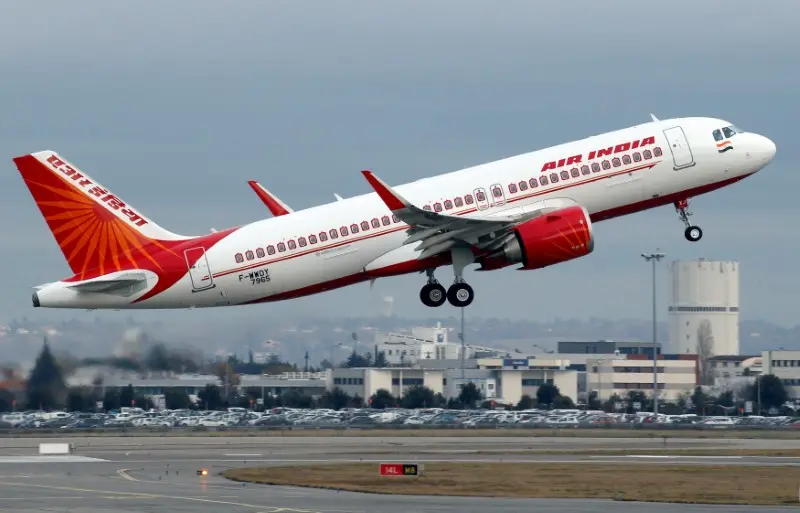
Imagine settling into your seat on an Air India flight, putting your headphones on and looking at the screen in front of you. Instead of simply choosing a movie from a catalogue, the screen already feels familiar. It remembers what you watched, helps you discover something new, connects with your Air India journey and, in the future, could even help you explore what awaits at your destination.
This is the kind of inflight experience Air India is now looking to create with its Vista Digital Platform, a next-generation connected inflight entertainment (IFE) software platform that could change the way passengers interact with the screen in front of them.
Air India has offered a preview of the platform, which is being developed by its in-house design and software teams and includes several patent-pending innovations. The technology is currently being integrated with IFE hardware systems, with progressive deployment planned from FY2028, beginning with select new aircraft deliveries before gradually extending across the airline’s fleet.
For the passenger, however, this is about much more than a new entertainment system.
It is about turning the seatback screen into another digital companion for the journey.
When your seatback screen knows you better
For years, inflight entertainment has largely meant one thing: pick a film, television programme, music track or game and enjoy it until the aircraft lands. Vista is designed to take that experience several steps further.
Air India says the platform will create a more personalised and connected experience while bringing greater consistency across different types of IFE hardware installed on its aircraft. That could solve a familiar passenger experience problem. Travellers flying on different aircraft can often encounter completely different interfaces and ways of navigating the entertainment system.
With Vista, Air India wants the experience to feel familiar regardless of which aircraft a passenger boards. The platform will also support over-the-air software and content updates, allowing Air India to introduce improvements and new features more efficiently without relying on traditional, slower update cycles.
In simple terms, the IFE system could begin behaving less like a fixed piece of aircraft equipment and more like a modern digital platform.
Your entertainment could follow you
One of the most interesting possibilities is continuity. Imagine starting a movie during one Air India journey, leaving the aircraft and then boarding another Air India flight days or weeks later. Instead of searching for the film again, Vista is designed to eventually allow passengers to pick up where they left off. That same philosophy extends beyond entertainment.
Air India envisages Vista working alongside its mobile application, website and wider digital platforms. In the future, passengers could potentially access loyalty services, travel information and selected booking-related functions through the seatback screen itself.
The airline’s mobile app could also become a companion to the IFE system, allowing passengers to browse and curate entertainment preferences even before boarding and then interact with the inflight system during the flight. The result could be a digital journey that begins before passengers reach the aircraft and continues after they land.
Netflix, but at 35,000 feet
The experience is also being designed around something passengers already understand very well with other streaming platforms. Vista’s interface is intended to bring the ease of discovery and personalisation associated with modern OTT and streaming services into the aircraft cabin.
Artificial intelligence will play a role in helping passengers discover content and services that may be relevant to them. A passenger could potentially be presented with movies and programmes they are more likely to enjoy, alongside options such as meals, travel products, games, children’s entertainment and reading material. Instead of scrolling endlessly through hundreds of options, the system is designed to make the discovery process more intuitive.
For families, frequent flyers and passengers on long-haul journeys, this could make the seatback screen a considerably more useful part of the journey.
What if the map became your travel guide?
Perhaps one of Vista’s more intriguing innovations is its patent-pending ‘commerce-on-map’ capability. The concept could allow passengers to discover and potentially book experiences and travel services associated with destinations they are flying over or planning to visit. That creates an interesting shift in the way we think about inflight entertainment.
The passenger is no longer simply looking at a map to see where the aircraft is flying. The map could become a window into the destination itself.
Flying towards a new city could therefore become part of the travel experience before the aircraft even touches down, with passengers discovering places to visit, experiences to explore and services connected to their destination.
Entertainment, information, inspiration and commerce could begin coming together on one screen.
The screen that could become a digital travel companion
For Air India, this is part of a much larger technology strategy.
Dr Satya Ramaswamy, Chief Digital and Technology Officer, Air India, described the opportunity created by the convergence of open-source operating systems, satellite connectivity and artificial intelligence. “The adoption of open-source operating systems by in-flight entertainment hardware vendors, the deployment of satellite broadband connectivity on aircraft and modern AI technologies create a unique ‘app store launch moment’ for reimagining the airline cabin experience.”
He added that Air India is among the pioneering airlines developing a connected software platform in-house to power personalised entertainment and commerce experiences for passengers.
“With this advancement, the inflight entertainment system has the potential to become the most important screen our guests interact with, joining Air India's award-winning mobile app and website as one of our core digital consumer platforms.”
That is perhaps the most important shift in Air India’s approach. The seatback screen is no longer being viewed simply as an entertainment accessory fitted into an aircraft. It is being positioned as another consumer-facing digital platform.
Is IFE becoming the new battleground for passenger experience?
For passengers, the difference may sound subtle today. But strategically, it could be significant. Airlines have traditionally competed on factors such as schedules, fares, aircraft, lounges, loyalty programmes, food and connectivity. Inflight entertainment has often remained a feature within that larger proposition.
Air India is attempting to make the IFE experience part of the airline’s broader digital ecosystem. That means the cabin could increasingly become an extension of the airline’s app and website rather than a separate digital environment. And this is where the development becomes particularly interesting for Indian aviation.
India is witnessing rapid growth in air travel, with millions of passengers experiencing flying for the first time or becoming increasingly frequent travellers. As expectations are shaped by smartphones, streaming services, personalised apps and instant digital services, passengers are also likely to expect the same level of simplicity and personalisation when they step aboard an aircraft. Air India’s approach effectively brings that expectation into the cabin.
The competition, therefore, may not simply be about what movie an airline offers. It could increasingly be about how intelligently the entire journey is connected.
Entertainment screen to experience platform
Vista also reflects how aircraft connectivity is changing what is possible inside the cabin.
With satellite broadband, modern software architecture and AI developing rapidly, the IFE system no longer has to remain a closed environment containing a fixed catalogue of entertainment. It can potentially become a constantly evolving platform.
Air India says Vista will allow it to introduce new features, services and content faster and more efficiently and at a lower cost, while maintaining a seamless experience for passengers. That could also mean the system continues evolving after it is installed.
The aircraft may remain the same, but the digital experience onboard could keep changing.
Your next flight may feel very different
The deployment of Vista Digital Platform is planned to begin progressively from the second half of 2027, with select new aircraft deliveries, before expanding across the fleet over time.
That means passengers will have to wait before the full vision becomes a familiar part of every Air India journey. But the direction is already clear.
The future Air India passenger could board an aircraft with an entertainment system that feels less like a television fixed to the back of a seat and more like a personalised digital companion, one that knows where they left off, helps them discover something new, connects with their wider Air India journey and potentially inspires their next destination.
For an industry where the cabin experience is becoming increasingly important to how passengers perceive an airline, that is a meaningful change.
The next generation of inflight entertainment may not simply ask passengers “What would you like to watch?” It could ask a much more interesting question:
“What would you like to experience next?”