After Pinarayi, who? If LDF loses, will CPM see leadership transition in Kerala?
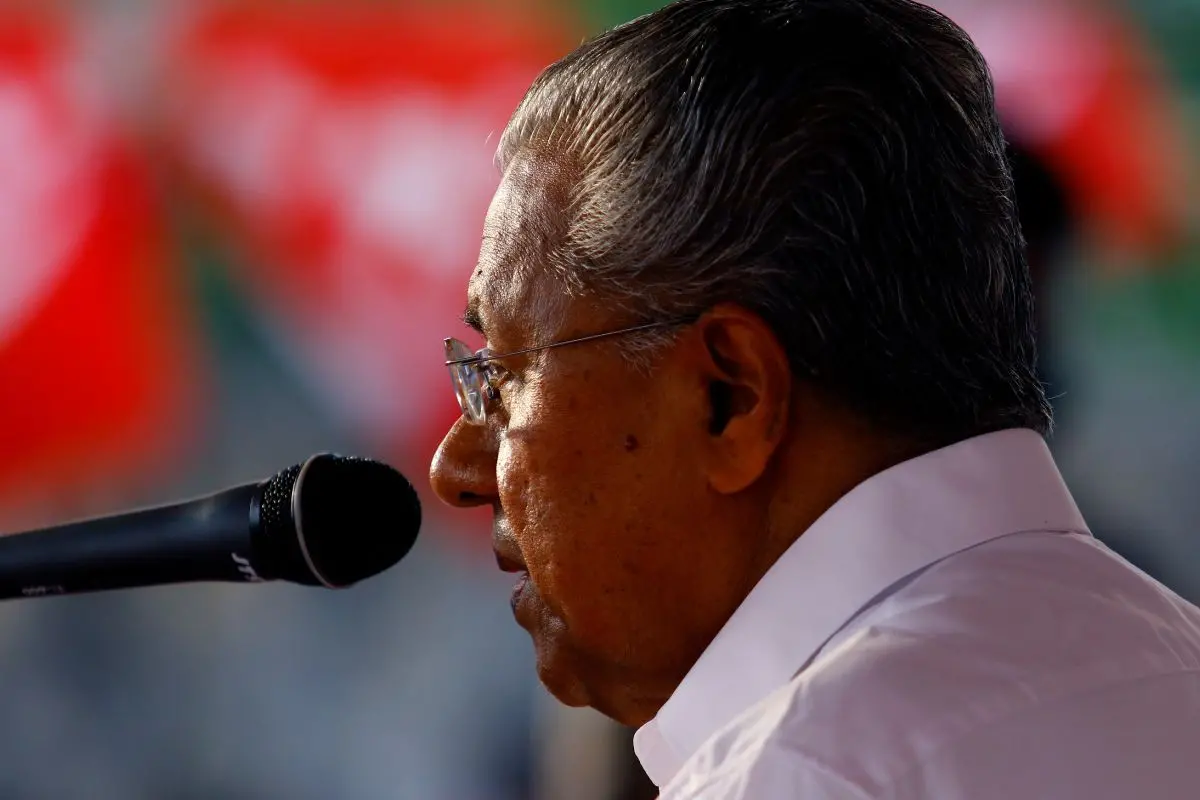
As Pinarayi Vijayan stands at the cusp of what could be a defining political moment, the Communist Party of India (Marxist) in Kerala finds itself confronting a question it has long managed to defer: what comes after the ‘Captain’?
For nearly a decade, Vijayan has been more than just a Chief Minister; he has been the central axis around which the party’s strategy, governance model, and electoral messaging have revolved. From crisis management during the Nipah outbreak and floods to navigating political storms and central-state confrontations, his leadership has crafted a persona of administrative authority rarely matched in the state’s recent history. But as the electoral dust settles on one of Kerala’s most fiercely fought assembly battles, the possibility of transition looms large.
If a third consecutive term slips out of reach, it may not merely signal an electoral setback. It could mark the beginning of a structural shift within the CPM, a party deeply rooted in cadre discipline but not immune to the pressures of generational change.
Within the party ranks, the conversation is already underway, albeit quietly. Leaders like MV Govindan, the current state secretary, represent organisational continuity and ideological grounding. Others, such as P Rajeev and KN Balagopal, bring administrative credibility into the mix, reflecting the party’s emphasis on technocratic competence.
Yet, the CPM’s transition is not merely about identifying a successor. It is about negotiating the balance between legacy and renewal. Can the party retain its electoral dominance without a towering figure like Vijayan at the helm? Will a new ‘face’ emerge to carry forward the party? Questions remain.
Some observers argue that over the last decade, Pinarayi Vijayan has carried out an unprecedented centralisation of power within the party. Moving away from the CPM’s traditional style of “collective responsibility”, he succeeded in narrowing both the government and the party into a leadership model centred largely around himself.
Pinarayi, who controlled the organisation with an iron fist as party secretary for 17 years from 1998, later became the sole, indisputable face of both the government and the party upon assuming the Chief Minister’s office. Surviving challenges from powerful leaders like VS Achuthanandan and silencing dissenting voices, he created a new power structure within the CPM. Observers believe that with the historic continuation of governance in 2021, Vijayan evolved into a de facto authority who established a personality-centric leadership within the party.
The CPM’s traditional framework has always prioritised the party over individuals. However, this balance underwent a significant shift over the past decade. Political observer Dr Mohan Varghese situates this transformation within a broader Communist historical context.
"In a Communist system within a democracy, as well as in an autocratic system, there will always be a single phase. It was Buddhadeb Bhattacharjee's period in Bengal; before that, it was Jyoti Basu's. In China, it was Mao Zedong's period, then Hua Guofeng's, and now it has reached Xi Jinping's. This is basic Communism. Just as the Soviet Union had different eras like the Leninist era, Stalinist era, Khrushchev era, and Brezhnev era, an individual remains at the helm. Here in Kerala, it has similarly culminated in Pinarayi Vijayan."
Kodiyeri Balakrishnan’s absence
For the CPM, a smoother succession after Pinarayi Vijayan was once seen as achievable through former party state secretary Kodiyeri Balakrishnan. His absence, however, has left a vacuum that many consider difficult to fill.
"The unexpected demise of Kodiyeri was actually a big blow to the CPM. Otherwise, that succession was something that should have happened very smoothly. Whether inside or outside the party, Kodiyeri Balakrishnan was a leader who had great acceptance. He had an extraordinary skill in uniting all sections of people,” Senior journalist KA Johny opined.
On the party’s failure to adequately groom a second line of leadership, he adds, "When the CPM came to the second term, the second line that existed in the government suddenly vanished. What the CPM could have actually done at that time was to properly groom and mould KK Shailaja. If she had been in the government for the last five years, the CPM would never have had to face such a vacuum or a helpless state regarding the question of 'Who after Pinarayi' in the leadership."
Meanwhile, a look at the CPM’s history reveals that leadership transitions were once more layered and distributed. After the 1964 split, intellectual leadership under EMS Namboodiripad and mass appeal through AK Gopalan together shaped the party’s foundation. This duality continued with leaders like EK Nayanar and VS Achuthanandan, a phase when multiple strong figures coexisted within the party.
"In politics, the question 'After Nehru, Who?' was perhaps not that important a question among Indians, but many foreign observers and newspapers pondered over it, fearing whether democracy in India would survive. In the book 'After Nehru, Who?' by Welles Hangen, names like Lal Bahadur Shastri, VK Krishna Menon, and Indira Gandhi, as well as General Brij Mohan Kaul, were discussed. Morarji Desai's name was the most prominent, and SK Patil was also considered… Even the name of army chief Kaul came up due to the fear that democracy would end after Nehru... However, in Kerala, during the period of EMS and AKG, no one asked who would succeed in the party after them. While EMS was there, Nayanar and VS Achuthanandan emerged into leadership. While EMS was still active, Nayanar became the Party Secretary and Chief Minister. Similarly, VS Achuthanandan became the Party Secretary and Chief Minister... In the CPM, the party secretary traditionally holds greater organisational weight than the Chief Minister," political observer Advocate A Jayasankar pointed out.
Will the ‘Captain’ step aside?
A key question remains whether Pinarayi Vijayan would step away from leadership roles in the event of an electoral setback. Observers believe such a possibility cannot be ruled out.
"After Kodiyeri’s passing, MV Govindan came in, bypassing the senior EP Jayarajan. But as we see today, Govindan is a very weak party secretary. Govindan is not the right person for the post of party secretary because he lacks the mettle to take or implement firm decisions. However, if LDF loses the election, there is a possibility that MV Govindan will continue as secretary and P Rajeev will become the Leader of the Opposition. Similarly, who is after Pinarayi Vijayan is a big question. A new leader will emerge from this. It will happen within the next five years. Two leaders, one as the Party Secretary and another as the Party Leader," opined Political Observer Advocate A Jayashankar.
At the same time, some observers point out that the current Assembly election serves as a crucial test of the LDF, examining whether Pinarayi Vijayan’s personality-driven leadership can translate into electoral support in the face of mounting anti-incumbency pressures.
"In 2016, the Left won by projecting VS Achuthanandan's face. In the 2021 elections, the COVID-19 pandemic, kits, welfare pensions, and Shailaja Teacher's face all turned into votes for the LDF. So, even there, Pinarayi Vijayan's face was not exclusively tested. But in this election, for the first time, the party has put forward Pinarayi Vijayan's face. Therefore, if the public does not respond favourably, and if the LDF is destined for a total collapse, Pinarayi Vijayan and the CPM will have to sit in the opposition. A Pinarayi sitting in the opposition will never be the same powerful Pinarayi who was in the government," Dr Mohan Varghese noted.
While leaders like VS Achuthanandan demonstrated how former Chief Ministers can remain powerful voices in opposition, there is scepticism about whether Vijayan would assume such a role.
"Whether it is victory or defeat, Pinarayi Vijayan will have to take responsibility. So, naturally, he is unlikely to come to the position of Leader of the Opposition. Looking at it that way, in the current situation, Balagopal is likely to become the Leader of the Opposition," KA Johny observed.
Rise of the third generation
Within the party, discussions on future leadership are already taking shape. Leaders such as P Rajeev and KN Balagopal are seen as key contenders. Both leaders are contesting this election from the Kalamassery and Kottarakkara assembly constituencies, respectively.
"The current second-line leadership in the party, P. Rajeev and KN Balagopal, both are perhaps equals. There are others standing along with them, too. Following them is the generation of M. Swaraj, Mohammed Riyas, or AN Shamseer. There is also a possibility of Party General Secretary (Central Committee member) MA Baby becoming stronger. He has a reformist mind and is a face acceptable to everyone,” Dr Mohan Varghese opined.
Beyond individuals, however, the larger question confronting the party is structural. Many within the CPM believe that moving away from an individual-centric leadership model, often described as “Pinarayism”, may ultimately hinge on an electoral turning point that forces introspection and recalibration.
As Dr Mohan Varghese opined, "Pinarayism cannot continue without Pinarayi. Therefore, there are many Communists in Kerala who believe that when that style changes, the party can regain its lost popular base."