The science behind India's high-altitude edge over China's air force
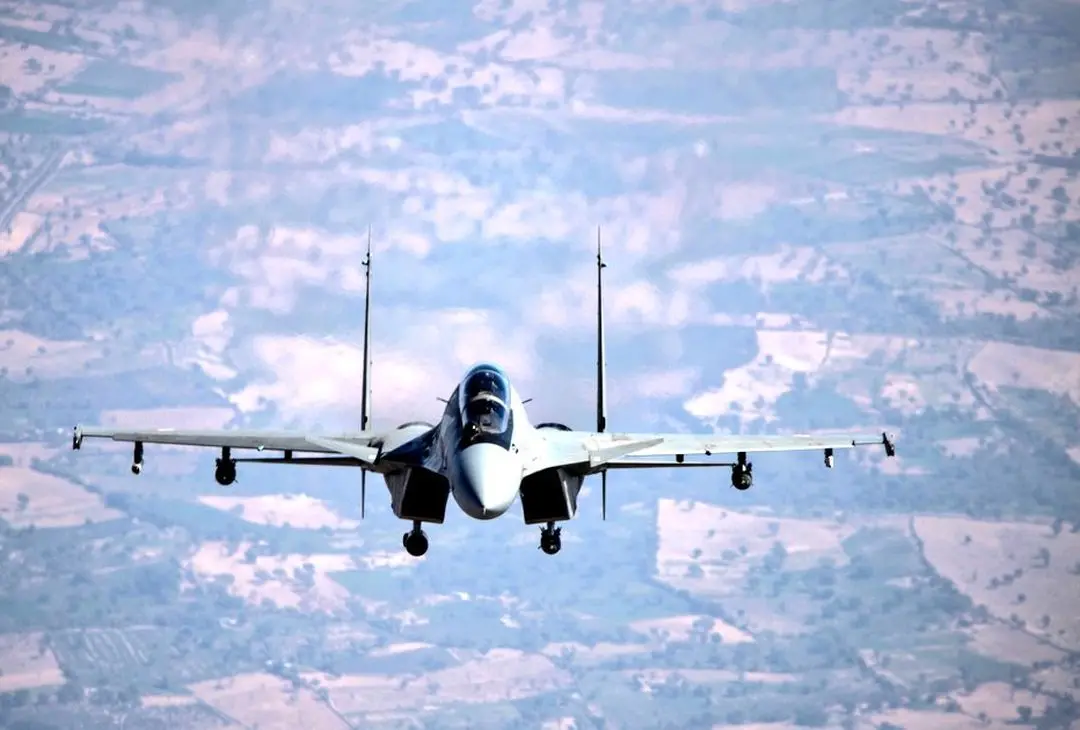
China might need more aircraft than India to effectively attack India due to a combination of geographical, logistical, and strategic factors that shape their military dynamics. The two countries share a vast, rugged border along the Himalayas, spanning over 3,400 kilometers, much of which is high-altitude terrain like the Tibetan Plateau and Ladakh. This environment poses unique challenges for air operations, and each side faces different constraints.
For China, the People's Liberation Army Air Force (PLAAF) operates from bases on the Tibetan Plateau, which sits at an average elevation of 4,500 meters. At such altitudes, air density is lower, reducing engine performance and payload capacity for aircraft.
Planes taking off from these bases -- such as Shigatse or Hotan -- cannot carry full loads of fuel or weapons, limiting their range and combat effectiveness.
India, on the other hand, has airbases closer to sea level in its northern plains, like those in Punjab or Uttar Pradesh, allowing its Indian Air Force (IAF) aircraft -- such as the Su-30MKI or Rafale -- to operate with greater payloads and longer ranges. This gives India a logistical edge, as its aircraft can sustain operations more efficiently near the border.
At high altitudes, like the Tibetan Plateau's 4,500-meter elevation, the air gets thinner because there are fewer air molecules packed into the same space compared to sea level. Think of it like a sponge: at lower altitudes, the sponge is soaked and heavy with water (air molecules), but up high, it’s squeezed out and lighter.
For aircraft engines, which need oxygen from the air to burn fuel and create thrust, this thinner air means they can't 'breathe' as well, so they produce less power. Plus, the wings rely on air rushing over them to lift the plane, and with less air to push against, the aircraft can't carry as much weight -- like bombs or extra fuel -- without struggling to get off the ground. It's like trying to run a race while holding your breath and carrying a heavy backpack; you just can’t go as fast or far.
The distance factor also plays a role. China's industrial and population centres are far from the border, and its forward airfields in Tibet are sparse and exposed to Indian counterstrikes. The PLAAF would need to project power over long distances, requiring more aircraft to maintain a presence, rotate forces, and cover potential losses.
India's bases, being closer to the Line of Actual Control (LAC), enable quicker response times and shorter supply lines, meaning fewer planes can achieve the same operational tempo.
Strategically, China's larger air force -- estimated at over 2,000 combat aircraft compared to India’s roughly 900 -- reflects its broader ambitions, not just against India but across the Indo-Pacific. However, to overwhelm India's defenses, China would need numerical superiority to account for attrition in the harsh Himalayan theater and India's robust air defense systems, like the S-400.
India's smaller but battle-tested fleet, combined with high-altitude experience (e.g., from operating in Ladakh), means China cannot rely on quality alone -- it needs quantity to saturate and sustain an offensive.
Finally, India's network of Advanced Landing Grounds (ALGs) near the LAC enhances its ability to deploy aircraft flexibly, while China's Tibetan bases are more static and vulnerable. To overcome these disadvantages, China would need more planes to ensure air superiority, compensate for logistical limits, and counter India's geographic advantages in a potential conflict.
The author is a defense, aerospace, and political analyst based in Bengaluru.