Explainer: Decoding India's F-21 vs Rafale fighter face-off
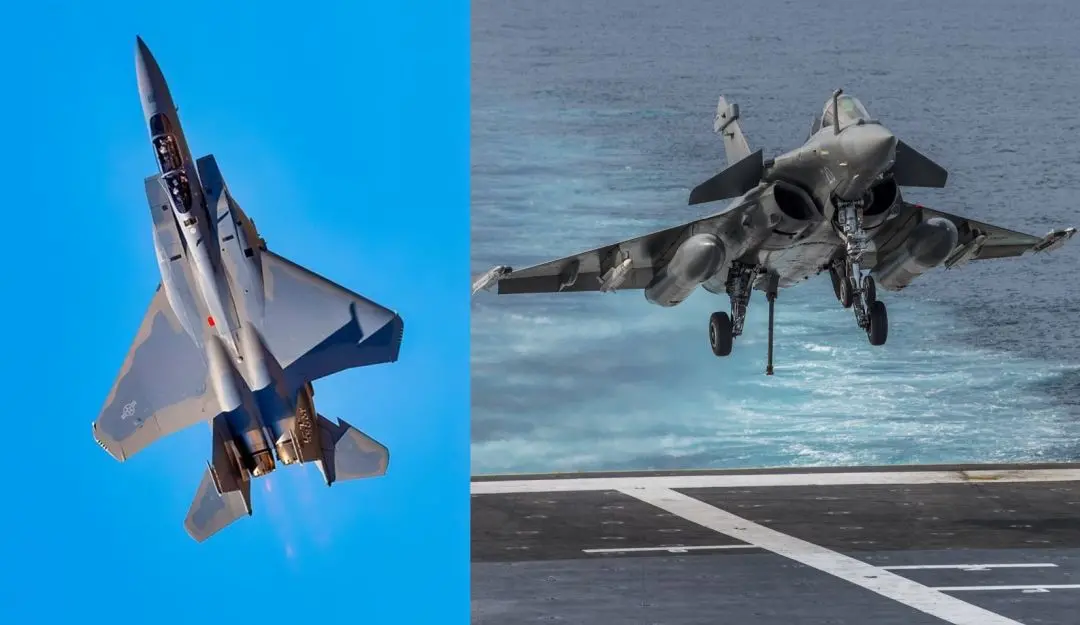
The Indian Air Force is at the crossroads. With its fighter squadron strength dwindling to a worrisome 42 and the impending phase-out of legacy aircraft, such as the MiG-21 and Jaguars, the need for rapid modernization has never been more urgent.
The 114 Multi-Role Medium-Range Combat Aircraft (MMRCA) competition is, hence, a pivotal moment, with Lockheed Martin's F-21 and Dassault's Rafale vying for the contract. Both offer cutting-edge capabilities. But which is the right fit for India’s evolving defence needs?
The IAF's declining squadron strength poses a significant challenge to India's air power projection. The ageing MiG-21s -- despite their glorious history -- are nearing the end of their service life; and the Jaguars are slated for a gradual replacement. The MMRCA deal is not merely about adding new fighters. It is also about rejuvenating the IAF and ensuring its combat readiness in a rapidly changing geopolitical landscape.
F-21: The 'Make in India' Champion
Lockheed Martin has strategically positioned the F-21 as the ideal solution for India's modernization drive. Built upon the combat-proven F-16 platform, the F-21 offers a cost-effective, sustainable and highly capable fighter, tailored specifically for the IAF.
* Economic and Industrial Impact: The F-21's 'Make in India' proposition is its trump card. Lockheed Martin has committed to exclusive production of the F-21 in India -- not just for the IAF, but also for potential export markets. This translates into significant technology transfer, job creation and a boost for India's indigenous aerospace industry.
* Operational Advantages: The F-21 boasts advanced avionics, an integrated self-protection suite and a unique cockpit with a large area display for enhanced situational awareness. It also offers significant growth potential for future upgrades and customization
Rafale: The Proven Performer
The Rafale, with its recent induction into the IAF, has already demonstrated its capabilities. A twin-engine, multirole fighter, it excels in versatility and high-end performance.
* Combat Experience: The Rafale has a proven track record in combat operations, having been deployed by the French Air Force in various war theaters. This operational experience provides invaluable insights into, and confidence in, its capabilities
* Technological Prowess: The Rafale boasts a powerful radar system, advanced electronic warfare capabilities and a wide array of weapon options. Its robust design and superior thrust-to-weight ratio offer exceptional manoeuvrability and performance.
| FEATURES | F-21 | Rafale M |
| Length | 49.3 ft (15.09 m) | 52.8 ft (16.1 m) |
| Wingspan | 31 ft (9.45 m) | 35.8 ft (10.9 m) |
| Height | 16.7 ft (5.09 m) | 17.8 ft (5.34 m) |
| Maximum Take-Off Weight | 48,000 lb (21,772 kg) | 57,000 lb (25,855 kg) |
| Maximum Speed | 1,500 mph (2,414 kmph) | 1,380 mph (2,225 kmph) |
| Range | >600 nautical miles (with conformal fuel tanks) | >930 nautical miles (with external fuel tanks) |
| Service Ceiling | >50,000 ft | >50,000 ft |
| Armament | 12 hardpoints for a variety of air-to-air, air-to-surface and anti-ship weapons | 14 hardpoints for a variety of air-to-air, air-to-surface and anti-ship weapons |
Making the Right Choice: Key Factors
The MMRCA competition involves more than just technical specifications—it requires evaluating industrial, strategic, and financial factors.
1) Ecosystem & Interoperability
* The F-21 benefits from the vast F-16 global network, offering logistical and training advantages.
* The Rafale is already integrated into the IAF, ensuring seamless compatibility with existing fleets.
2) Future-Proofing & Upgrades
* The F-21's modular design allows future upgrades, but its F-16 heritage limits generational improvements.
* The Rafale has already demonstrated adaptability, integrating new weapons and sensors over time.
3) Strategic & Geopolitical Considerations
* Choosing the F-21 strengthens US-India defense ties but also raises concerns on dependence on US regulations.
* Opting for the Rafale deepens India’s strategic ties with France, ensuring greater operational independence.
Challenges for India
* Timely Procurement: With India's fighter jet shortage worsening, a fast-tracked acquisition process is crucial. Delays in negotiations or production bottlenecks could further weaken air defense capabilities.
* Technology Transfer & Indigenous Production: To achieve self-reliance in defense manufacturing, India must ensure genuine technology transfer and domestic production capabilities under the MMRCA deal.
* Long-Term Cost Management: Beyond the initial purchase cost, India must consider lifecycle expenses (maintenance, spares, and upgrades). A thorough cost analysis is needed to determine the most financially sustainable option.
* Geopolitical Risks: If the F-21 is chosen, India would need to constantly watch its back for risks potential sanctions or trade restrictions, especially under the Donald Trump regime. His administration's unpredictable foreign policy could impact the F-21's technology transfer and supply chain. India's past experiences with CAATSA (Countering America's Adversaries Through Sanctions Act) highlight the risks of over-reliance on US-made platforms.
* Balancing Capabilities with Budget: The final choice must align with India's defense needs while ensuring cost-effectiveness. A high-performance fighter that fits within budget constraints will be key to a successful procurement decision.
The IAF's decision on the MMRCA contract will influence India's air superiority for decades. The F-21 brings cost advantages, local production, and global interoperability, while the Rafale offers proven combat experience and technological excellence. India must balance immediate needs with long-term strategic goals, ensuring that the chosen fighter jet safeguards national security in an increasingly complex global landscape. The choice is not just about buying jets -- it is about securing India’s skies for the future.