Beyond goddess and damsels: Did you know of this unconventional portrait by Raja Ravi Varma?
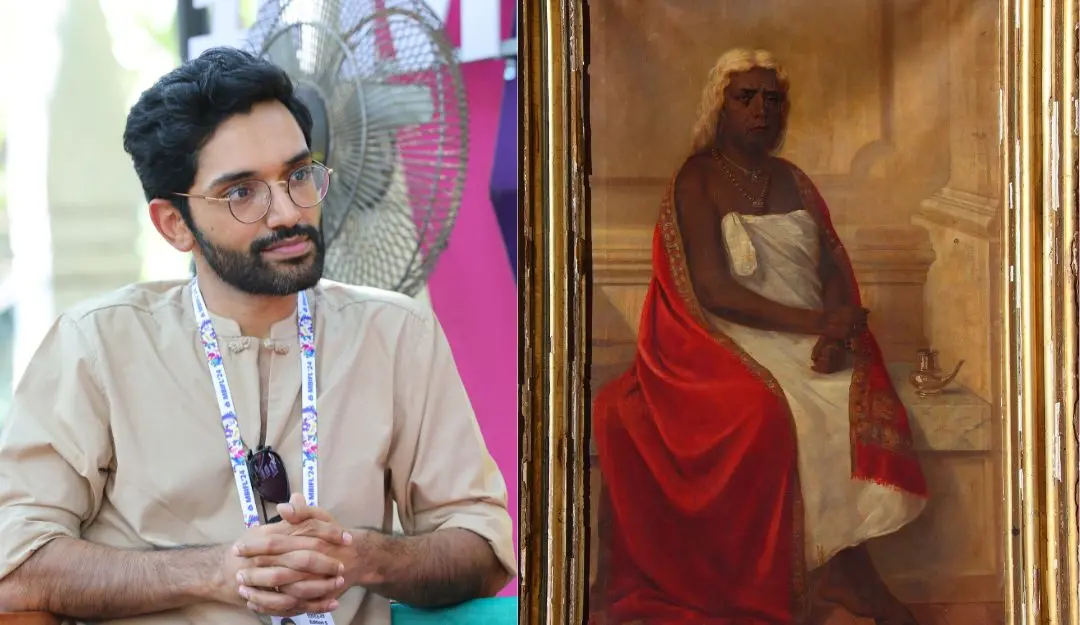
In the world of Raja Ravi Varma, the iconic painter known for his ethereal and idealised depictions of women from mythology, there exists a portrait that stands in stark contrast to his signature style.
It is a portrait not of a goddess or a delicate damsel but of a woman who is as earthy, strong, and unapologetic as the very soil of Kerala. This painting, depicting his formidable mother-in-law, is one that historian Manu S Pillai holds in particularly high regard.
In a recent interview with Kitaabi Cabins, Pillai spoke passionately about the painting, noting that it is one of Varma's most striking and powerful works. "My favourite painting of Ravi Varma is the one he did of his mother-in-law. It’s such a fascinating portrait," Pillai shared.
Known for his idealised portraits of fair-skinned, doe-eyed women from Indian mythology—figures embodying purity, grace, and divine beauty—Varma’s portrayal of his mother-in-law offers something entirely different.
"Firstly, this is a dark-skinned lady. She’s got like really white hair. She’s got red eyes and she is glaring out of the painting, literally looks like she is going to pounce. Either he didnt like his mother-in-law- may be that is why he did this somewhat unflattering painting of her. But I found it very interesting. There’s an edge to her that’s not present in any of his other work."
This painting, created in the late 1880s, was an extraordinary departure from the artist's usual depiction of women. Varma was instrumental in shaping the emerging Indian ideal of feminine beauty, which tended to be fair, delicate, and passive.
His mythological heroines and classical beauties were often soft, tender, and pious—qualities that aligned with the social expectations of women at the time.
But the portrait of his mother-in-law breaks these conventions with startling force.
The woman in the painting stands with a powerful, unyielding presence. Unlike his soft, heavenly figures, this mother-in-law, depicted with dark skin, bloodshot eyes, and a piercing, imperious glare, confronts the viewer with a raw and unapologetic presence.
As Pillai noted, there is no softening of her character here; this is a woman who refuses to conform to any romanticised notion of beauty.
"It’s a very earthy, real woman that Ravi Varma encountered in his life, and she looks unapologetic even in the painting. That’s something I really like," Pillai explained.
In the interview, Manu S Pillai also spoke about his academic journey, shedding light on the challenges and rewards of pursuing a PhD in India. He mentioned that a true PhD requires more than just summarising existing work; it’s about having the aptitude to ask meaningful questions and engage in original research. For Pillai, history is far from boring; it's a rich tapestry full of life, comedy, violence, and tragedy, offering much more than the standard textbook view.