Brutal honesty, luminous tenderness: Revisiting Han Kang's literary worlds as she turns 56
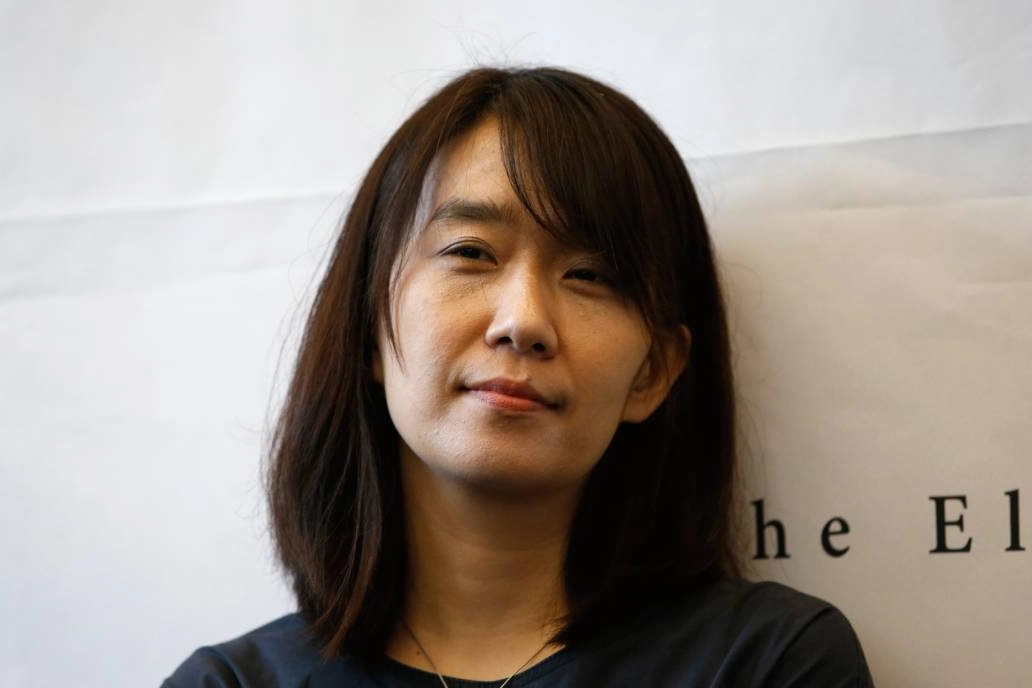
Marking the Nobel laureate’s birthday by revisiting the surreal, heartbreaking, and luminous worlds of her literary oeuvre.
Before I ever read a word of Han Kang, I knew her through fellow writers from around the world, who spoke about her with a certain kind of reverence and awe. They all kept recommending The Vegetarian to me, over and over again until I picked it up. Its opening line used to be, and still is, quoted as one of the best of the twenty-first century. Han Kang holds a place in the hearts of readers, writers and critics alike for her mastery over the craft of writing.
To see what makes the literary world so devoted to her, you only have to look at the range of her work. Pick up one novel. You’re reading surreal body horror about a Seoul housewife who decides she is turning into a tree. Pick up another. You’re standing in the blood-stained streets of 1980s South Korea. Pick up a third. There’s barely a story at all, just a fragmented, hypnotic meditation on white things.
What makes each of her books distinct is the way she creates a form for every kind of pain, memory or resistance she wants to tell. When the Swedish Academy awarded her the 2024 Nobel Prize in Literature, making her the first Korean author and the first Asian woman to win, the jury praised her "intense poetic prose that confronts historical traumas and exposes the fragility of human life." As we celebrate her fifty-sixth birthday, I am drawn back not just to the intensity of her gaze, but to the fearless, restless variety of her craft.
For international readers, including me, the entry point was The Vegetarian, winner of the 2016 International Booker Prize (shared with translator Deborah Smith). Its premise is deceptively quiet: Yeong-hye, a wife, wakes from violent dreams and throws out every piece of meat in the house.
Kang transforms that refusal into body horror as Yeong-hye stops eating altogether, desperate to opt out of human brutality by becoming a plant. What still amazes me as a writer is Han’s decision to deny Yeong-hye a sustained first-person voice. Instead, we watch her unravel through the eyes of her husband, obsessive brother-in-law and exhausted sister.
If The Vegetarian is a domestic nightmare, Human Acts widens the lens to the collective body broken by the state. Rooted in the 1980 Gwangju Uprising, a democracy movement brutally crushed by the military in the city of Han’s birth, the novel trades surrealism for a devastating, polyphonic chorus. Han hands the voice to everyone the tragedy touched: a boy tending corpses, the disembodied soul of his dead friend, an editor fighting censors, a tortured survivor and finally Han herself. Her prose here is both forensic and fiercely tender, asking how humanity can hold cruelty alongside quiet solidarity.
Beyond those two masterpieces, there are more to relish. In The White Book, written in Warsaw, she strips away plot entirely for a luminous mosaic of fragmented vignettes on snow, salt, breast milk, a shroud and so on, woven into an elegy for an older sister who lived for just two hours. She brings that delicate restraint to Greek Lessons, a sensory chamber piece about a woman who has lost her speech and an Ancient Greek teacher going blind, before sweeping back into history with We Do Not Part (winner of France’s 2023 Prix Médicis étranger), a snow-drenched fever dream confronting the 1948 Jeju Uprising.
I recently learned that Kang began her career as a poet before diverting to the art of the novel. She is also a composer and singer who released a 2007 album of 10 self-written songs accompanying her book Songs to Sing Quietly. Once you learn these things, you start hearing it on every page. The way she paces her chapters like movements, knowing exactly when to let a dissonance linger and when to drop into absolute silence.
Han Kang continues to shape the literary landscape through her strikingly distinct style. Refusing to be confined to a single form or style, she reminds us that literature doesn’t have to choose between brutal honesty and luminous tenderness. On her birthday, the best way to honour her genius is to pick up a book of hers you haven’t read yet. You’ll get to meet her as someone entirely new, and she will surprise you all over again!