Coconut shells are big business: ₹4,688.89 crore activated carbon boom offers Kerala a chance
The humble coconut is no longer just a backyard tree. In India, it has become a multi-crore agricultural powerhouse. Today, nearly 30 million people across the country, including 10 million farmers, depend on this single crop. India now ranks first globally in coconut production, generating over 20,300 million nuts from 2.19 million hectares of land. What was once a simple source of cooking oil and fresh water has transformed into a sophisticated export industry.
From backyards to global markets
A quiet revolution is taking place in India's agricultural trade. In the 2025-26 financial year, coconut exports surged by 62 per cent, reaching more than ₹7,038 crore. To put this in perspective, India’s coconut exports in 2001-02 were valued at a mere ₹25.3 crore. This phenomenal rise is driven by a massive shift in what the country sells. Instead of just exporting raw nuts, India now ships high-value processed items like coconut milk, virgin oil, and powdered milk to over 155 countries. Trade links have expanded far beyond traditional buyers in the Gulf, reaching deep into Europe, the United States, and the United Kingdom. According to the Coconut Development Board, this success stems from growing international demand for plant-based diets and improved quality standards within India.
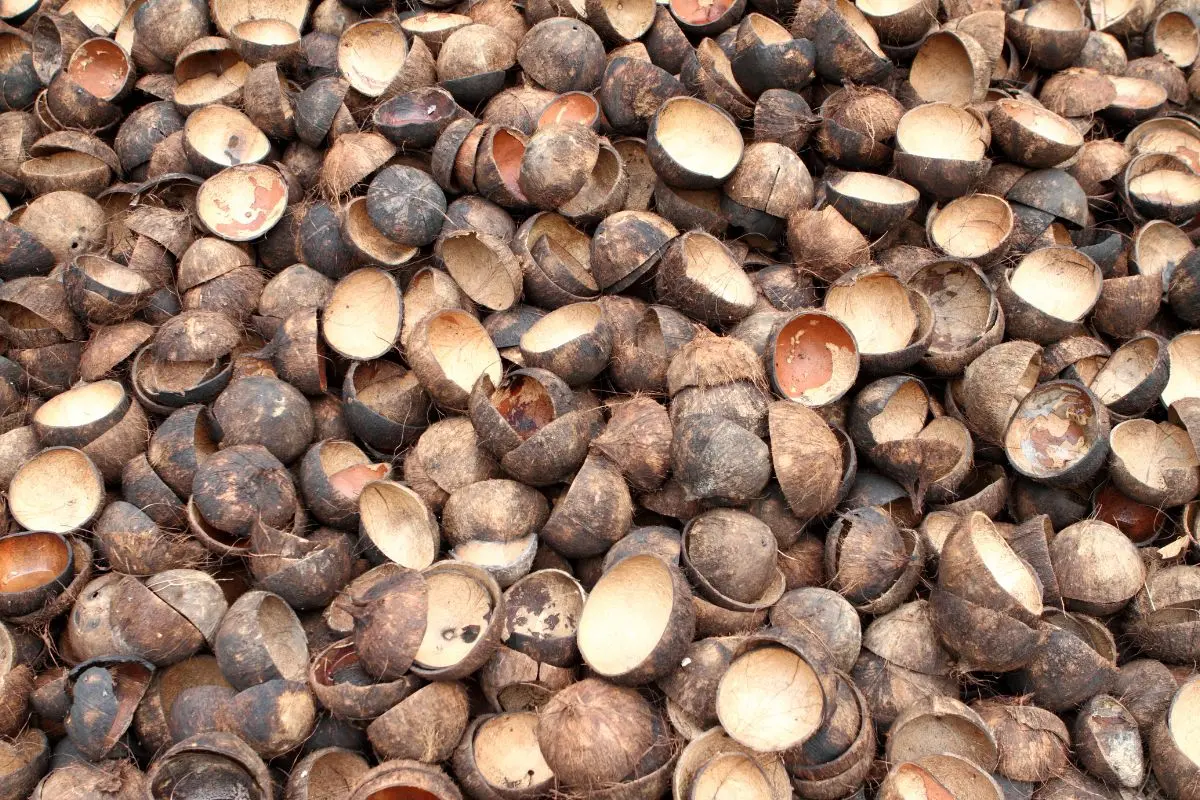
The undisputed king of these exports is activated carbon. Made from burnt coconut shells, this highly processed material accounted for a staggering 67 per cent of India’s non-coir coconut exports in 2025-26. It alone brought in ₹4,688.89 crore. Buyers across the globe purchased 1.8 lakh tonnes of Indian activated carbon. This is because the material has an extraordinary ability to filter and purify. It is used in gold mining, drinking water purification, air filters, pharmaceutical manufacturing, and even advanced energy storage devices. This high global demand means that a simple waste product—the discarded coconut shell—is now one of the country's most valuable agricultural exports.
Kerala leads the green canopy
While the export numbers are decided globally, the work happens on the ground in southern India. Kerala remains the absolute heart of India’s coconut country. The state has the largest area under coconut cultivation, covering nearly 7.54 lakh hectares and yielding over 5,149 million nuts. It is also where the Coconut Development Board is headquartered in Kochi, guiding farmers across 22 states and union territories. However, Kerala is not alone in this green boom. Tamil Nadu leads the country in overall coconut production, while Andhra Pradesh has achieved the highest crop productivity per hectare. Even newer states like Chhattisgarh are adopting the crop, showing that the coconut palm can thrive and create jobs in fresh regions.
Boosting incomes on the ground
Growing coconuts is becoming increasingly profitable for small farmers. The government has stepped in to ensure that price drops do not hurt growers. For the 2026 season, the Minimum Support Price for milling copra has been raised to ₹12,027 per quintal, while ball copra stands at ₹12,500 per quintal. This gives farmers a guaranteed financial safety net. Furthermore, schemes like the Productivity Improvement programme help farmers adopt scientific multi-tier cropping. This means growing pineapples, vegetables, or spices in the empty spaces between coconut trees. In Kerala alone, this scheme covered over 8,089 hectares, directly helping more than 33,000 farmers improve their earnings. With the Union Budget introducing the new Coconut Promotion Scheme to tackle crop diseases and plant younger trees, the future of the sector looks highly promising.