Bigger cocoons, longer silk threads: Calicut University secures patent for innovative formula
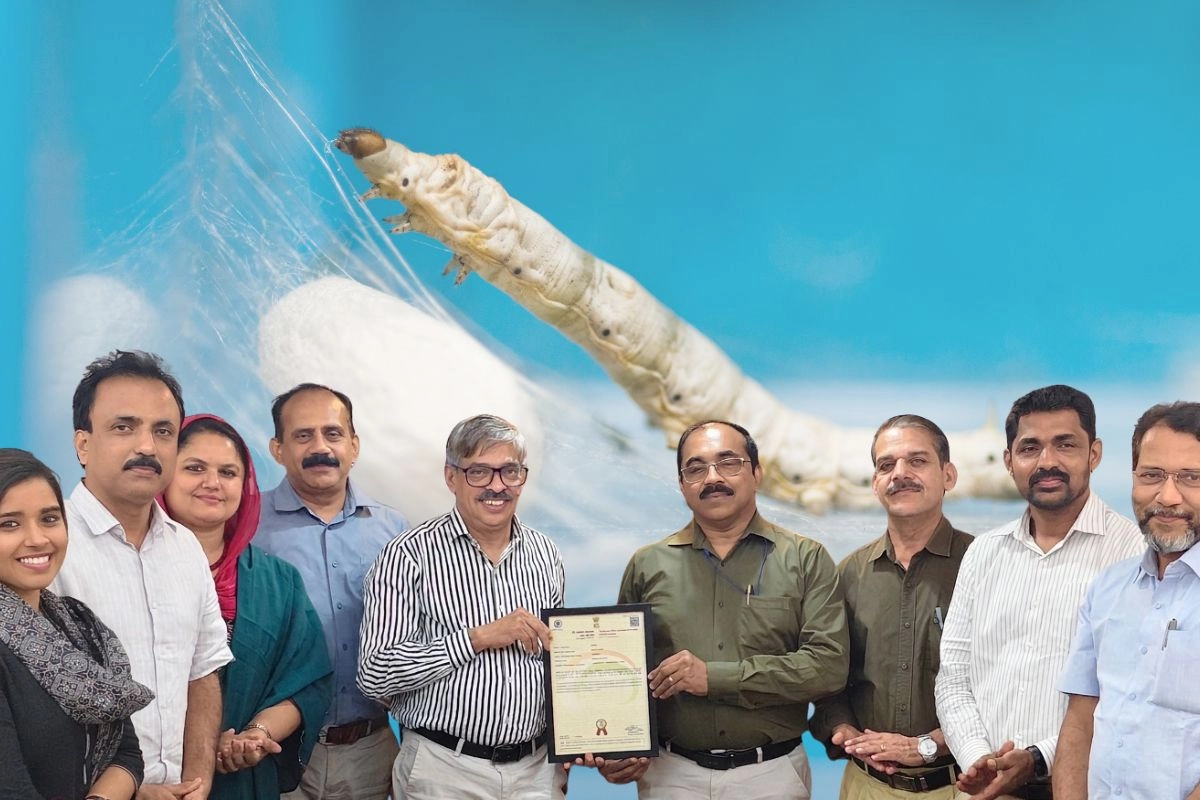
The University of Calicut has earned a national patent for an innovative nutrient solution designed to boost India's silk production. The formulation, named RESHVARDHAN, was created by Prof. Dr. Y. Shibu Vardhanan of the Department of Zoology alongside Dr. Abhilash P. L., a former postdoctoral fellow who currently serves as Scientist at the Central Silk Board.
Granted on November 11, 2026, by the Indian Patent Office, Patent No. 609130 remains valid for 20 years.
How the nutrient spray improves silk yields
RESHVARDHAN is applied directly onto mulberry leaves after harvest. Farmers dilute the mixture with water at a 1:75 ratio before spraying it onto the leaves to raise their nutritional value. Once silkworms consume the treated foliage, the solution regulates their physiology to cut egg retention while strengthening the silk thread.
Official specifications show striking improvements compared to untreated control groups. Average cocoon weight rises by 50.59 per cent, while average silk filament length increases by 37.13 per cent. At the same time, egg retention drops by 16.37 per cent, helping silkworms produce more eggs. The formulation also protects silkworms against heat stress during warmer periods.
Rolling out field trials for Indian farmers
India holds the position of the world's second-largest producer of raw silk, yet the nation still imports silk to meet demand. The Union Ministry of Textiles is running several programmes to raise domestic silk output and quality, and the research team notes that RESHVARDHAN aligns with these national goals.
To test the innovation under actual farming conditions, the University plans multi-location field trials across Kerala, Karnataka, and Tamil Nadu over three consecutive silkworm-rearing seasons. Researchers are also preparing technology transfer plans and a farmer-friendly mobile application that will guide silk growers on proper spray schedules and exact dosages. Successful commercialisation promises higher earnings for sericulture farmers alongside licensing revenue for the University.