The new school is home: Why Indian parents are choosing to homeschool their children
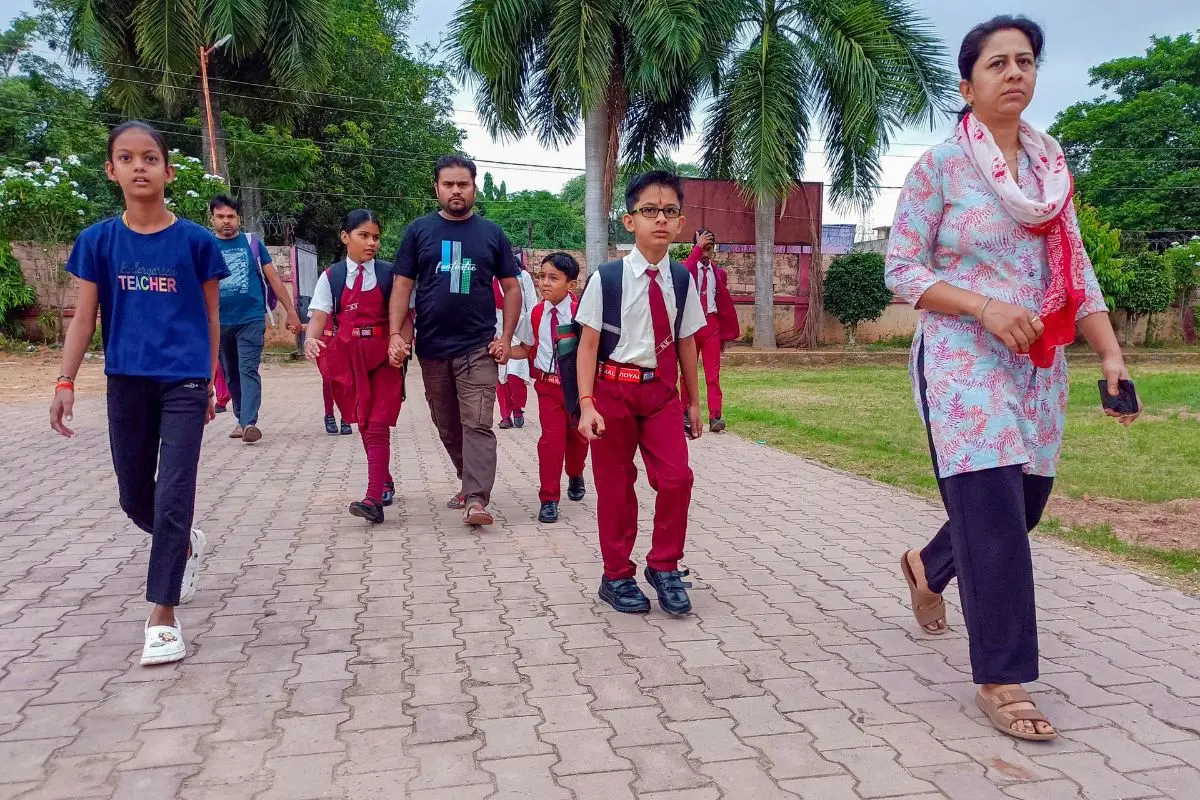
In a quiet but unmistakable shift across urban apartments, small-town homes, and even village courtyards, a new form of education is steadily taking root in India. What was once seen as a fringe concept—homeschooling—has become a choice more and more parents are seriously making for their children. For decades, Indian families placed unquestioning faith in conventional schooling. Morning uniforms, rigid timetables, heavy backpacks, and the predictable rhythms of the academic year were part of the fabric of growing up. But something has changed. The last five years have acted as a catalyst. The pandemic may have opened the first crack in the system, but it is now the growing conviction among educated, observant parents that the system no longer serves the needs of their children which is widening the fissure.
Until recently, parents hesitated to even consider the idea. “What about social skills?” “How will they get into college?” “Is it even legal?” Such concerns kept homeschooling confined to a small circle of brave or desperate families. But today, the questions are changing. More parents are asking, “Why should my child sit through hours of rote learning?” or “Why must education mean stress, not joy?” With access to the internet, online resources, digital classrooms, and peer learning platforms, many parents no longer see traditional schools as the only gateway to quality education.
A new generation of children, too, has adapted easily to this change. For them, homeschooling isn’t a fallback option—it’s a preferred one. The relief of not waking up at 6 am to catch a school bus, the freedom to explore learning at their own pace, and the ability to dig deep into subjects they care about rather than memorise answers for an exam—they see all of this as liberating. Technology plays a key role. With the entire world of knowledge a tap away, learning has moved beyond textbooks. From live online tutorials to open-source science labs, and coding bootcamps to virtual museums, the homeschooled child of 2025 has more access than the average classroom ever offered.
But it isn’t just convenience that is drawing parents to homeschooling. It is dissatisfaction—profound and growing—with what schools have become. As Rebina E.A., Co-Founder of Hash Future School, says, “Most parents today are increasingly turning to homeschooling. Being well-informed and educated, many of them recognise the urgent need for change in our traditional education system. The outdated curriculum, often unchanged for over 40 years, fails to meet the needs of today’s generation.” Her words echo a widespread sentiment. Many schools, especially in India, still operate in a framework built for a different era. Emphasis is placed on uniformity over individuality, memorisation over creativity, and discipline over dialogue. A child enters school at age six full of curiosity and imagination. Within a month, that spark dims. They are expected to conform to a rigid timetable, produce predictable results, and chase grades. What is lost is not just joy—it’s the very essence of learning.
This rigidity often comes at a price. Academic pressure in traditional schools is mounting. Students, some as young as seven or eight, juggle homework, tuition, project deadlines, and weekly tests. They live in a state of constant stress, often with no room for play, reflection, or relaxation. Over time, that pressure can have dangerous consequences. “This overwhelming routine leaves them exhausted, stressed, and often hopeless. In such vulnerable states, children can be easily targeted and trapped by drug mafias and other harmful influences,” Rebina adds. For many parents, homeschooling is a form of protection as much as it is a choice.
Kerala offers a unique lens to observe this phenomenon. Long celebrated for its near-total literacy and robust public schooling, Kerala is now witnessing a surprising trend. A district-level survey in 2024 showed that school enrolment among children aged 6–14 had dropped from 64.5% to 44.5% in just two years. While part of this could be attributed to migration and other social factors, education experts say the growing interest in homeschooling and alternative education models is unmistakable. Families are exploring options like the National Institute of Open Schooling (NIOS), Cambridge IGCSE, and unschooling paths tailored to children’s interests. The state’s high digital penetration—close to 100%—and widespread English proficiency have also made the transition smoother.
Even at the national level, the trend is visible. The Indian Homeschoolers’ Association estimates that more than 25,000 families across the country are now pursuing homeschooling. This is up from just a few thousand before the pandemic. Many of these families are in metros like Bengaluru, Pune, and Delhi, but a growing number are in tier-2 and tier-3 towns. Notably, nearly 40% are returning NRIs, who often struggle to reconcile global education standards with what’s offered in traditional Indian schools.
Government data, while sparse, supports the trend. The Samagra Shiksha Abhiyan recently reported over 72,000 children across India engaged in home-based education, especially children with special needs. Tamil Nadu tops this list, with over 11,000 home-educated students, followed by Uttar Pradesh and Kerala. These numbers may still be small in percentage terms, but they point to a significant undercurrent of change.
For those who homeschool, the journey is not without its challenges. One of the biggest is time. Homeschooling demands involvement. Parents have to double up as facilitators, curriculum designers, motivators, and sometimes subject experts. This often means one parent—usually the mother—has to give up or scale back professional ambitions. Financial constraints can also arise, especially if curated curriculums, online courses, and educational resources are sourced from private vendors. Moreover, there is constant anxiety about whether they are “doing it right”—whether their children will be academically sound, emotionally balanced, and socially equipped to enter the larger world.
Socialisation is another concern often raised. Children in schools form friendships, learn group dynamics, and experience peer interaction. Homeschoolers, unless part of strong co-learning groups or hobby clubs, can feel isolated. However, most homeschooling families now actively build such ecosystems. Weekly meetups, field trips, theatre groups, science clubs, and community volunteering projects fill in the gaps. In fact, many homeschooled children develop deeper, more meaningful friendships than those forged in school corridors.
Higher education remains a mixed bag. While boards like NIOS and Cambridge IGCSE allow homeschoolers to write exams as private candidates, entry into colleges and universities often depends on performance in these board exams or competitive entrance tests. Some institutions remain sceptical of unconventional backgrounds, though awareness is gradually improving. The silver lining? Many homeschoolers, freed from the monotony of traditional schooling, excel in creative thinking, problem-solving, and independent research—skills increasingly valued in global academic spaces.
But perhaps the most profound shift lies in the mindset. Homeschooling in India today is not an act of rebellion. It is a conscious choice, made by parents who no longer see education as a factory model. It is about giving their children space to breathe, explore, and grow—not just intellectually, but emotionally and ethically. It is about redefining success—not in terms of marks and medals, but confidence, curiosity, and compassion.
This is not to say that traditional schools have no role. They remain vital for many, especially in a country as vast and diverse as India. But what homeschooling does is expand the idea of what education can be. It reminds us that learning need not be confined to classrooms and that children do not all learn the same way, at the same time, or at the same pace. As one parent in Kochi, now homeschooling her two children, puts it: “School taught my kids how to remember. Homeschooling is teaching them how to think.”
In a country where education has long been associated with sacrifice, routine, and competition, homeschooling offers a fresh possibility—one that places joy, freedom, and relevance at the heart of learning. It may not be for everyone, but its rise signals something deeper: a generation of parents and children searching for more meaningful ways to learn, live, and grow. And in doing so, they may just be reinventing the very idea of school.