Türkiye inducts Kizilelma unmanned fighter jet, but how does it compare with its rivals?
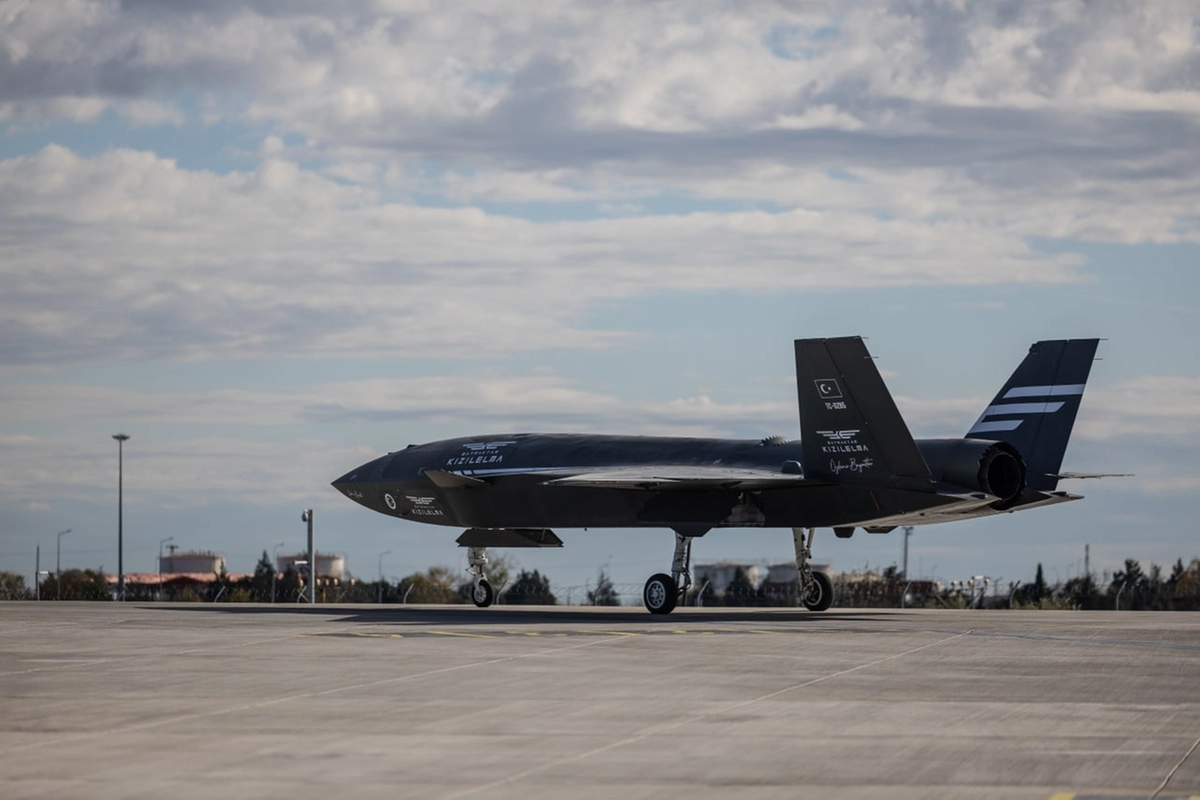
Türkiye has delivered its first three Kizilelma unmanned combat jets to its armed forces, moving one of its most ambitious aviation programmes from development into initial military service. The handover comes as China, Australia and the United States pursue competing aircraft intended to strike targets, support piloted fighters and expand air power without placing a pilot aboard every aircraft.
But the competition needs an important qualification: these aircraft are neither identical nor at the same stage of readiness. China’s GJ-11 has entered service, Australia’s MQ-28 Ghost Bat has demonstrated weapons use and participated in a multinational exercise, and the United States has awarded production contracts for its first Collaborative Combat Aircraft, or CCA.
That makes Kizilelma a significant new entrant -- not an independently-established winner in a global contest whose participants have different missions, procurement timelines and levels of public disclosure.
A milestone for Türkiye
Developed by Baykar, Kizilelma first flew in December 2022, less than four years before the initial deliveries. According to company information reported by Janes, the programme had accumulated 600 test and training sorties by the time of the handover.
The aircraft combines a fighter-like layout with a design emphasis on low observability, manoeuvrability and the ability to operate from short-runway aircraft carriers. Its published performance places the current platform in the high-subsonic category rather than among supersonic fighters.
Janes reported a maximum speed of Mach 0.9, a cruise speed of Mach 0.6 and endurance exceeding three hours. The aircraft has a maximum take-off weight of 8,500 kg and a payload capacity of 1,500 kg.
Its reported mission radius is 500 nautical miles -- approximately 926 km -- with an operational altitude of 25,000 feet and a service ceiling of 40,000 feet. At 14.5 metres long, with a 10-metre wingspan, it is a substantial combat aircraft rather than a small expendable drone.
However, the initial delivery leaves some operational questions unanswered: Baykar declined to identify the specific end user to Janes, although imagery suggested a possible connection to the Turkish Land Forces Command.
The closest international contenders
The most useful comparison separates aircraft already inducted from those undergoing experimentation or moving into production; a contract award, a successful test and operational service are different milestones.
China’s GJ-11: Strike first
China’s GJ-11 is the clearest comparator among the foreign aircraft for which service entry has been publicly announced. The People’s Liberation Army Air Force said it entered service in November 2025, according to Janes.
Unlike Kizilelma’s fighter-like configuration, the GJ-11 uses a tailless, blended-wing design. Footage broadcast by China Central Television on November 9, 2026, showed two internal weapons bays, confirming a configuration previously displayed in a model.
Chinese state television described its mission set as including air-to-surface strikes and suppression of enemy air defences. These remain Chinese official descriptions of capability, rather than independently verified evidence of combat performance.
The same footage showed mission planning involving the GJ-11 working with J-16 fighters and, separately, J-20 stealth fighters -- evidence of China’s emphasis on cooperation between crewed and uncrewed aircraft.
The distinction is therefore one of emphasis: the public description of Kizilelma highlights manoeuvrability and short-runway carrier compatibility, while the latest detailed reporting on the GJ-11 stresses low-observable strike, internal weapons carriage and fighter teaming.
There is insufficient comparable public information in these reports to rank their stealth, electronic warfare performance or survivability against modern air defences.
Ghost Bat: Teamwork over labels
Australia’s Boeing-developed MQ-28 Ghost Bat offers a different benchmark: demonstrated progress in collaborative operations, rather than simply an induction announcement.
Reuters reported in July that Ghost Bat had participated in a US-led multinational military exercise earlier that month, following a live-fire test against an aerial target in December 2025. Boeing said it had conducted more than 100 test flights.
Boeing presented a working aircraft at the Farnborough Airshow, while several competitors displayed models—an indication of physical programme maturity, although not proof of operational superiority.
The comparison with Kizilelma is consequently more balanced than a simple race to announce service entry suggests: Türkiye has reported its first military deliveries, while Australia’s programme has publicly demonstrated weapons testing and participation in a multinational operating environment.
Neither milestone alone establishes which aircraft would perform better in combat, and Reuters’ July reporting still described Ghost Bat as part of a developing production and capability effort.
America’s advantage: Scale and integration
The United States is pursuing a broader force-building programme through its Collaborative Combat Aircraft initiative, which pairs semi-autonomous aircraft with piloted fighters.
On June 17, the US Air Force awarded production contracts to General Atomics for the FQ-42 and Anduril for the FQ-44, although it did not disclose the contracts’ cost or aircraft quantities.
The service intends ultimately to field approximately 1,000 combat-capable CCAs, with a nearer-term objective of procuring more than 150 by the end of the decade. Those are programme ambitions, not a count of aircraft already operational.
Another important feature is the separation of mission-autonomy software procurement from the aircraft themselves. Reuters reported that the Air Force was deliberately buying the airframe and autonomy capability separately, potentially allowing software competition and upgrades without tying every improvement to one aircraft manufacturer.
Against that background, Kizilelma’s first three deliveries represent an early fielding milestone, while the American programme’s publicly stated ambition centres on much larger numbers and integration across a wider combat force.
Cost comparisons remain premature: Reuters reported that the US Air Force expected its CCA aircraft to cost one-third or less of an F-35, but the reporting used here does not establish a directly comparable Kizilelma acquisition price.
Europe remains further behind
Britain’s emerging programme illustrates why not every aircraft described as a rival belongs in a list of already fielded systems.
BAE Systems unveiled its Brontanax unmanned aircraft at Farnborough in July, with first flight planned for 2027 and possible service entry by 2030. Britain’s associated sovereign CCA programme is called Storm Fighter.
Reuters also reported that Airbus expected its U760 Ravenstorm to become operational in the early 2030s, while working on nearer-term experimentation through the U740 Valkyrie.
These are relevant future competitors, but the reported schedules place them behind Kizilelma’s November delivery milestone -- not necessarily behind it in every technical characteristic.
Carrier ambitions need qualification
One of Kizilelma’s most distinctive advertised features is its ability to operate from short-runway aircraft carriers, potentially giving Türkiye a different route to sea-based combat aviation.
But a design feature should not be confused with an established operational capability: the Janes induction report identifies carrier compatibility as part of the aircraft’s design, without documenting routine operational deployment from a ship.
That distinction is particularly important because Baykar’s separate TB3 drone has already conducted autonomous operations and weapons-release trials from TCG Anadolu; those achievements should not automatically be attributed to Kizilelma.
What the milestone really establishes
Baykar portrayed the delivery as a global first for the operational induction of an unmanned fighter jet, but Janes explicitly attributed that description to the manufacturer.
The broader claim requires caution because China’s GJ-11 entered service earlier, while the aircraft differ in design and publicly described mission. Türkiye’s milestone is therefore best described precisely: its first three Kizilelma unmanned combat jets have been delivered, rather than Türkiye having conclusively beaten every country to operational unmanned combat aviation.
For now, the evidence supports different strengths rather than an overall ranking: Kizilelma has achieved initial delivery, the GJ-11 combines announced service entry with an internally armed strike design, Ghost Bat has demonstrated weapons and exercise milestones, and the American programmes have moved into production with ambitious procurement targets.
The next meaningful comparison will depend on what follows those milestones -- sustained operational use, demonstrated mission performance and delivery at scale -- rather than on the label attached to the aircraft.