OPINIONWhy not an Indian Google or a ChatGPT?
Indian Rupee declines further and further. This is a headline we have seen almost every day for many years, and it has become a boring routine. Most of us have long stopped reading beyond that headline, and even newspapers have long buried it on back pages or in single columns. According to media textbooks, only a rarity, like a man biting a dog, makes news; otherwise, it does not. So, only an unlikely event, such as the rupee appreciating against the US dollar, may now make news.
Ever since India gained independence, the country has made significant gains, as well as faced equally significant setbacks, in almost every field during the past eight decades. But the only field where it has witnessed an almost uninterrupted decline is the rupee's value against the US dollar. In 1947, one US dollar was equivalent to Rs 3.30. By 1978, it had risen to 7.91. Today it stands at around Rs 94 and could even touch the Rs 100 mark in the near future.
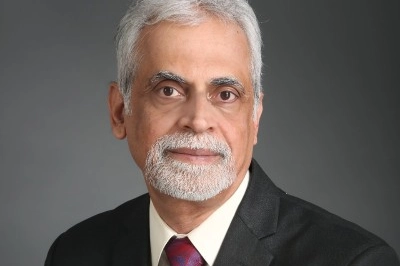
So accustomed to this phenomenon, many may well ask: So what? But not among those is Dr Suresh Namboothiri, a former COO of the Tata Group. A product development specialist and educator, Dr Namboothiri writes in his recent book, “Bharatmata Deserves Better” (Notion Press, 2026): “Every currency fluctuates. But the Indian Rupee falls. This isn’t mere economic trivia; it's a visceral wound inflicted on 145 crore souls, inflating the cost of dreams and deflating the dignity of a nation alike”.
For Namboothiri, the relentless fall of our currency is the most telling proof of everything wrong with India. It hurts ordinary people through inflation, drives up the import bill, pushes small enterprises to bankruptcy, and erodes real wages. Citing countries like Japan, China or the USA, which strive to fortify their national currencies, he argues that devaluation corrodes not merely wallets but the fabric of national life. Namboothiri recalls the celebrations he witnessed in 1994 at the Sanyo Electric Company in Japan, when the dollar fell below 100 Japanese yen for the first time in history! “The strength of a country’s currency is the world’s assessment of its knowledge, skills, abilities, innovation power, technological sophistication and disciplined intelligence of its people”, he writes. A weak currency mirrors a nation’s collective failures, especially its inability to create anything significantly valuable that the world craves.
Consider the frenzy that accompanied the launch of the iPhone 17 Series in many Indian cities in September 2025. Hundreds of buyers, carrying over Rs 1.45 lakh, camped overnight beside the retail shops and lined up before sunrise. As the 8 am launch approached, buyers pushed and shoved each other, and even fistfights erupted over line-cutting, prompting police and security staff to intervene. The unusual “Cosmic Orange craze” was triggered largely by fear of an instant sellout of the series’ new colour variant.
Namboothiri uses this spectacle to illustrate India’s disturbing consumerist paradox. Despite being an extraordinary feat of human ingenuity and design, an iPhone contains raw materials worth less than Rs 100. Brian Merchant, an American technology journalist, demonstrated this in 2017 by dismantling an iPhone in 2017 and analysing its constituent materials - copper, aluminium, gold, silver, rare earth and other materials- which were worth less than 1 US Dollar.
For Namboothiri, this is symptomatic of an India that consumes but produces very little of global value. This is despite India’s enormous strengths: 5000 years of civilisational history, an ancient repository of knowledge; the world’s sixth-largest economy; vast domestic market with 20% of the global population; home for 60% of the global youth, the third-largest army of science and technology professionals, 28% of the global STEM talent pool, and 23% of the world’s software engineers.
We take immense pride in our IITs and their brilliant alums, many of whom occupy leadership positions in global IT giants. They are household names: Sundar Pichai, CEO of Google; Arvind Krishna, Chairman of IBM; Nikesh Arora, Chairman of Palo Alto Networks; Trivandrum-born Raj Subramaniam, CEO of FedEx; Aravind Srinivas, Co-founder of Perplexity; and Narayana Murthy, Co-founder and CEO of Infosys. India’s 23 IITs collectively produce over 25000 graduates annually.
Yet, Namboothiri points out a stunning paradox. Over the past 45 years, more than 2000 breakthroughs in computer science and information technology have transformed how we live and work. How many can India, particularly its prestigious IIT system, claim as original inventions? Almost none, he argues, describing the IIT ecosystem as a “desert of breakthrough inventions”, save for a few sparks.
His inventory of technological shortcomings is sobering. Despite millions of Indian students (including those from non-IIT institutions) studying operating system design, India has no globally recognised OS of its own. So is the case with databases, cloud platforms , AI platforms or even a social media platform despite having millions of internet users. Despite being a country of software professionals, we don't even have software which has significant global demand.
This failure, Namboothiri argues, cannot be attributed to a shortage of funds or infrastructure. IIT Bombay’s yearly salary bill alone is Rs 853 crores, “enough to build four medical colleges”. IIT Kanpur had advanced IBM workstations as early as 1965. IIT Madras established a computer centre in 1973 and introduced its B.Tech in Computer Science in 1983.
Many revolutionary inventions originated in bedrooms or garages, often as hobbies pursued by college dropouts or students during their vacations. “The world’s most transformative technologies did not come from massive funding, glossy buildings or 1000-crore budgets. They came from individuals with curiosity, persistence and the disposition to think differently”.
Namboothiri extends his critique chillingly even to India’s defence sector. The Union government frequently claims that India has transitioned in recent years from being one of the world’s largest net arms importers to a defence manufacturing and exporting hub. Indigenous defence production has reached a record Rs 1.78 lakh crore, while exports soared from Rs 686 crore a decade ago to cross a record Rs 38400 crore in 2025-26.
Yet Namboothiri argues that several weapon systems proudly presented as indigenous are substantially derived from foreign designs. His list includes missiles, tanks, destroyers, frigates, submarines, anti-aircraft guns, and an aircraft carrier. Of the 20 systems he examines, 14 are linked to Russian originals, albeit with modifications and enhanced capabilities. Examples include the following, alongside their original Russian versions (in brackets), imported at high prices.
| Indian Name | Original Russian version |
| Sudarshan Chakra missile | S-400 Triumf Missile System |
| BrahMos missile | P-800 Oniks Missile System |
| Bhishma tank | T-905 Tank |
| INS Vikramaditya aircraft carrier | Admiral Gorshkov |
| Sindhughosh-class submarine | Kilo-class |
| Rajput-class destroyer | Kashin-class |
Every nation imports some weapons, including the US, Israel and Germany. But Namboothiri draws a distinction: they import what they choose not to manufacture, whereas India imports what it cannot. He laments that this shows India is still at the mercy of foreign technology to defend our motherland, despite the big talk of “Atmanirbharta”. From its first war since independence, India has fought with imported weapons and remains among the world’s largest arms importers.
Why is India in this unenviable position? Namboothiri holds that its prime culprit is our higher education system, inherited from the colonial era. His arguments often appear highly emotional and polemical. The reasons seem to be his pride in India’s innate strengths, his abiding passion to see the country assume its deserved role in the global arena, and his impatience to overcome structural obstacles. He has every right to be impatient and believe that obstacles can be overcome. For, as a specialist in product development, he is credited with successfully developing as many as 160 world-class products during his two-decade-long technocrat career.
Namboothiri, an M.Tech in Tool Engineering and Design, worked with the BPL and then the Tatas from 1987 to 2007. This book also contains the remarkable story of BPL, an electronics and appliance company launched in Palakkad in 1963 by a London-returned Malayali who was far ahead of his time- TPG Nambiar. The era was the heyday of India’s licence-raj; the region was Kerala, known even today as an industry-hostile state, and electronics was still too new even to the world. Yet by the 1990s, BPL had risen as the most popular Indian brand in consumer electronics, offering almost all the popular electronic gadgets of the time, all developed indigenously for the first time in India. Namboothiri recalls his boss at BPL, KPR Nambiar, “the doyen of indigenisation and a true patriot”, who inspired him to involve himself fully in developing world-class products. During the one decade at BPL, Namboothiri led the development of a wide range of products, from CD and DVD players, EPABX, computer and TV monitors to cordless phones. In 1998, he joined the TATA Group to help develop India’s first indigenous passenger car, Indica. At the Tatas, Namboothiri was credited with developing products ranging from Titan sports watches to the roof and floor assemblies of the Toyota Innova.
After two decades in the corporate world, he left to investigate India’s capability crisis. He visited over 280 educational institutions across India and met over 37000 stakeholders to unearth the causes and discover the cure. The book is the outcome of that exercise to create “ a higher education revolution, AI-irreplaceable competencies and national survival”.
Drawing on Bloom’s Taxonomy, the framework for classifying learning objectives, Namboothiri argues that India’s higher education system has failed to develop the full range of human capabilities. Developed by the American educationist Benjamin Bloom in 1956 and subsequently revised, the framework encompasses three domains of learning: cognitive, affective, and psychomotor. An ethnographic survey covering 22,000 graduates and final-year students across India, conducted by Namboothiri’s team, found poor performance in all three domains. Except for one of Bloom’s Graduate Attributes - remembering- in the Cognitive domain, the performance was pathetic in all others: creating, evaluating, analysing, applying and understanding. Another focused study was conducted for inter-domain assessment across final-year engineering students from four of “India’s most resource-rich educational” regions, including Kerala. It showed even poorer performance in the other two domains: the affective domain, which focuses on emotional growth, values, and attitudes, and the psychomotor domain, which focuses on physical movement, motor coordination, and skill acquisition.
Namboothiri describes the outcome as a higher education system with a ”Head without Heart and Hand”. Students are trained to remember and reproduce information but are incapable of creative or critical thinking. They can only copy but not innovate or invent. No wonder India has not produced a Google, an Apple or a Microsoft.
The advent of Generative AI makes this failure particularly alarming. Almost all the capabilities our students gain from our system are trapped at the lowest cognitive level and are readily replaceable by AI, if not already. The survey showed that. most graduates lacked AI-irreplaceable competencies such as embodied intelligence, relational mastery, experimental innovation, and others.
The book’s last four chapters elaborate on Namboothiri’s proposed remedies. Though often sounding esoteric and mystical with frequent invocation of his village temple goddess, Namboothiri draws on both India’s ancient wisdom and modern technologies. Invoking the ancient principle of “Sthira Sukham Asanam” from Patanjali’s Yoga Sutra, Namboothiri advocates learning that is rigorous yet joyful, disciplined yet liberating. He has developed faculty development programmes focused on AI-enabled pedagogical excellence and “Vigyana”, an AI platform intended to facilitate interdisciplinary and collaborative research.
Namboothiri’s book is polemical, and some of its sweeping conclusions invite debate. But its central question deserves serious attention: How can a country with India's extraordinary human resources, intellectual traditions and technological infrastructure remain so dependent on others for innovation? The falling rupee may be the most visible symptom. The deeper crisis is India's failure to convert its enormous potential into original knowledge, inventions and globally valuable products.