SPECIALSTrump's veto threats may not shield him from Congressional scrutiny
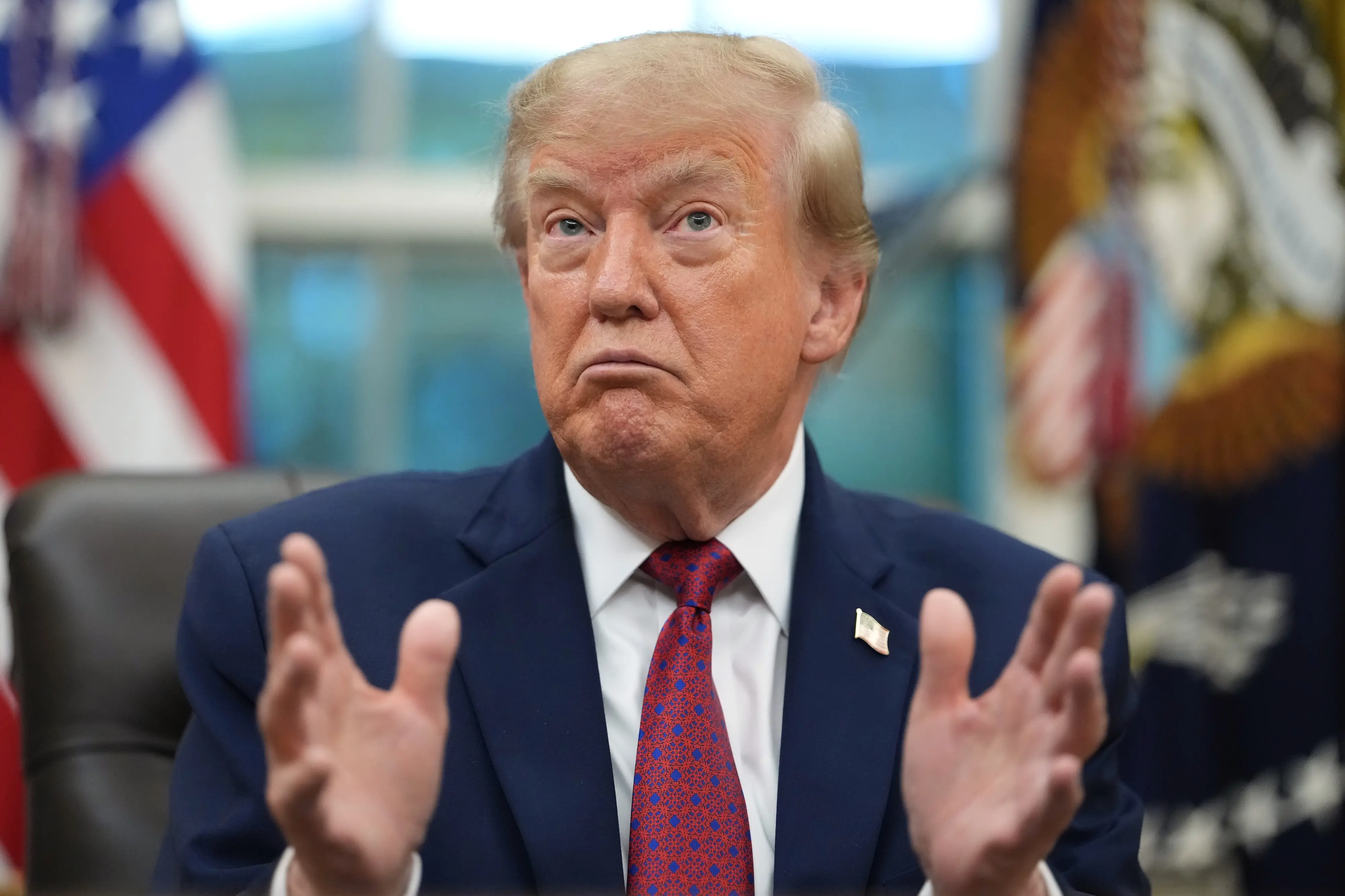
Donald Trump has spent much of his political life treating the institutions of the American republic as though they were extensions of his personal estate. The presidency, the Justice Department, the intelligence establishment and even the machinery of federal law enforcement have frequently been subjected to the same peculiar test of loyalty; whether they serve the public interest or the interests of Donald Trump. The mid-term verdict though has now delivered a rather inconvenient answer to his political ambitions.
The Democrats have swept both chambers of Congress, wresting control of the House and Senate from the Republicans in an electoral repudiation that cannot be dismissed as a localised inconvenience or blamed on a few insufficiently obedient candidates. Trump, naturally, has responded in the manner of a proprietor whose shareholders have discovered that the accounts do not quite add up. He has distanced himself from defeated candidates and promised to become Mr Veto! The irony is too stark to miss. A man who has spent years demanding almost unqualified executive authority will now discover the constitutional inconvenience of having to govern alongside a legislature that does not consider him its chairman.
The real significance of this electoral upheaval, however, lies not in the prospect of legislative paralysis but in the investigations that a Democratic Congress can now pursue. The presidency may be occupied by Trump until January 2029, but the House and Senate will no longer be available as an indulgent audience for his performances. Congressional committees will have the authority to subpoena witnesses, demand documents, investigate executive conduct and, where evidence warrants it, refer matters for criminal investigation. The question is whether they will exercise these powers with sufficient determination to establish what has happened behind the White House's increasingly elaborate theatre of self-exoneration.
The war in West Asia could prove to be one of the most consequential casualties of Trump's electoral miscalculation. The conflict with Iran, the disruption of shipping through the Strait of Hormuz and the economic consequences of rising energy prices have become significant political liabilities. A President who appears unwilling to reconsider the ramifications of his military decisions will now have to contend with a Congress considerably less inclined to indulge them. Democratic control does not give Congress the authority to command the President to withdraw American forces, but it does provide substantial leverage through appropriations, military oversight and the War Powers Resolution.
The administration's military decisions, its expenditure of public money and the legal basis for continued operations could all face considerably greater scrutiny. And the changing arithmetic in Washington could prove consequential for Israel too. The bipartisan consensus underpinning American support for them has come under increasing strain, and a Democratic Congress could subject weapons transfers and military assistance to greater scrutiny.
Tehran cannot ignore the changed political circumstances either. Trump might find negotiations an attractive exit from an increasingly expensive conflict, although the temptation to demonstrate presidential authority through further military action cannot be discounted. The danger is that a war already fraught with uncertainty could very well become entangled in the President's domestic political predicament.
The Epstein files ought to be near the top of the Democrats' agenda. Jeffrey Epstein was no obscure predator with an unfortunate penchant for influential acquaintances. He operated within an extraordinary network of wealth, power and privilege, and the public deserves to know who knew what, when they knew it and whether anyone was afforded protection because of their connections. This makes Kash Patel's stewardship of the FBI particularly consequential. A man who has spent years cultivating his credentials as a Trump loyalist now heads an agency whose investigations could embarrass the very President who appointed him. His combative congressional appearances have hardly inspired confidence. The FBI is not a presidential concierge service, and congressional oversight is not an invitation to audition for a television wrestling match. If Patel has nothing to conceal, he should have little difficulty producing the records and accounting for the evidence. The truth, after all, does not require a protective detail.
Yet the Epstein affair is not the only scandal warranting scrutiny. The suspicious trading surrounding the Iran war, with substantial oil futures positions reportedly taken shortly before major announcements on military action and ceasefires, demands an equally rigorous investigation. The Commodity Futures Trading Commission has confirmed that it is examining the trades. The questions are obvious: who placed them, who profited, and did anyone with privileged access to government decisions pass information to those investors? It would be premature to pronounce anyone guilty of insider trading, but the extraordinary timing is hardly something to wave away as market clairvoyance. If confidential information about war and peace was converted into private profit, it would represent a particularly egregious abuse of public office. Ordinary Americans should not have to pay for a war through their taxes and fuel bills while politically connected insiders potentially profit from knowing when it might pause. The Situation Room, after all, is not a trading terminal.
The new Congress must therefore resist the temptation to turn oversight into a succession of theatrical hearings. Kash Patel may be perfectly capable of treating hostile questioning as an opportunity to audition for another television appearance. That does not make him immune to documentary scrutiny. Committees should demand original records, obtain sworn depositions, protect whistleblowers and establish precisely what was withheld, altered or disclosed. The Justice Department Inspector General's audit of compliance with the Epstein Files Transparency Act offers an important avenue, but independent examination must not become a substitute for congressional oversight. There are constitutional limits, of course. Congress cannot simply vote Patel out of office, nor can it compel the President to dismiss him. It can investigate, formally condemn misconduct, pursue contempt proceedings for defiance of lawful subpoenas and, in sufficiently serious circumstances, initiate impeachment proceedings against federal civil officers. The Senate's two-thirds requirement for conviction makes removal difficult, but difficulty is hardly an argument for institutional passivity.
The Democrats have been handed something more consequential than control of two legislative chambers. They have been given an opportunity to demonstrate that the American system of checks and balances is not an ornamental feature of the Constitution, brought out for ceremonial occasions and put away when the occupant of the White House becomes inconveniently powerful. They must also resist the temptation to use investigations merely as instruments of partisan revenge. Every allegation must be tested against evidence, every witness must receive due process and every finding must withstand scrutiny irrespective of whose political fortunes it damages. Trump may yet spend the next two years behaving as though an electoral defeat were an administrative misunderstanding. He may issue executive orders, threaten vetoes, attack investigators and describe every subpoena as another conspiracy against his person. But the Constitution does not confer upon the President a proprietary interest in the republic, and the FBI is not a private security agency for the incumbent.
The real question confronting America is therefore not whether Trump will become a lame duck. It is whether the institutions he has so assiduously attempted to bend will finally demonstrate that they possess a spine. The country does not need another round of presidential indignation or congressional theatre. It needs answers, documentary evidence and accountability. If the Democrats fail to deliver those, the mid-term victory will have been little more than an electoral change of management. And if they succeed, Donald Trump may discover that the most inconvenient thing about the American Constitution is that it was never written to guarantee him the last word.
(The author is a National Award winner for Best Narration and an independent political analyst. Views expressed are personal.)