More than Ink: What Tattoos say about characters in Indian films
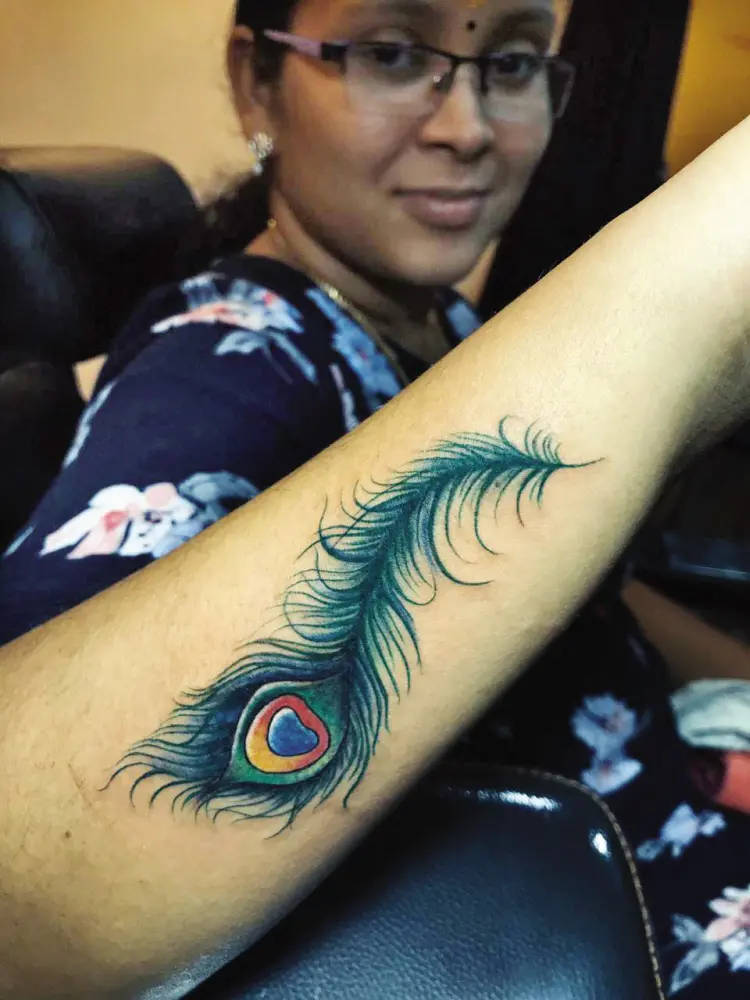
The tattoo on any exposed part of the body, male or female, introduces intrigue in the mind of the average viewer. It can be a design, a name, a symbol, a snake, anything that signifies something about the person wearing it. In fact, a tattoo is not worn. It is a permanent design or mark made on the skin by inserting chemically manufactured colour into the pigment, the second layer, called the dermis, through a very painful process if done organically and not done cosmetically, for a given purpose, removable after its function is over. Ancient Egyptians, indigenous Polynesians, Greeks, Romans, and Siberian nomads all used body markings, mostly, as a mark of identification of the person either from a name, or a design linked to that person and so on.
The word comes from the Polynesian word tatau, meaning "to strike" or "to mark". Amusingly, when I was little, my mother appointed a part-time maid. When she was asked her name, she at once took out her forearm from under her sari pallu and her name, “Lakshmi” was inked on the fore-arm in Devanagari script. In their community, most boys and girls were illiterate as they never went to school. So, their parents had their names inked on their forearms. This was permanent and would remain till they were cremated. This, I was told, was common practice among people belonging to very low castes in the caste hierarchy and also among adivasis and tribals who did not know how to write. Later, with evolution and cultural progress, the women had ornaments painted on their necks, faces, foreheads, arms, forearms to beautify themselves. Over time, this became a cultural practice among these people, specially girls and women.
So, tattoos in the form of names defined the beginning of the tattoo art in history. Today, it is a fashion statement and can be chemically injected for permanence or simply painted on with durable colours which could be removed when the client wishes to have it removed.
Indian cinema covering Bollywood and cinema from the Southern states are known to use the tattoo for the major characters in many of their films. Tattoos on screen characters have evolved from simple rural identifiers into sophisticated storytelling tools. While both Bollywood and Southern cinema (Tamil, Telugu, Malayalam, and Kannada) use tattoos to instantly communicate a character's persona, their execution often reflects distinct cultural nuances and cinematic styles.
Today, tattoos used by male characters in both Bollywood films and in Southern films are used mainly either to underline their criminal identity or to establish the criminal gang they belong to. These tattoos mark them out either as independent characters who do not care about social norms in their individual capacity or belong to a particular criminal gang the membership of which is underscored by the tattoo he wears on his body, often, the forearm or the upper arm. A good example is the huge tattoo Sanjay Dutt wore on his upper arm in the film Agneepath (second one) in which he plays the brutal villain Kancha Cheena. He has tattoos on his body in real life too but chooses not to display them in his film roles.
In Baahubali: The Beginning (2015), Prabhas (Shivudu) paints an intricate tattoo on a sleeping Tamannaah (Avanthika). This act is not just romantic; it serves as a metaphorical awakening of her hidden, softer identity and bridges their fates together. Unlike the commonly used logic of the tattoo in films, this expression of the hero drawing the tattoo on a sleeping lady-love signifies love quite subtly and without dialogue or any physical intimacy.
In the film Shakti – The Power (2002) Aishwarya Rai who has no role in the film, performs an item number alongwith Shahrukh Khan but to make her look more sexy and physically charming, she was made to sport a tattoo right along her midriff like an ornamental belt. The film was not commercially successful but this item number surely mesmerized the audience. In Rudaali, Dimple Kapadia decorates her face heavily with tattoos as she belongs to the low-caste tribe of professional mourners who cry over the dead to make a living.
Directors and costume designers in the South heavily utilize tattoos to instantly communicate a character's background, mindset, or loyalties without needing dialogue. Which means that a body tattoo, if created with imagination and artistry to fit into the script without the use of dialogue permits the tattoo to do the “talking.”
An excellent example of the tattoo doing the “talking” is the film 24 – Time Story (2024) a fine blend of a sci-fi and time-travel genre. The film features Suriya in three roles and two of them as identical twins. It is as the very villainous twin Athreya in which Suriya steals the hearts of the audience. Athreya tries to steal a special time-travel watch from his identical twin Dr. Sethuraman and this defines the beginning of this very adventurous story. Athreya wears a prominent eagle tattoo on his forearm. Firstly, the tattoo functions as an identification mark for the audience to recognize who is who as both roles are performed by the same actor. Secondly, it invests the character of Athreya with the menacing look the character demands. Thirdly, it invests Athreya with the dimension of remaining evil even 26 years later when he is a paraplegic and wants to go back in time after getting the magical watch.
In the film, the prominent clock tattoo is worn by the film's ruthless antagonist, Athreya. The tattoo is an intricate, stylized mechanical clock and gear design inked boldly on Athreya's forearm/hand. It features Roman numerals, clock hands, and complex internal gear machinery fading into his skin. Athreya is a man driven entirely by greed and an obsessive desire to control time. The clock tattoo serves as a permanent physical manifestation of his fixation on the time-travel watch (Project 24) invented by his twin brother, Sethuraman.
Ghajini (2005) made first in Tamil (later dubbed in Telugu) with Suriya essaying the role of the hero in the film later essayed by Amir Khan in the Hindi remake (2008) uses the tattoo as a major character and a metaphor in the film. Sanjay, the hero, runs a massive corporate mobile company but has a rare illness. He suffers from chronic anteretrogade amnesia, a tough name for a sickness in which the patient’s memory does not remember anything that happened say 15 minutes ago. So, he lives alone in a big apartment with a large mirror. When he bares his body, we find his torso filled completely with tattoos of phone numbers, names, timings, facts which happened 15 minutes ago written in reverse so that he can read them straight in the mirror reflection. But this tattoo-reflection plays a marginal role because the story changes tracks with Sanjay trying to nab a trafficker in young girls and the villain keeps trying to capture him capitalizing on his limited memory. The main story of anteretrogade amnesia gets somewhat sidelined. But both versions of Ghajini were super duper hits so who are we to complain? However, the film did offer the audience a combination of a tragic love story, a hero with anteretrogade amnesia and the illness as the killing excuse for the villain to resort to.
In intense action thrillers such as the character of KK played by Chiyaan Vikram in Kadaram Kondan, the prominent tattoo often represents a physical manifestation of a lifelong promise or a blood feud. The tattoo he sports in the film is not only rugged and extensive but also sports dark geometric tribal sleeves wrapping down his arms. The character, KK is an enigmatic, highly trained rogue ex-agent with a mysterious background. In Tamil action cinema, this level of intense, non-traditional tribal tattooing signifies an outsider who operates completely on his own code. The wrapping patterns act like an armour, a kind of protective weapon, imagined by the wearer, perhaps, which visualises a character who has calloused himself against physical pain and emotional attachments to survive a lawless underworld.
In some films, both from Bollywood and the South, religious figures are also common perhaps to symbolize the religious fanaticism of a violent villain or even perhaps a fighting hero. Rather than just signaling righteousness, a Shiva or Trishul tattoo on a volatile character usually represents destruction, finality, and an absolute lack of fear. The character views himself not as a common criminal, but as an executioner delivering absolute, wrathful justice. It creates a psychological layer: they answer only to a higher cosmic power, making them incredibly dangerous. Ajay Devgn sported an iconic Shiva tattoo and trident in Singham and Golmaal 3. But he was a hero in both films.
In period dramas or films rooted in rural landscapes (like Pushpa or Asuran), you will see traditional South Indian body art called Pachakuthu. Historically practiced by various local tribes and communities, these rustic, green-inked, geometric lines or dots on the hands, forehead, or neck ground the characters in authentic regional realism rather than modern urban fashion. One point to be noted: in all Indian films, the tattoo is a gender-specific signature. Female characters are rarely shown sporting a tattoo except as a titillating factor for the camera first and the audience later. Sometimes, a tattoo used as a birth-mark on an infant lost in infancy becomes a point of recognition when the infant becomes an adult and his parents/family recognizes him. This used to be common in films till the 1970s and 1980s but is no longer common.
However, while researching this piece, this critic found that film critics and scholars neither notice nor write or even mention anything about the tattoos some characters wear in some films as a mark of the kind of character they portray, their significance in the film and the utlility of the tattoo for the character and other characters pitted against him. Isn’t this strange?