We, The People of India, Owe it to Nehru
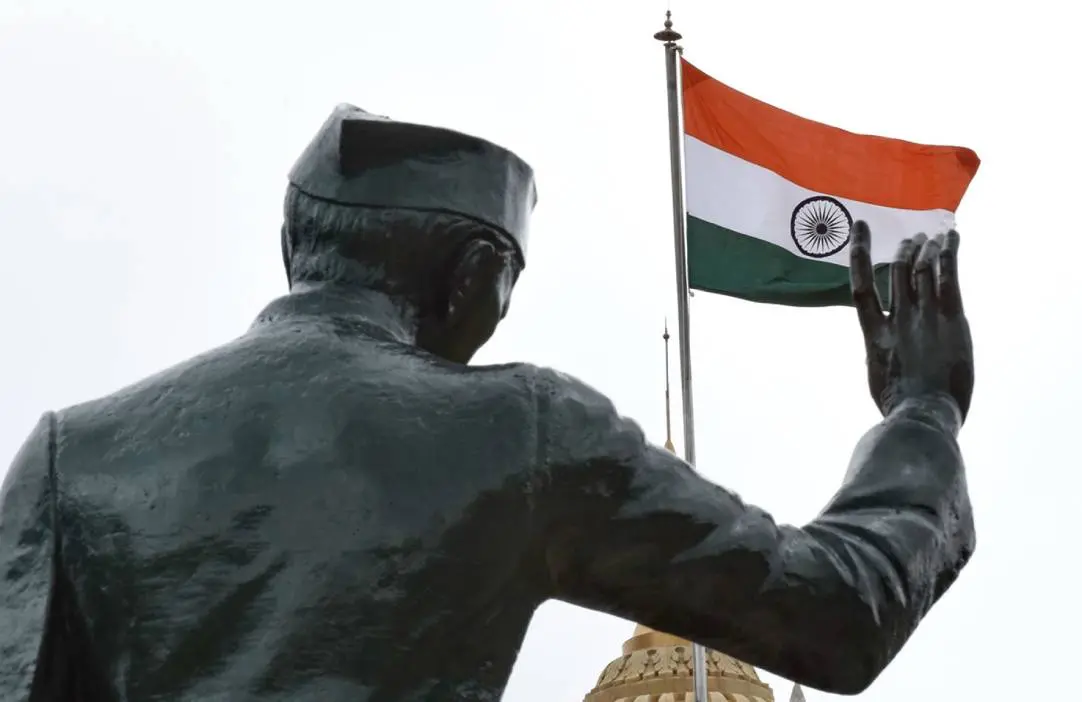
For the first seventeen years of India's independence, the paradox-ridden Jawaharlal Nehru - a moody, idealist intellectual who felt an almost mystical empathy with the toiling peasant masses; an aristocrat, accustomed to privilege, who had passionate socialist convictions; an Anglicized product of Harrow and Cambridge who spent over ten years in British jails; an agnostic radical who became an unlikely protégé of the saintly Mahatma Gandhi - was India. When I was researching for my 2003 biography Nehru: The Invention of India, a senior Indian official told me, with conviction and pride, of his colleagues in the Indian ruling establishment: 'We are all Nehruvians.'
Twenty years after that remark, as we commemorate the 134th birth anniversary of Jawaharlal Nehru, there are scarcely any Nehruvians in office. Today the ruling BJP and its followers lose no opportunity to denigrate Nehru, especially on social media, accusing him of every conceivable sin of both commission and omission. A concerted effort is being made to excise the first and longest serving prime minister of India from our collective consciousness. This is being done, of course, by rewriting history - which is to say, by concocting falsehoods - and eliminating Nehru from the glorious array of freedom fighters who strove tirelessly for a democratic, pluralist and egalitarian India. Indeed, having reduced him to a footnote in his own prime ministerial residence, his detractors can, perhaps, heave a sigh of relief: They think their mission is nearly complete - Indians are forgetting Nehru.
Except they are not, and never will. To vilify Nehru is to throw pebbles at a mountain. Nobody can even begin to dent the scale of his contributions to India. The truth is that Jawaharlal's extraordinary life and career is part of the inheritance of every Indian. His impact on India is too great not to be re-examined periodically. His legacy is ours, whether we agree with everything he stood for or not. What we are today, both for good and for ill, we owe in great measure to one man. That is why his story is not simply history.
'World's largest democracy' remains the sobriquet of which all Indians are proud. India became that under the tutelage of a man so unquestionably its leader - so unchallengeably the personification of its very freedom - that all he needed to do if anyone opposed him was to threaten to resign. Nehru usually got his way. Yet these threats were not bouts of petulance: Jawaharlal often used them to steer his party back on track when he felt the Congress was drifting from its ideological moorings. This happened even before the first general elections, when P.D. Tandon's ascendance in the Congress - and the party's rightward shift - disconcerted Nehru. Then again in 1958, when he publicly expressed his desire to retire, wanting to 'free myself from this daily burden and think of myself as an individual citizen of India and not as Prime Minister.' In the event, he settled for a long holiday in his beloved mountains instead, but not before expressing at length his disillusionment with his party members and Indian politics. Had Nehru been allowed to resign, he would've set a democratic precedent around the developing world, none of whose first independence leaders had ever resigned voluntarily, nor would till the 1970s.
As prime minister, Jawaharlal Nehru nurtured the country's infant democratic institutions, forever looking upon himself as simply the first among equals. He paid deference to the country's ceremonial presidency and even to its largely otiose vice-presidency, never letting the public forget that these notables outranked him in protocol terms. The mere presence of a Constitution, in Nehru's view, was not sufficient to sustain a republic, which was barren without democratic conventions and procedures. So he wrote fortnightly letters to the chief ministers, explaining his policies and seeking their feedback; built up the Cabinet as a deliberative forum for all matters of importance; sedulously distanced himself from, and respected, the judiciary; and subjected himself and his government to cross-examination in Parliament by the small, fractious but undoubtedly talented Opposition, convinced that a strong Opposition was essential for a vital democracy. In the words of Granville Austin, the redoubtable constitutional scholar, 'After 1950 and Sardar Patel's death, little stood in the way of arbitrary rule by Nehru other than Nehru's liberalism itself.'
Inaugurating democratic institutions and conducting elections at regular intervals was also not enough; democratic values had to be firmly instilled in the people. Nehru's objective was to make Indians worthy of democracy, for he believed that no people, in any part of the world, had a special claim to it: if they were to govern themselves, they ought to rise to the occasion. Like Ambedkar, Nehru too felt, on some level, that democracy in India is largely a 'top dressing' on a largely undemocratic soil. And so he sought, during the three general elections over which he presided, to edify a largely unlettered populace about their indispensable role in democracy; to vote in an election was, in his view, to contribute to the task of nation-building.
By 1957, he had begun regarding elections as educational, calling them 'a university for 37 crore people in India.' As Madhavan K. Palat notes, Jawaharlal 'admitted to functioning like a schoolmaster; and during the third general election, he even apologized to the public for lecturing like a professor.' At the heart of this incessant 'lecturing' lay Nehru's paranoia - which is today unfolding before our eyes - that democracies could easily be diluted just to elections, with politicians sequestering themselves soon after attaining power, away from any accountability to their hapless voters. Jawaharlal considered elections as a means to an end, which was to stimulate meaningful debate in public and elevate sincere, responsible individuals to office; and not as an end unto themselves, for that would degenerate democracy into (to use the phrase the respected V-Dem Institute applies to today's India) an electoral autocracy.
The victorious roar of Bharat Mata ki Jai! - Victory to Mother India! - intrigued Jawaharlal Nehru. And when, long before India's arrival at Independence, huge multitudes greeted him with this rallying call, he would wryly ask them what they meant by it: Who was Bharat Mata? A confused hush would envelop the gathering, only to be shattered by someone hazarding a guess. Bharat Mata was 'the dharti, the good earth of India.' What earth? Jawaharlal would retort, the earth only of their village, or that of the entire district or province, or that of the whole of India? The bewildered silence would return, until, impatiently, someone would ask the questioner to expatiate. As Jawaharlal writes in The Discovery of India: 'I would ... explain that India was all this that they had thought, but it was much more. The mountains and the rivers of India, and the forests and the broad fields, which gave us food, were all dear to us, but what counted ultimately were the people of India, people like them and me, who were spread out all over this vast land. Bharat Mata, Mother India, was essentially these millions of people, and victory to her meant victory to these people.'
To be decolonized, Nehru felt, was to realize that we, the people of India, in all our bedazzling diversity, are the sole custodians of our nation, the lone arbiters of India's destiny. In building a nation where the citizens are the wellspring of political authority, and in repeatedly reminding them of this fact, Jawaharlal sought to create an India that safeguards the common space available to each identity, an India that remains safe for diversity. That was Jawaharlal Nehru's vision; and nearly six decades after his passing, hundreds of millions of Indians continue taking pride in those values he embodied. That is his vindication.