Donald Trump and the discipline of Indiscipline
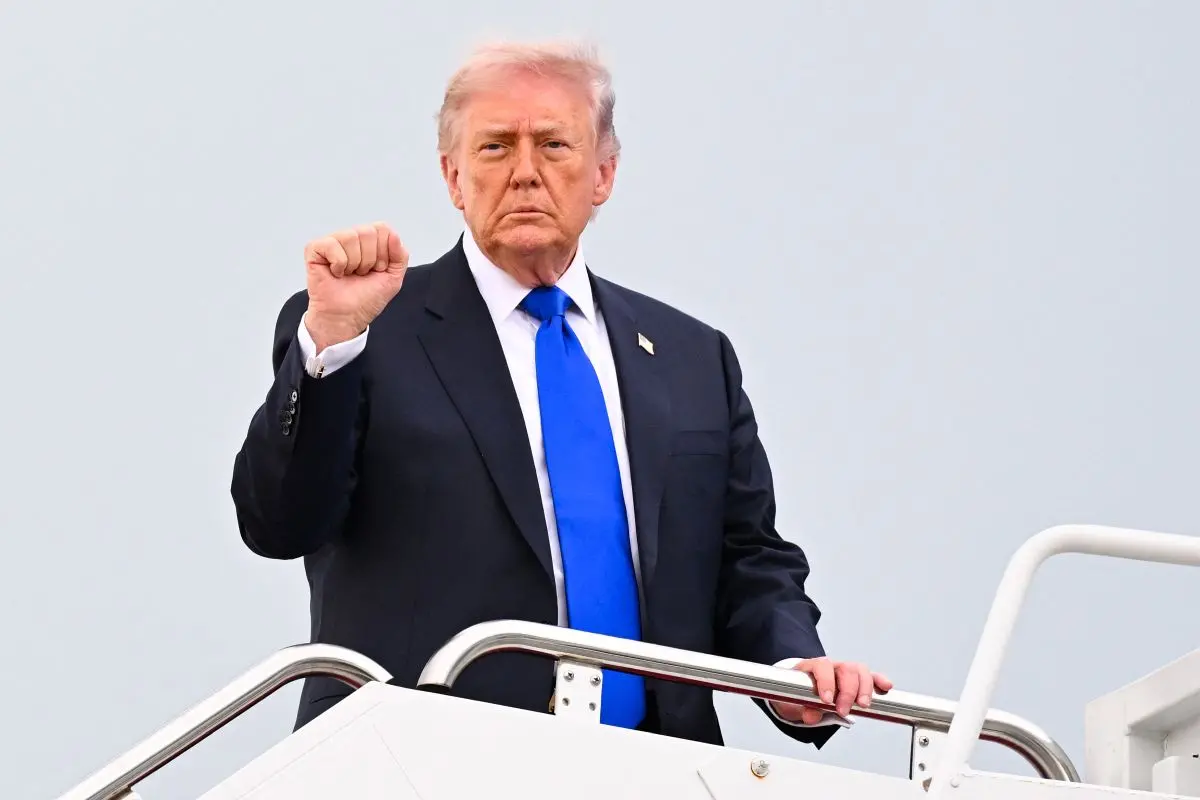
There is a temptation to dismiss United States President Donald Trump as an aberration, a crude interruption in an otherwise continuous arc of political refinement. Although that temptation is understandable and it would seem quite a logical assessment, it is also analytically lazy. Trump is not an accident; he is a method.
What appears as indiscipline is in fact a calibrated rejection of discipline itself. His language is not careless. It is stripped of the filters that have long defined public office. Where others hedge, he declares. Where others construct arguments, he provokes reactions.
The medium matters as much as the message. His posts on Truth Social are not statements in the classical sense, but they are cues. They invite outrage, loyalty, and repetition. Precision is irrelevant, and velocity is everything.
Also Read: Trump's absurd Strait stunt
Take one of his latest posts in which he lashed out at India and China in sweeping, derisive terms, describing them in language that reduced complex societies into crude caricatures and referring to Indians in dismissive, almost conspiratorial shorthand. The response from New Delhi was measured but firm.
The government rejected the characterisation in unusually direct language for a diplomatic communication, making it clear that such remarks were unacceptable even if they did not escalate the matter to the level of a formal diplomatic summons. The episode is instructive as it shows both the provocation and the restraint it forces on others.
This, unfortunately, is not an isolated instance. His digital trail is replete with such interventions. One recalls the early Twitter years when he reduced North Korea's leadership to playground taunts, referring to Kim Jong-un as 'Little Rocket Man', a phrase that travelled far beyond the platform and into the language of statecraft. Or his insistence, against mounting evidence, that the 2020 election was stolen, a claim repeated with such frequency that it ceased to be a statement and became a rallying cry.
There was also the infamous "covfefe" episode, a fragment that meant nothing and yet dominated discourse for days, not because of its content but because of what it revealed about the absence of filter. These are not slips; they are signals.
Also Read: How Donald Trump turns war into spectacle
To understand why it works, one has to move beyond the language and examine the audience. Trump's base is not drawn to him despite his excesses, but because of them. There is a long-standing resentment towards institutional speech that sounds rehearsed and evasive.
Trump offers something that feels unprocessed, blunt, often crude, and frequently inaccurate, but it carries the illusion of candour. In a political culture saturated with managed messaging, that illusion is powerful.
There is also a deeper psychological contract at play. His supporters do not expect consistency. They expect defiance. Each provocation becomes a signal that he is willing to say what others will not. Whether those statements withstand scrutiny is secondary. The emotional transaction is already complete.
But that is where the consequences begin to matter. Rhetoric at this level does not remain rhetorical. It seeps into policy, into diplomacy, and into the texture of international relations. When a sitting president reduces entire countries to slurs or caricatures, it does not merely offend, but it recalibrates expectations. Allies become wary, and adversaries become emboldened. Diplomacy, which depends on a degree of predictability, is forced to operate in a perpetual state of uncertainty.
Consider the current entanglement involving Benjamin Netanyahu. What began as assertive positioning has hardened into a situation from which retreat is politically costly and escalation is strategically dangerous. Trump finds himself constrained by the very posture he cultivated. When every statement is maximalist, there is little room left for quiet correction. When every move is framed as strength, compromise appears as weakness. This is the trap of performative leadership. It simply narrows the exit options.
His language has played no small part in this. Loose words create rigid expectations. Public commitments, even when casually made, acquire a life of their own. They are parsed, amplified, and thrown back into the diplomatic arena.
In such a setting, miscalculation is not an aberration, but an almost inevitable outcome. None of this absolves other actors of responsibility. Nor does it suggest that traditional diplomacy was ever pristine. But there is a difference between calculated ambiguity and habitual provocation. The former leaves room for manoeuvre, whereas the latter closes it off.
Trump's style has altered the grammar of political communication. It has shown that disruption can be a viable path to power. It has also demonstrated the limits of that approach when confronted with the complexities of governance and international conflict.
The question is no longer whether his rhetoric is appropriate. That debate has been settled many times over. The more urgent question is whether a system built on constant escalation can sustain itself when faced with realities that demand restraint. At the moment, the answer appears uncertain. And that uncertainty is not confined to one leader or one country. It travels.
The author is a National Award winner for Best Narration and an independent political analyst. Views expressed are personal.