E85 Flex Fuel is here: It is cheaper than petrol but will it give you mileage?
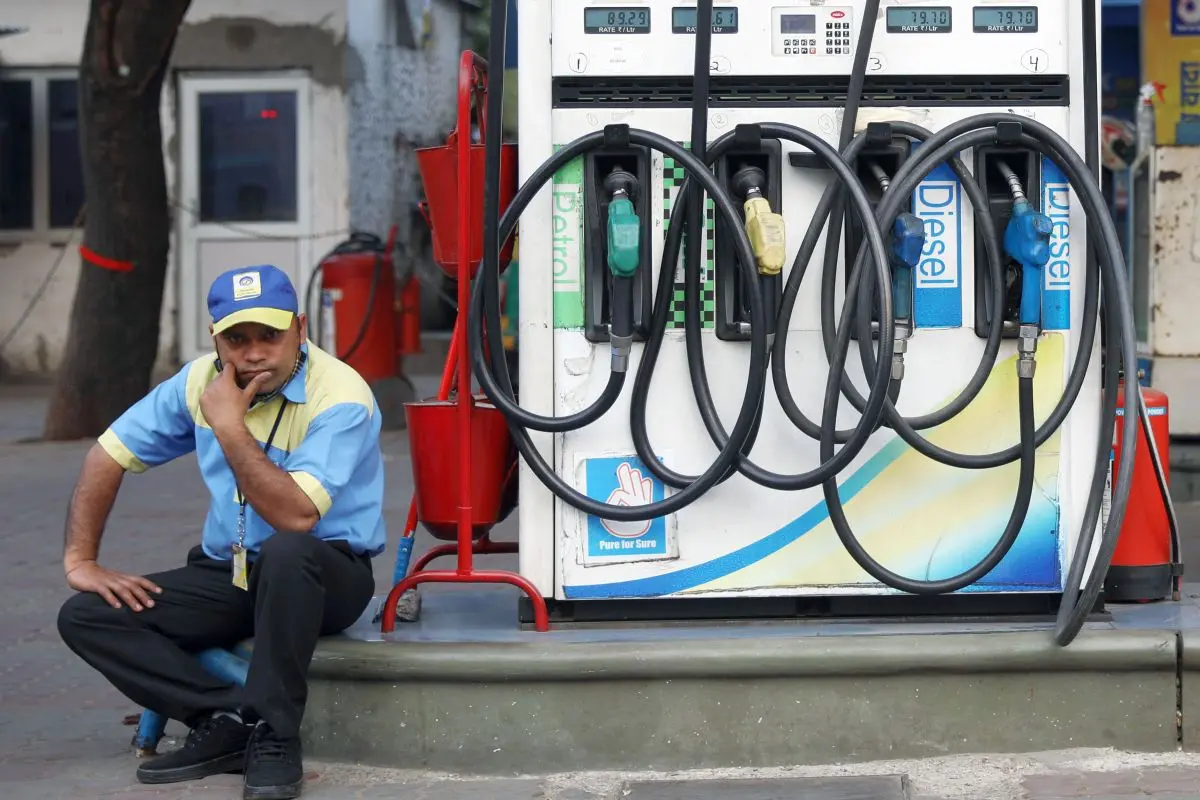
E85 flex fuel, the high-ethanol blend formally rolled out across India under the Narendra Modi government's ethanol roadmap, promises cleaner, cheaper motoring -- but it will almost certainly give motorists fewer kilometres per litre than regular petrol.
The real question, experts say, is not whether E85 is more "fuel efficient" in a narrow mileage sense, but whether it can deliver lower cost per kilometre and meaningful climate gains when used in the right engines and priced correctly.
The Centre recently launched E85 fuel for flex‑fuel vehicles, after pilot announcements around World Environment Day and the unveiling of India's first flex‑fuel passenger car by Maruti Suzuki in Delhi.
E85 in the Indian context means:
* About 85% ethanol and 15% petrol
* Intended only for dedicated flex‑fuel vehicles designed to run on blends from E20 up to near‑pure ethanol (E100)
* Part of a broader push that has already seen India reach its 20%ethanol‑blending (E20) target ahead of schedule
A Press Information Bureau note describes flex‑fuel vehicles as capable of automatically adjusting to different ethanol‑petrol blends without driver intervention, and positions them as a key tool for reducing crude oil imports and tailpipe emissions.
Critically, the government and oil marketing companies have underlined that E85 is not meant for conventional petrol vehicles. Using it in non‑flex engines, they warn, can damage fuel systems and void warranties.
Why E85 gives lower mileage per litre
The central technical issue is straightforward: ethanol contains less energy per litre than petrol. Technical estimates suggest E85 has roughly 73–75% of petrol's energy content per litre, depending on exact ethanol percentage and formulation. Because of that, a vehicle must burn more litres of E85 to produce the same amount of power.
This plays out as lower fuel economy (km/l). Global data show that flex‑fuel vehicles running on E85 typically deliver around 20–30% lower mileage than on pure petrol, depending on engine design, calibration and driving conditions.
According to auto experts, a bike returning 50 km/l on petrol might drop to around 40–42 km/l on E85 in a flex‑fuel setup.
Indian government briefings have also quietly acknowledged this physics: reference standards for flex‑fuel engines list "lower mileage per unit volume" as an inherent feature of high-ethanol blends, even when engines are optimised for them.
In pure efficiency terms, then, E85 is less fuel efficient per litre than petrol. The question is whether it can compensate on price, emissions and import savings.
Policy makers are betting that what E85 loses in mileage, it an gain back in economics and emissions -- provided the pricing is right.
Price advantage
Ethanol produced from domestic feedstocks (molasses, grain, agri‑residues) is generally cheaper than imported petrol on an energy-adjusted basis, especially once taxes and forex costs are factored in.
Flex‑fuel buyers are expected to face higher upfront vehicle costs because of additional components and calibration.
However, if E85 is kept significantly cheaper than E20/petrol, the total running cost over time can offset this, allowing owners to recover the premium in roughly three years of typical usage.
Independent analyses echo this logic. A global comparison reveals that while E85 delivers lower miles per gallon, its pump price in many markets is enough lower that drivers can see a 20–30% reduction in fuel cost per kilometre, especially in vehicles tuned specifically for ethanol.
The crux: Litres consumed go up; rupees per kilometre may still go down, as long as the price discount is large enough.
Emissions and energy security
E85 is also being sold as a green and strategic fuel. Ethanol has a higher octane rating and can burn cleaner in properly tuned engines, reducing certain pollutants.
Lifecycle assessments (counting crop cultivation, processing and combustion) generally show lower net greenhouse gas emissions for ethanol blends compared to fossil petrol, with Indian estimates suggesting around 60% GHG reduction for high-ethanol blends in flex‑fuel vehicles.
Every litre of ethanol blended into E85 is a litre of fuel not imported as crude, which fits neatly into the government’s rhetoric on reducing import dependence and improving the current account.
For farmers, a stable ethanol programme also promises more predictable demand and prices for sugarcane and other feedstocks, though that promise comes with its own environmental and food‑security debates.
What will drivers actually experience on E85?
For motorists who buy the new generation of certified flex‑fuel cars and two‑wheelers, the day‑to‑day experience is likely to be a mix of positives and trade-offs.
Fuel economy and performance: On a tank of E85, drivers should expect noticeably lower km/l than on petrol -- in most cases, 20–25% less, even with good engine calibration.
Because ethanol has a higher octane, engineers can sometimes extract similar or slightly better peak power, and engines may feel smoother or more knock‑resistant. But this doesn't erase the energy gap; any performance gains are more about responsiveness than mileage.
In Indian conditions, cold‑start problems that are sometimes associated with high‑ethanol blends in colder countries are expected to be less severe, though OEMs still calibrate cold‑start strategies carefully.
Cost per kilometre
Here, everything comes down to the pump price gap. If petrol is, for example, ₹110 per litre, and E85 is priced about 25–30% lower, then even with 20–25% higher consumption, the rupees per kilometre can be similar or lower on E85.
If E85 is only marginally cheaper than petrol, the lower efficiency simply translates into higher running costs, making it unattractive except to those prioritising emissions and import reduction.
As of launch week, detailed official pricing for E85 relative to petrol is still evolving at the state and OMC level, and analysts say the long‑term viability of E85 for consumers will hinge almost entirely on pricing policy and taxation.
Experts and government advisories highlight several crucial caveats:
* E85 is not for regular petrol vehicles. Using E85 in non‑flex engines can lead to corrosion, seal degradation, injector issues and misfires, because fuel lines, seals and engine maps are not designed for such high ethanol content. Automakers have explicitly warned customers on this point.
* Vehicle cost and availability: Flex‑fuel vehicles require ethanol‑compatible materials, different calibration and sometimes fuel system changes, which make them costlier to build. For now, E85 is relevant only to a small, early fleet of flex‑fuel cars and trial two‑wheelers, not India’s massive existing petrol vehicle base.
* Feedstock sustainability: Large-scale ethanol demand raises questions about water‑intensive crops like sugarcane, land use, and food vs fuel trade‑offs, especially if more grain is diverted to distilleries. Those concerns are likely to intensify if E85 volumes ramp up.
* Policy risk: If global crude prices fall or fiscal pressures rise, governments can be tempted to narrow the price advantage of alternative fuels through taxation -- which would instantly undermine E85's economic appeal.
So, is E85 "really fuel efficient"?
The answer depends on what you mean by "fuel efficient".
If you mean km per litre: E85 is not more fuel efficient than petrol. It delivers significantly lower mileage per litre because of its lower energy content -- typically 20–30% less in real-world flex‑fuel usage.
If you mean rupees per kilometre in a flex‑fuel vehicle: E85 can be economically efficient if it is priced substantially cheaper than petrol/E20, and if you are driving a certified flex‑fuel vehicle tuned for high ethanol blends. In that scenario, the lower mileage can be more than offset by the lower pump price, bringing down the cost per kilometre.
If you mean climate and import efficiency: High-ethanol blends like E85 are more efficient from an energy‑security and emissions perspective, reducing crude imports and lowering lifecycle greenhouse gas emissions, assuming feedstock and land‑use are managed well.
For Indian consumers, the practical takeaways are clear:
* Expect fewer kilometres per litre on E85 than on petrol.
* Judge it by cost per kilometre, not just by mileage.
* Use it only in vehicles explicitly designed and certified for flex‑fuel.
Whether E85 becomes a mainstream success or remains a niche green option will depend less on chemistry -- which is fixed -- and more on how seriously India follows through on pricing, vehicle deployment, and sustainable ethanol production in the years after its June 6 launch.