World's largest electric ship launched in Australia | PHOTOS
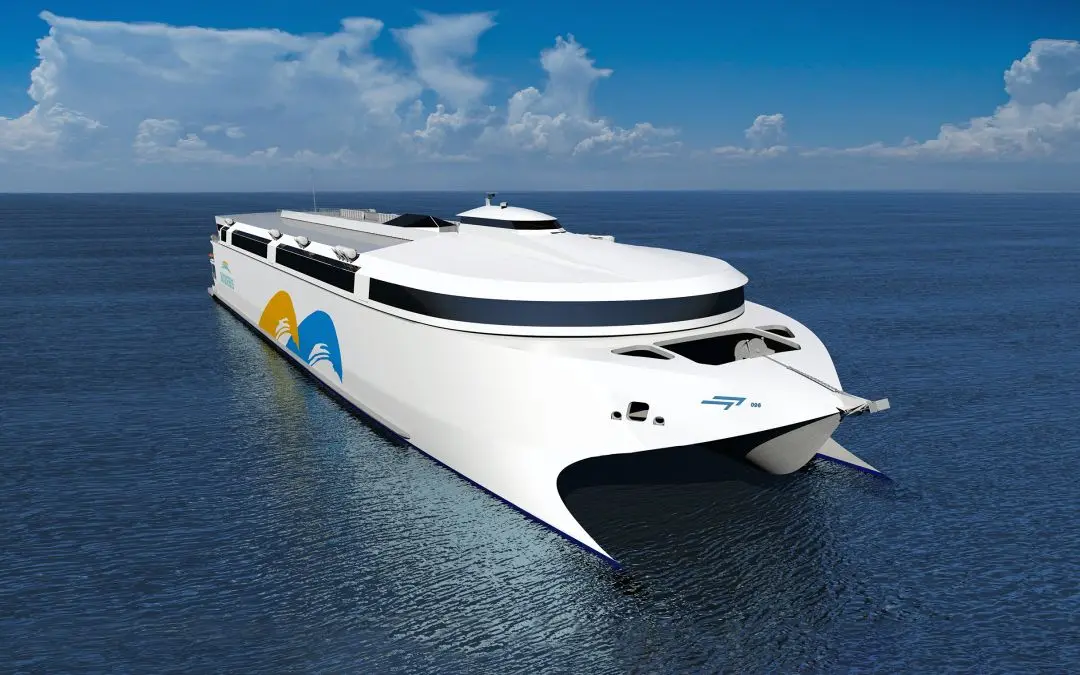
Australian boatbuilder Incat today launched what it claims is the world's largest electric-powered ship, a massive 130-metre (426-feet) catamaran named Hull 096. The vessel, capable of carrying an impressive 2,100 passengers, was built for South American ferry operator Buquebus.
The aluminium catamaran, powered by over 250 tonnes of batteries, is designed to transport both passengers and up to 225 vehicles across the River Plate, connecting Buenos Aires in Argentina and Uruguay.
"Hull 096 proves that large-scale, low-emission transport solutions are not only possible, they are ready now," declared Incat CEO Stephen Casey in a statement released following the launch on Hobart's Derwent River in Tasmania.
The launch comes at a crucial time as the shipping industry faces increasing pressure to reduce its environmental impact. The United Nations' International Maritime Organization (IMO) reports that shipping accounts for nearly three percent of global greenhouse gas emissions, a significant contributor to global warming.
In a move towards decarbonization, IMO member states last month voted in favour of a global pricing system aimed at curbing maritime carbon emissions. The regulations will require all ships to utilize a less carbon-intensive fuel mix by 2028 or face financial penalties.
However, environmental lobby groups have expressed concerns that a potential shift towards biofuels could lead to issues like deforestation and may not be a sufficient long-term solution for addressing maritime emissions comprehensively.
Incat highlighted the substantial power capacity of Hull 096, stating that its batteries and Energy Storage System (ESS) will provide more than 40 megawatt hours of installed capacity. The ESS was developed by Finnish engine manufacturer Wartsila and is integrated with eight electric-driven waterjets.
"Ferries play a vital role in meeting the growing demand for environmentally sustainable transport options, with ship electrification a key solution for enabling the sector to transition towards net-zero emissions," commented Wartsila Marine President Roger Holm in the same statement, underscoring the significance of this development for the maritime industry.
Notably, the vessel was originally intended to run on liquefied natural gas (LNG) and was named China Zorilla before being redesigned and reconfigured to operate entirely on battery power, marking a significant shift towards electric propulsion for large-scale maritime transport.