WhatsApp AI writing help can rephrase your messages and keep them completely private
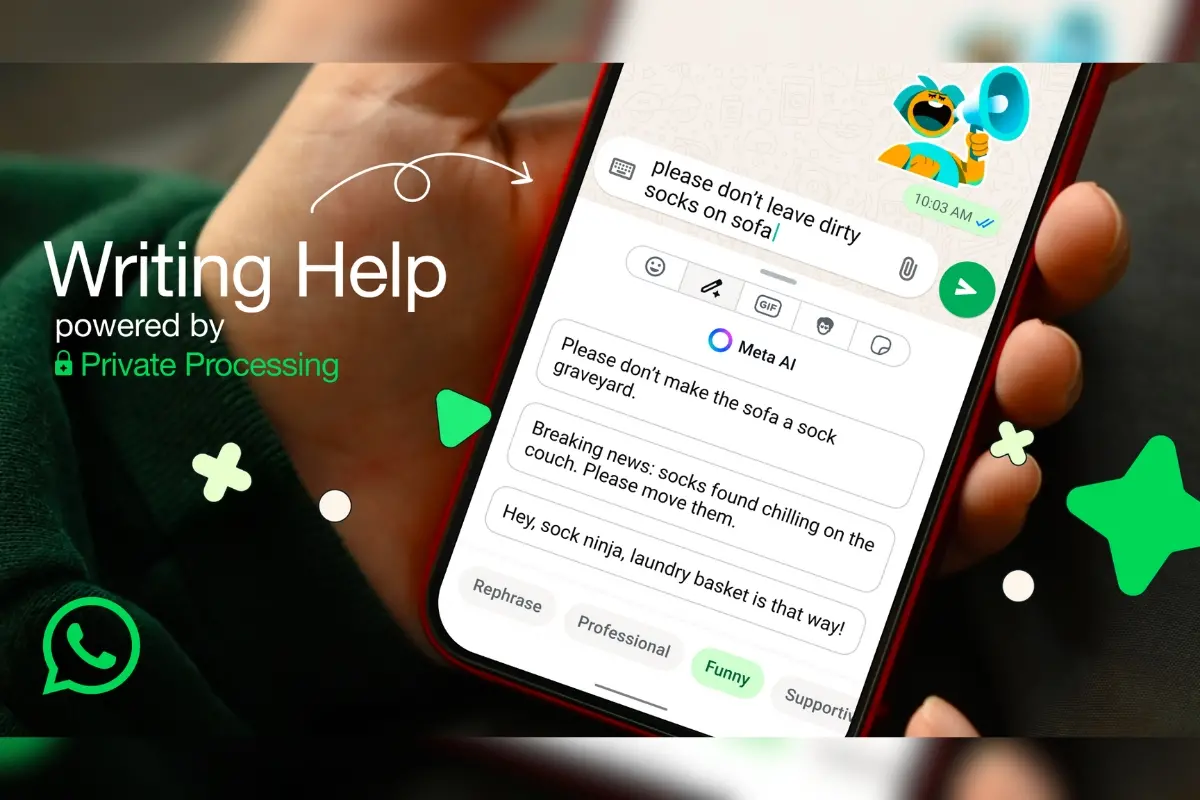
WhatsApp has acknowledged that even sending a simple message can sometimes feel like a task. To ease that, the platform is rolling out a new tool called ‘AI Writing Help’, designed to assist when you are unsure how to phrase your thoughts or want your words to sound more polished.
The feature caters to different needs — whether you want a crisp professional reply, a witty quip for a friend, or a thoughtful message for someone going through a tough time. Within seconds, the AI generates suggestions, which you can either send directly or tweak until they sound perfect.
To use the feature, look for a small pencil icon when you are in a private chat or group conversation. A tap on the icon activates the assistant. At present, however, it is restricted to English-speaking users in the United States. WhatsApp has confirmed that wider language support and expansion to more regions will follow later this year.
With any AI integration in messaging apps, privacy concerns are inevitable. WhatsApp has long emphasised its commitment to end-to-end encryption, ensuring that only you and your recipient can see your messages. Since AI tools typically rely on remote servers for processing, users naturally question whether their conversations remain private.
Meta, the parent company of WhatsApp, claims to have addressed this issue through its Private Processing technology. This system enables AI features to run without exposing personal messages to external access. The company reassures users that “no one except you and the people you’re talking to can access or share your personal messages.” The approach is comparable to Apple’s Private Cloud Compute, which similarly delivers AI features without sending all data across the internet.
That means your casual chats, private rants, or even typo-filled confessions should remain secure, with Meta stressing that the new feature does not undermine WhatsApp’s “core privacy promise.”