Users report scratches on iPhone 17 Pro barely hours after launch: Reports
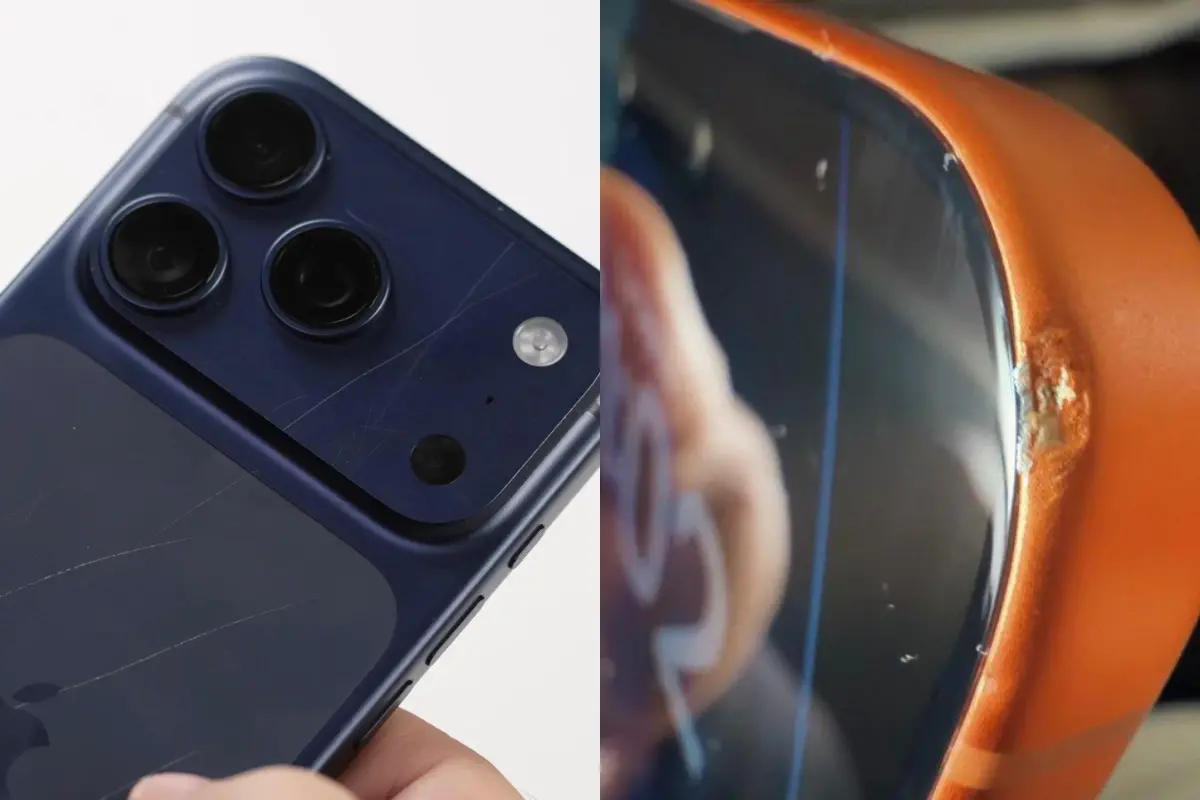
Within hours of Apple’s much-anticipated launch of the iPhone 17 family, durability concerns have already surfaced. Early users claim the iPhone 17 Pro’s new aluminium unibody design is prone to scratches, raising questions about its long-term resilience. However, several users have raised concerns on social media, where multiple images are circulating. Mathrubhumi English has not independently verified the authenticity of these images.
Scratches on display models
Several users have shared images online of scratched iPhone 17 Pro display units. Journalist Mark Gurman suggested this may explain Apple’s decision to avoid a black color option for the device, noting that scratches on anodized aluminum are more noticeable.
“It looks like the iPhone 17 Pro in Deep Blue is scratch-prone due to its anodized aluminum frame. Not entirely surprising. The dark aluminum iPhone models in prior years had a similar issue. This is actually probably why there’s no black version,” he tweeted, along with an article published by Bloomberg regarding the same.
Independent testers and YouTubers are subjecting the new iPhones to stress and durability trials. Popular teardown channels, including JerryRigEverything, are also dismantling the new iPhones to assess their internal durability. Videos of these tests are spreading quickly on TikTok, Instagram, and X.
Ceramic Shield 2 promises stronger glass
Apple has emphasised improvements in screen durability with the introduction of Ceramic Shield 2 glass across the iPhone 17 range. The company claims it is three times more scratch-resistant than its predecessor. In demonstrations, repeated scratches with a mineral tool left only removable residue, rather than permanent marks.
Apple also showcased the iPhone 17 Pro in drop tests, releasing it from various heights onto different surfaces. The results showed no significant cracks or structural damage, aside from expected impact bounces.