NASA successfully carries out first-ever medical evacuation from space
#News Desk
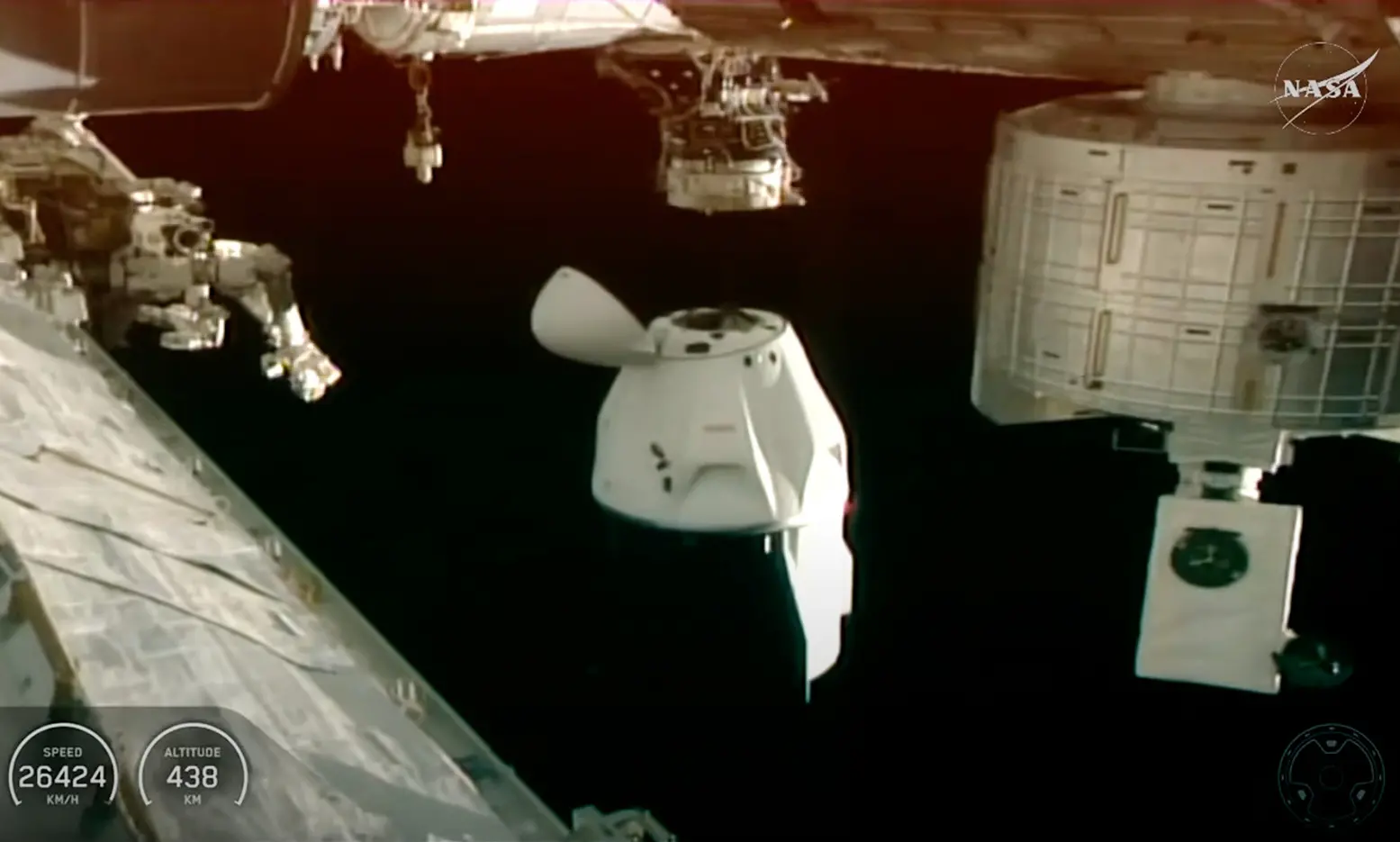
This screengrab from video provided by NASA TV shows the SpaceX Dragon departing from the International Space Station shortly after undocking with four NASA Crew-11 members inside on Wednesday, Jan. 14, 2026.| Photo: NASA via AP
NASA confirmed that a health issue affecting one crewmember prompted the early return of four astronauts from the International Space Station. While the space agency did not disclose details of the condition, officials said there was a “lingering risk” and uncertainty around diagnosis that made further medical evaluation on Earth necessary.
The agency stressed that the situation was not an emergency. The affected astronaut was reported to be in stable condition throughout the process, and the decision to return was described as a precautionary and deliberate move to allow access to full diagnostic facilities available only on the ground.
Who were the astronauts on board?
The returning crew included American astronauts Mike Fincke and Zena Cardman, Russian cosmonaut Oleg Platonov, and Japanese astronaut Kimiya Yui. They were part of SpaceX’s Crew-11 mission and had spent around five months aboard the orbiting laboratory.
NASA footage showed the capsule splashing down in the Pacific Ocean off the coast of San Diego at 12:41 am local time on Thursday. Recovery teams were deployed immediately following the successful landing.
This marked the first medical evacuation in the ISS’s more than 25 years of continuous human habitation. Although astronauts are trained to manage medical situations in orbit, this was the first time health concerns led to a mission being cut short for medical reasons.
NASA officials said the crew had been well prepared for unexpected situations and handled the return calmly and professionally.
The four astronauts arrived at the ISS in early August and were scheduled to remain onboard until mid-February, when they were due to be replaced by the next rotation crew. The early return shortened their stay by several weeks.
Following the Crew-11 return, American astronaut Chris Williams and Russian cosmonauts Sergey Kud-Sverchkov and Sergei Mikaev continue to live and work aboard the station. They arrived in November on a Russian Soyuz spacecraft.
NASA and Russia’s Roscosmos continue to cooperate on ISS operations, including cross-national crew transport, despite broader political tensions between the two countries.