Super-Earths may be far more common and farther away than we ever imagined: Study
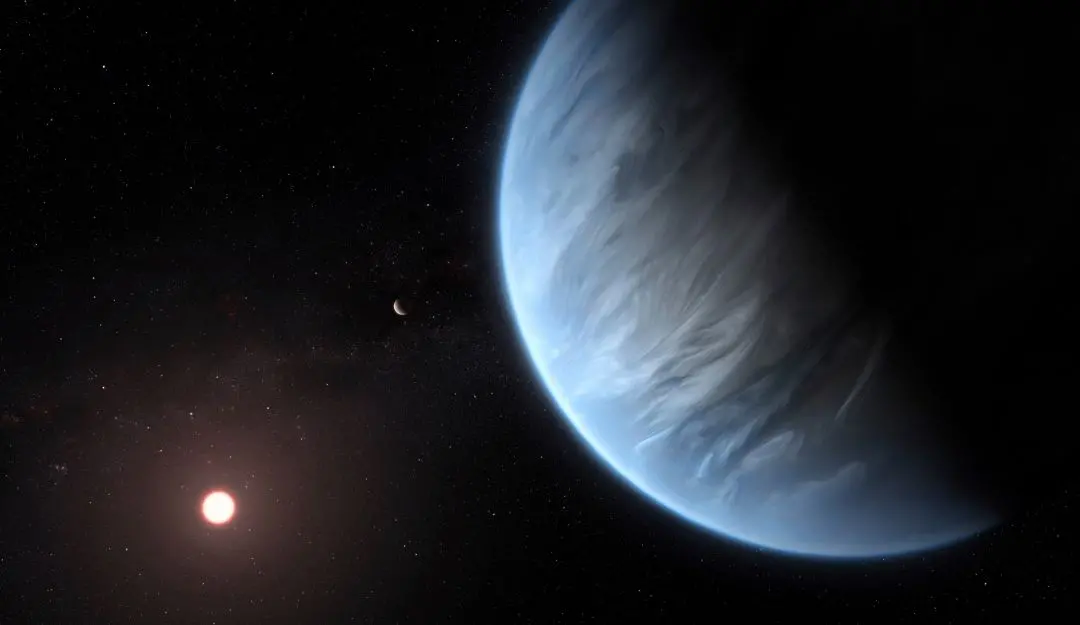
Astronomers have made a breakthrough discovery suggesting that super-Earth exoplanets are not only widespread across the universe but also located much farther from their stars than previously assumed.
For decades, the search for exoplanets has mostly centred around worlds that orbit close to their parent stars, as their proximity makes them easier to detect using conventional methods like the transit technique or radial velocity measurements. However, identifying planets with much wider orbits remains a significant observational challenge. Despite this, researchers now estimate that, statistically, for every three stars in the universe, there could be at least one super-Earth with a Jupiter-like orbital distance. This suggests these types of planets are not only abundant but perhaps a fundamental feature of planetary systems.
Super-Earths spotted through microlensing
The new findings come from an international team of astronomers working with the Korea Microlensing Telescope Network (KMTNet). The study, led by analysis of data from microlensing surveys, has changed our understanding of where and how often these mysterious planets appear.
Microlensing occurs when a massive object, such as a star or planet, passes between an observer and a distant background star. The gravitational field of the intervening object bends and magnifies the background star’s light, temporarily brightening it. This natural cosmic effect can reveal planets that are otherwise too far from their stars—or too faint—to detect through traditional methods.
By closely studying light anomalies caused by a newly discovered planet’s host star, and combining this information with a broader set of data from KMTNet surveys, researchers have uncovered clear evidence that super-Earths can exist as far from their stars as our gas giants, such as Jupiter and Saturn, are from the Sun.
"Scientists knew there were more small planets than big planets, but in this study, we were able to show that within this overall pattern, there are excesses and deficits," explained Andrew Gould, co-author of the study and professor emeritus of astronomy at The Ohio State University. "It's very interesting."
Gould, whose earlier theoretical work helped establish the microlensing method for planetary discovery, highlighted that while the study reinforces the known trend that small planets outnumber large ones, it also reveals new nuances in planet populations depending on their distance from their stars.
What are super-Earths?
Super-Earths are a class of planets that have no direct counterparts within our own solar system. They are defined by their size and mass—being larger than Earth but smaller than the ice giants Uranus and Neptune. Their mass typically ranges from about twice that of Earth to up to ten times heavier.
Importantly, the designation "super-Earth" refers only to a planet’s size and mass. It does not imply any similarities to Earth in terms of atmosphere, surface conditions, or potential habitability. Indeed, the internal structures and compositions of super-Earths can vary significantly, encompassing rocky worlds, ocean planets, snowball planets, and those resembling miniature versions of gas giants like Neptune.
Over the past three decades, as exoplanet detection techniques have advanced, astronomers have discovered an astonishing diversity of planets—many of which have no analogues within our solar system. Super-Earths stand out among them for their wide variety of possible forms.
One particularly fascinating example is 55 Cancri e, a super-Earth located just 41 light-years away. The planet orbits its star extremely closely, completing a full revolution every 18 hours. Due to this proximity, it is tidally locked, meaning the same side always faces its star, similar to how the Moon is tidally locked with Earth.
In 2016, observations from NASA's Spitzer Space Telescope provided the first temperature map of a super-Earth. The results showed an extraordinary temperature difference between the day side and night side of 55 Cancri e, with a swing of 2,340 degrees Fahrenheit (1,300 Kelvin). The star-facing side scorches at nearly 4,400 degrees Fahrenheit (2,700 Kelvin), while the dark side cools to about 2,060 degrees Fahrenheit (1,400 Kelvin). These findings suggest dynamic lava flows across the planet's surface, painting a vivid, if inhospitable, picture of life on a super-Earth.
Is human life possible on super-Earths?
The question of whether humans could ever live on a super-Earth is a complex one. While some super-Earths are located within the so-called “habitable zone” of their stars—where temperatures could allow liquid water to exist—many other factors influence a planet’s potential for supporting life.
One crucial factor is the atmosphere. A planet needs a stable, life-supporting atmosphere to regulate temperature, shield against harmful radiation, and facilitate chemical processes vital for life. Some super-Earths may possess thick atmospheres, but whether these atmospheres contain the right balance of gases remains unknown. In some cases, a thick, Venus-like atmosphere could create conditions far too hostile for life as we know it.
Another key element is a magnetic field. On Earth, the magnetic field acts as a protective shield against solar wind and cosmic rays. Research suggests that many super-Earths could sustain strong, long-lasting magnetic fields due to vigorous, extended volcanic activity beneath their surfaces, which would be a positive sign for habitability.
However, surface conditions could pose serious challenges. The extreme gravitational pull on a super-Earth could create crushing surface pressures. For instance, CoRoT-7b, one of the first confirmed super-Earths, orbits so close to its star that it is likely a molten world, with surface temperatures high enough to melt rock, and an environment completely hostile to life.
Even if a super-Earth resides in the habitable zone, and even if it has the right atmospheric and magnetic protections, the specifics of its surface conditions—such as temperature, atmospheric pressure, and chemical composition—would ultimately determine whether it could support life.
(With inputs from ANI)