Self regulated landing test of RLV: Hat-trick success for ISRO
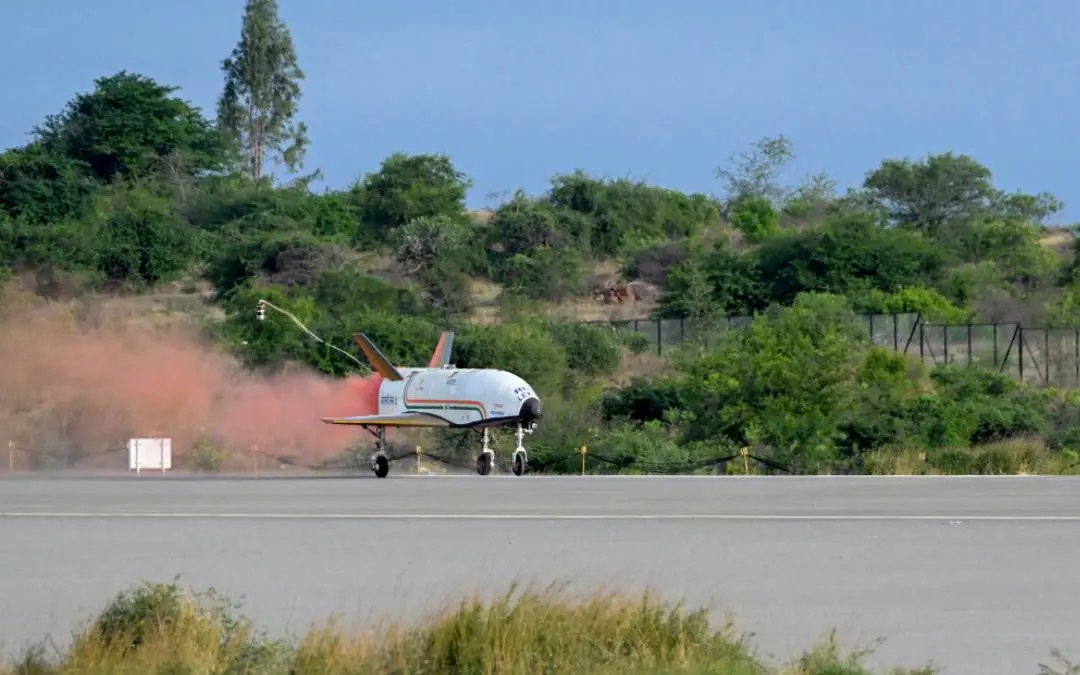
Bengaluru: Adding another feather to its cap, the Indian Space Research Organization (ISRO) has successfully conducted the third and final self-regulated landing test of the Reusable Launch Vehicle (RLV). ISRO will now go into the trials of landing the Orbital Re-Entry Vehicle-ORV.
The test took place at the Challakere Aeronautical Test Range (ATR) at Chitradurga district in Karnataka at 7.10 am on Sunday. The ISRO said that the vehicle made a precise landing despite the challenging conditions. The RLV 'Pushpak' was taken to a height of 4.5 km by an Air Force Chinook helicopter and released. Pushpak landed at a speed of 320 km/h. After landing, the speed was reduced to 100 km/h using a brake parachute. Then the vehicle was stopped using the landing gear brakes. The high-speed landing conditions were recreated when the launch vehicle returned from space. The name of the third test mission is 'RLV-LEX-03'.
The first phase was completed in April 2023 and the second in March 2024.
Currently, India's space launch vehicles are single-use. As reusable launch vehicles become a reality, the cost of space missions will drop dramatically. RLV looks like an airplane. The RLV will consist of an airframe, nose cap, twin delta wings and twin tails.
Vikram Sarabhai Space Center (VSSC) led the experiment. SAC, ISTRAC, SDSC-SHAR, Indian Air Force etc are also cooperating. J Muthupandian was the Mission Director and B Karthik was the Vehicle Director. ISRO chairman S Somnath congratulated the team for making the test mission a success. VSSC Director Dr S Unnikrishnan Nair said that the success of the test missions has increased confidence.
Next stop- Return from orbit
Thiruvananthapuram: With the success of the third landing test, the next stage of ISRO's reusable launch vehicle (RLV) program is the re-orbit test. This mission will be India’s first attempt to land a winged vehicle from space.
The third successful landing took place in Chitradurga, Karnataka, marking a significant milestone since the vehicle was previously landed in the Bay of Bengal eight years ago. The next phase involves testing a vehicle 60 percent larger than the current one to assess the feasibility of reusability.
While the structure of the vehicle is complete, it will differ from the 'Pushpak' used in the earlier tests. The existing propulsion units will be retained, but some new components are currently under construction.
The vehicle is designed to reach an altitude of 400 km, spend a few weeks in orbit, and then return safely to Earth. A modified GSLV version will launch the vehicle, which will be mounted on top of a rocket using the PSLV's fourth stage, bypassing the GSLV's cryogenic stage.
Unlike Pushpak, which had fixed landing gear, the orbital re-entry vehicle will feature retractable landing gear for touchdown. This system, developed at the Vikram Sarabhai Space Centre in Thiruvananthapuram, is currently undergoing hardware testing. The re-entry vehicle will also carry payloads.
India aims to develop a fully-fledged reusable launch vehicle by 2030, which will be about five times the size of the test vehicle. The final design will be an aircraft-shaped vehicle, 32 meters long and weighing 72 tonnes. It will re-enter from 100 km above the Earth's surface and is expected to travel 25 times faster than the speed of sound. This will significantly reduce launch costs and increase the frequency of launches.
Orbital re-entry vehicle test in two years
Following the successful completion of the third landing test in Chitradurga, all three landing tests have been successfully concluded. An orbital re-entry vehicle test is expected within two years, with preparations already underway, said Unnikrishnan Nair.