Interstellar comet 3I/ATLAS makes safe pass by Earth, heading toward Jupiter
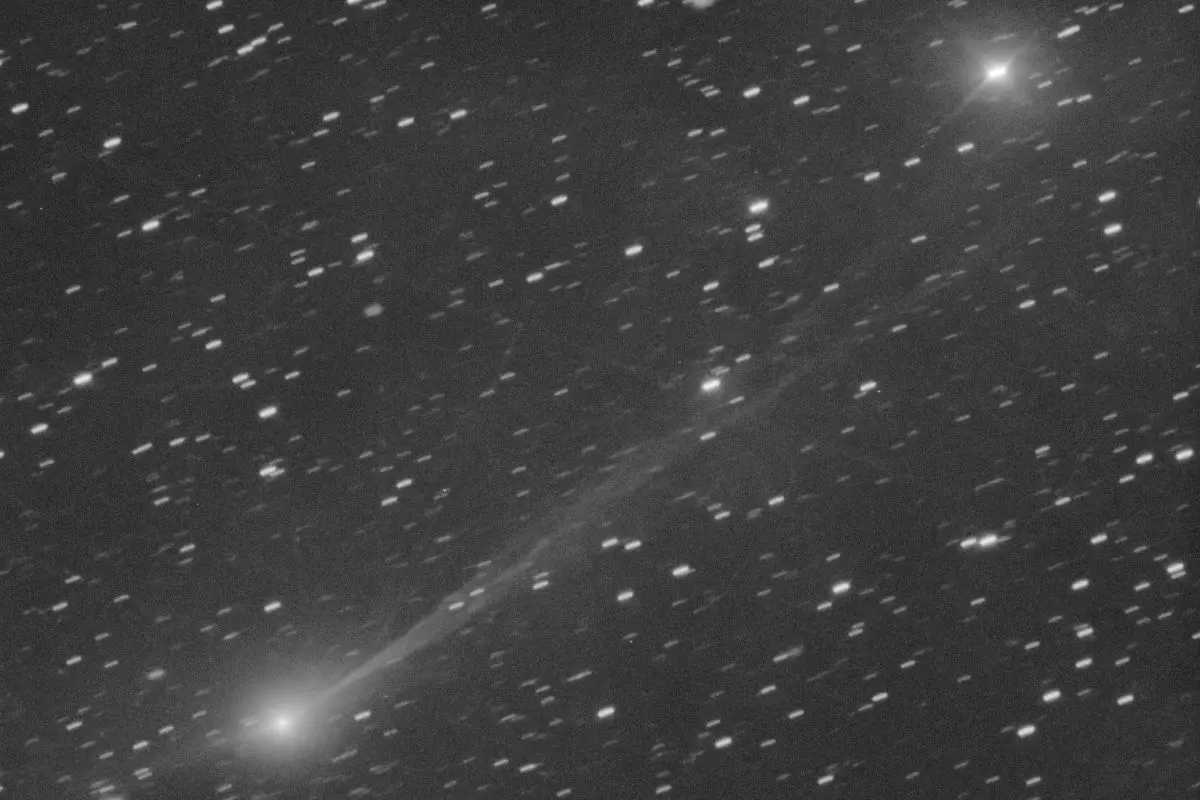
The interstellar comet 3I/ATLAS, which has captivated astronomers worldwide for months, safely passed Earth early this morning. At approximately 06:00 GMT, the object reached its closest approach, coming within 168 million miles (270 million km) of our planet — nearly twice the average distance between Earth and the Sun.
Following its Earth flyby, the comet is now on course toward Jupiter, where it will pass within 33 million miles (53 million km) of the gas giant on 16 March 2026. It will subsequently cross the orbits of Saturn in July 2026 and Uranus in June 2027, before passing Neptune at a speed of 137,000 mph (221,000 km/h) in 2028. Astronomers predict that 3I/ATLAS will reach Pluto’s orbit in April 2029, ultimately leaving the solar system for interstellar space in the mid-2030s.
Discovered on 1 July by the NASA-funded ATLAS telescope in Chile, 3I/ATLAS was identified as originating from outside the solar system. It is only the third known interstellar visitor, following 1I/‘Oumuamua in 2017 and 2I/Borisov in 2019. Scientists estimate that the comet formed around a distant star roughly eight billion years ago, making it older than our solar system and the oldest object ever studied up close.
Earlier, the comet passed within 19 million miles (30 million km) of Mars on 3 October, and reached its closest point to the Sun at 130 million miles (210 million km) on 29 October. While the close approach sparked speculative discussions about alien spacecraft, scientists emphasise that the encounter provides a rare opportunity to study the history and composition of our galaxy.