CMFRI scientists discover rare deep-sea 'octopus squid', name it after late KAU Vice Chancellor
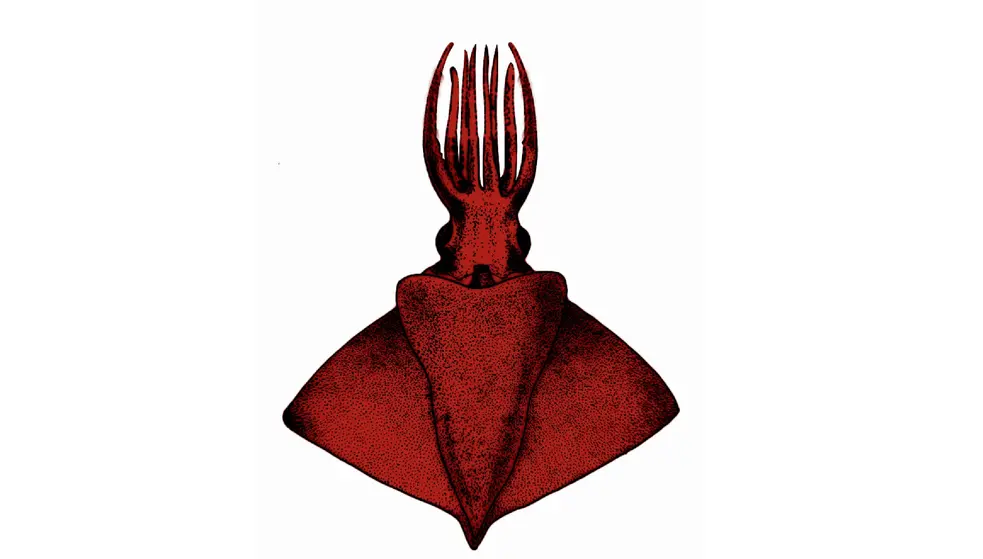
In a rare marine breakthrough, scientists from the ICAR – Central Marine Fisheries Research Institute (CMFRI) in Kochi have discovered a new deep-sea squid species in the Arabian Sea. The species is only the second globally confirmed from the little-known genus Taningia.
The new species, named Taningia silasii or the Indian octopus squid, has been formally described in the international journal Marine Biodiversity.
Discovery off Kollam coast
The specimen was collected from nearly 390 metres below sea level off the Kollam coast. Measuring 45 cm in dorsal mantle length, the squid belongs to the family Octopoteuthidae, whose adult members uniquely lack tentacles, unlike most squid species.
Despite being a squid, its octopus-like appearance—with eight arms and no long feeding tentacles—has earned it the name “octopus squid”.
Team behind the discovery
The research team was led by CMFRI Principal Scientist Geetha Sasikumar and Technical Officer Sajikumar K.K.
“We have been studying cephalopods in the Arabian Sea for over a decade, but this 'octopus squid' was unlike anything we had seen before,” Geetha said.
Other members of the discovery team included CMFRI researchers Shijin Ameri and Toji Thomas.
Scientific significance
Until now, Taningia danae, found in the Atlantic Ocean, was the only known species of the genus. DNA barcoding revealed more than 11 per cent genetic divergence from the Atlantic species, scientifically confirming it as a distinct species.
Sajikumar noted that members of this genus are also remarkable for their potential to grow to giant sizes, with Taningia danae recorded at up to 2.3 metres in length and weighing more than 61 kg.
Honour for a pioneering marine biologist
The newly discovered species has been named in honour of the late E.G. Silas, a pioneering marine biologist, former Director of CMFRI, and former Vice Chancellor of Kerala Agricultural University. The naming recognises his outstanding contributions to cephalopod research in India.
Adding to India’s deep-sea knowledge
Nearly 400 squid species have been identified worldwide, inhabiting environments ranging from shallow coastal waters to deep-sea trenches. This discovery adds significant scientific value to India’s deep-sea biodiversity research and offers fresh insights into the evolutionary diversity of squids.