Artemis II explained: How NASA is returning humans to the Moon after 50 years
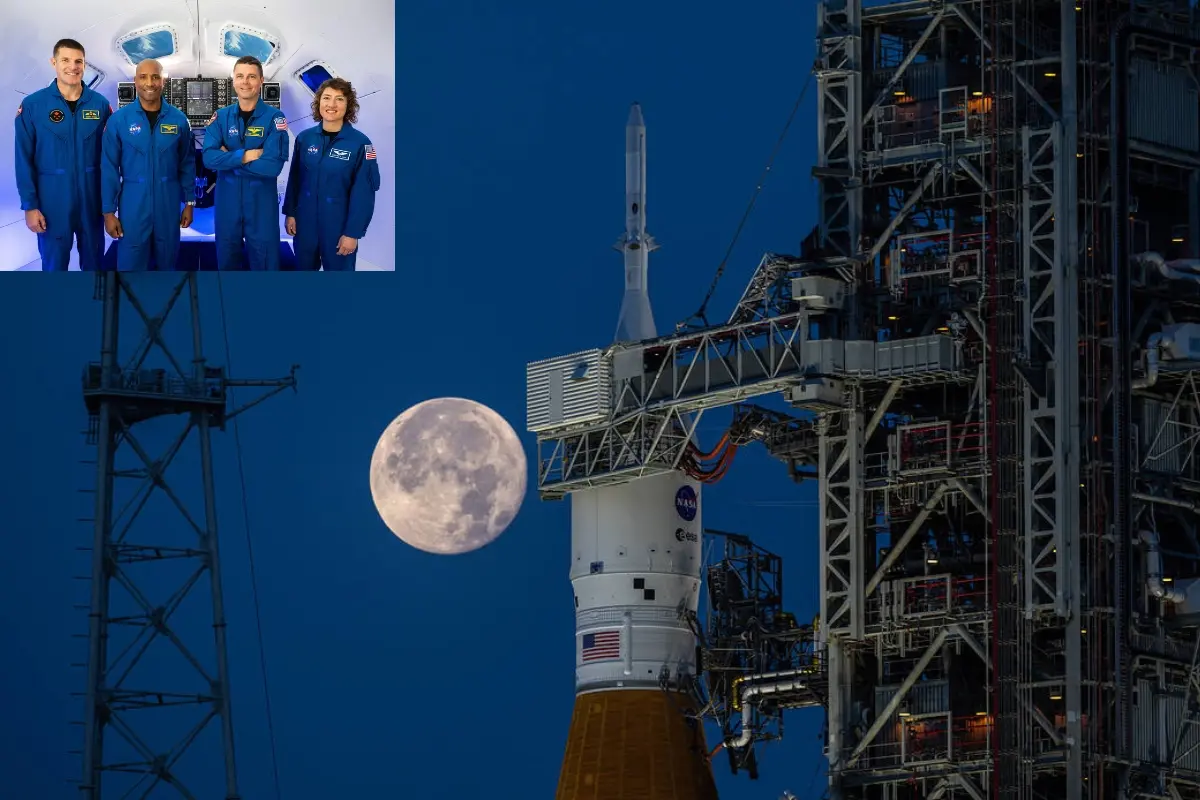
When Apollo 17 lifted off in December 1972, few imagined it would take more than half a century for humans to venture back toward the Moon. That long pause is now ending.
On February 6, NASA plans to launch Artemis II, the first crewed lunar mission since the Apollo era, marking a decisive shift from historical achievement to long-term exploration.
Here is a clean, detailed article body with subheadings written as questions, keeping an engaging, historical angle, UK English, and only necessary capitalisation.
Why is Artemis II being called a historic return to the Moon?
More than 50 years have passed since Apollo 17 became the last human mission to the Moon in December 1972. Artemis II marks the first time since then that astronauts will travel beyond low Earth orbit toward the Moon. While it will not land on the lunar surface, the mission symbolises humanity’s return to deep space and the restart of crewed lunar exploration after decades of focus on Earth-orbit missions like the International Space Station.
Who are the astronauts flying on Artemis II?
The mission will carry four astronauts: NASA’s Reid Wiseman, Victor Glover and Christina Koch, along with Canadian Space Agency astronaut Jeremy Hansen. Their 10-day journey around the Moon will test how humans and spacecraft perform together far from Earth, a key requirement for future lunar landings and long-duration missions.
What exactly will Artemis II test in space?
Artemis II is designed as a proving mission. Astronauts will test the Orion spacecraft’s life-support systems, communications, navigation and power systems in deep space conditions. The mission will also evaluate how the crew handles high-speed re-entry into Earth’s atmosphere, one of the most critical phases of any lunar mission.
How does Artemis II differ from the Apollo missions?
Unlike Apollo, which aimed to land astronauts on the Moon as quickly as possible, Artemis follows a step-by-step approach. Artemis II focuses on safety and system validation rather than landing. The programme is intended to build a sustained human presence on the Moon, using modern technology and international partnerships, rather than short, symbolic visits.
What role does the Space Launch System play?
The mission will use NASA’s Space Launch System, the most powerful rocket ever built. Combined with the Orion spacecraft, SLS is capable of sending astronauts farther into space than any previous human-rated system. This capability is essential for future lunar landings and for eventual crewed missions to Mars.
What preparations are happening before launch?
NASA plans to roll out the fully assembled SLS rocket and Orion spacecraft from the Vehicle Assembly Building to Launch Pad 39B at the Kennedy Space Center. This process mirrors procedures used during the Apollo era. A wet dress rehearsal will follow, during which engineers will load over 700,000 gallons of cryogenic fuel and conduct a full countdown simulation without the crew onboard.
Why is the wet dress rehearsal so important?
The rehearsal allows NASA teams to practise fuelling, countdown holds and emergency procedures. It also helps engineers identify any technical issues before astronauts are committed to flight. Only after a successful rehearsal and a flight readiness review will the mission receive final approval to launch.
How does Artemis II shape future Moon and Mars missions?
Artemis II is a critical bridge between uncrewed test flights and future crewed landings. The data gathered will guide Artemis III, which aims to return astronauts to the lunar surface. Beyond the Moon, the mission supports NASA’s long-term goal of sending humans to Mars by testing systems needed for extended deep-space travel.
Why does Artemis II matter beyond space exploration?
Beyond science, Artemis II represents technological progress, international collaboration and a renewed human ambition to explore beyond Earth. It marks the shift from short-term missions to long-term exploration, positioning the Moon as a stepping stone for humanity’s next chapter in space.