Everything GPT-4 couldn’t do, GPT-5 just did in under a minute | Key features inside
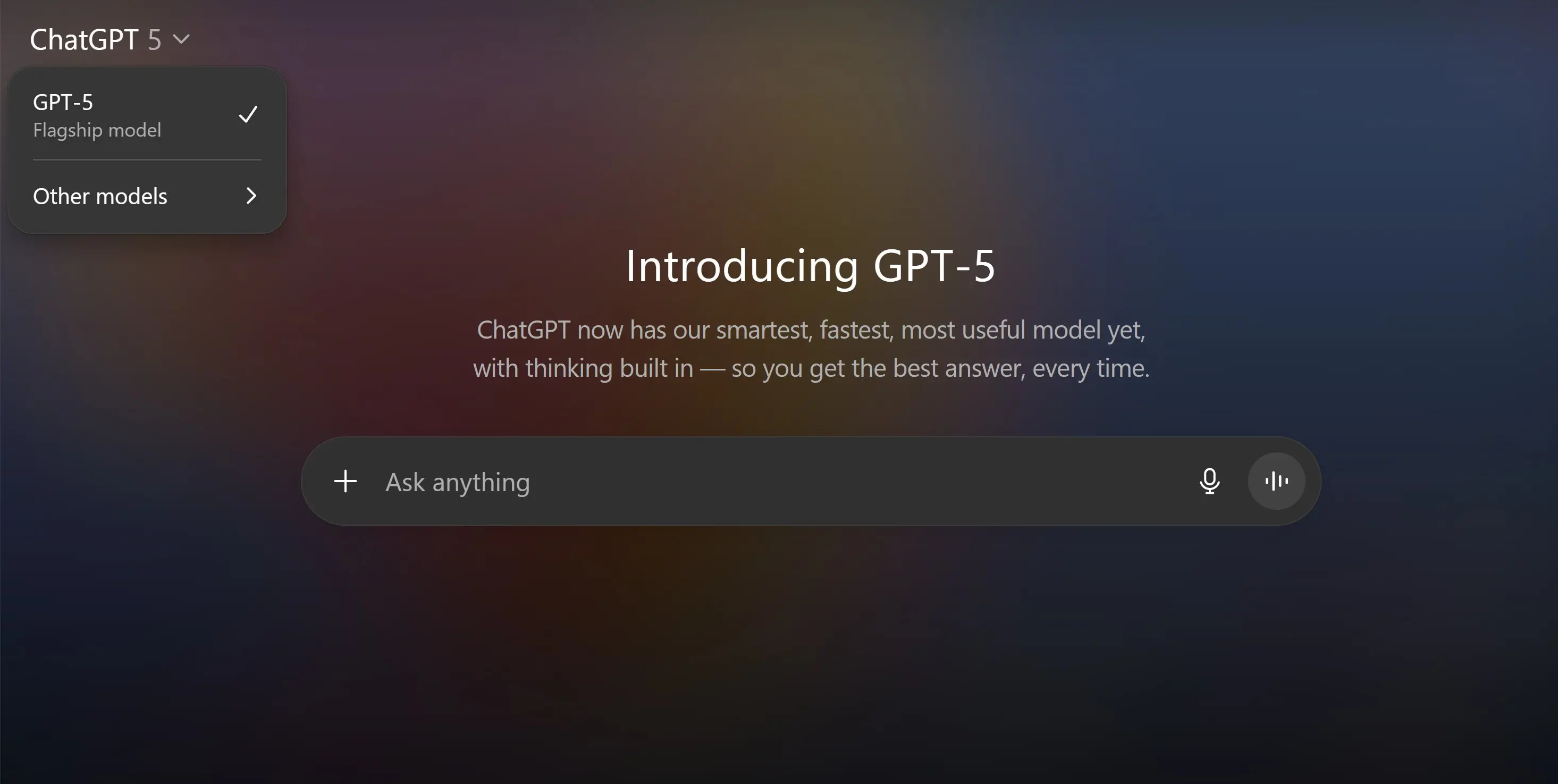
OpenAI has begun the phased rollout of GPT-5, its latest language model, for both free and paid users of ChatGPT. The update includes new model variants, expanded system integrations, and enhancements to performance and safety.
If you’re wondering how to access GPT-5, the process is straightforward -- you will automatically see a welcome screen once it becomes available to you. As it’s a staged release, not everyone will receive it immediately, but re-logging into your account may help expedite access.
Advancements introduced in GPT-5
GPT-5 arrives with a set of notable upgrades, such as new model variants, improved memory capabilities, and safer completions across all ChatGPT tiers and API use.
While GPT-5 doesn’t meet the criteria for Artificial General Intelligence (AGI) as outlined in OpenAI’s own charter, it is described internally as generally intelligent. However, it is not capable of learning or evolving post-deployment.
OpenAI states that GPT-5 is more accurate and efficient than previous versions, with significantly reduced hallucination rates. CEO Sam Altman compared the leap from GPT-4 to GPT-5 to the transition from early iPhone displays to Retina screens.
New variants: Mini and Nano
Two new versions of GPT-5 are now available:
- GPT-5-mini: A lightweight version accessible to all users
- GPT-5-nano: A faster, more affordable variant available exclusively through the API
Free users will be able to use GPT-5 and GPT-5-mini. Paid users gain access to higher usage limits and additional models, including:
- GPT-5-pro
- GPT-5-thinking
The $200/month Pro tier unlocks full, unlimited access to these models. The ChatGPT platform now automatically selects the best-suited model based on the query’s complexity and the user’s plan. Legacy models continue to be available for Pro users.
API pricing
Pricing for API access is as follows:
- GPT-5: $1.25 per million input tokens; $10 per million output tokens
- GPT-5-mini: $0.25 per million input; $2 per million output
- GPT-5-nano: $0.05 per million input; $0.40 per million output
GPT-5-nano now undercuts the cost of Google’s Gemini 2.5 Flash.
Upcoming Google integrations
Starting next week, Pro users will be able to integrate their Gmail, Google Calendar, and Google Contacts with ChatGPT. Other user tiers will receive access in due course. When enabled, ChatGPT will reference these accounts automatically, with no need for manual selection.
Customisation and new personalities
ChatGPT now offers users more control over the interface and conversational tone. New features include:
- Four preset personality modes: Cynic, Robot, Listener, and Nerd
- Customisable chat colours
- Planned support for personality modes in Advanced Voice Mode
API users can toggle between detailed and concise response styles.
Larger context window and performance enhancements
GPT-5 features a context window of 256,000 tokens, up from 200,000 in the previous o3 model. This allows the system to better retain information across extended conversations, codebases, or lengthy documents.
In coding benchmarks, GPT-5 delivers significantly better performance:
- 74.9% on SWE-Bench Verified
- 55% on SWE-Lancer using GPT-5-thinking
- 88% on Aider Polyglot
These benchmarks include tasks such as bug fixing, multi-language programming, and freelance-style coding assignments.
Real-time capabilities and tool use
In a demonstration, OpenAI’s team instructed GPT-5 to create an interactive language-learning app. The system successfully generated both the features and the user interface within a minute.
GPT-5 is capable of handling complex task sequences and using external tools, such as making API calls or browsing the web.
Health benchmarks and medical performance
While GPT-5-thinking scored 25.5% on HealthBench Hard--lower than o3’s 31.6%--OpenAI reports improved performance in other health-related tasks. Outputs have been reviewed by medical professionals, and hallucination rates have dropped significantly:
- 65% reduction compared to o3
- 26% reduction compared to GPT-4o
The system is designed to fail gracefully on tasks beyond its capabilities, avoiding the generation of misleading information.
Enhanced safety measures
OpenAI has implemented several new safety features:
- Safer completions for dual-use prompts
- Lower likelihood of producing hacked, unsafe, or deceptive outputs
- Over 5,000 hours of red teaming and external testing
- Improved handling of prompts that pose safety concerns
User statistics
OpenAI currently reports:
- 700 million weekly ChatGPT users
- 5 million paying business customers
- 4 million developers using the API
Summary: Key changes in GPT-5
Available to all users
The company has planned a gradual rollout to free and paid ChatGPT users.
New model variants
- GPT-5-mini (lightweight)
- GPT-5-nano (API only, faster and cheaper)
- GPT-5-pro and GPT-5-thinking (exclusive to Pro-tier)
Automatic model selection
The interface will choose the best model based on user tier and query complexity.
Pro-tier features
- Unlimited GPT-5 access
- Use of GPT-5-pro and GPT-5-thinking
- Continued access to legacy models
Google integration
Gmail, Google Calendar, and Google Contacts support coming to Pro users first
User customisation
- Choose from four personality modes: Cynic, Robot, Listener, Nerd
- Chat colour options
- Advanced Voice Mode integration on the way
Performance upgrades
- Increased token window to 256,000
- Higher coding benchmark scores
- Better at tool use and long-context tasks
- Reduced hallucination rates
Developer pricing
- GPT-5: $1.25 (input), $10 (output) per million tokens
- GPT-5-mini: $0.25 (input), $2 (output)
- GPT-5-nano: $0.05 (input), $0.40 (output)
Medical capabilities
- Claimed best model yet for medical queries
- Reviewed by physicians
- Designed to avoid misleading answers on unsolvable prompts
Safety improvements
- 26% fewer hallucinations than GPT-4o
- 65% fewer than o3 (GPT-5-thinking)
- Safer completions for risky inputs
- Over 5,000 hours of safety testing