‘Don’t care about Astra’: ChatGPT users tell OpenAI to ‘get back online’ amid outage
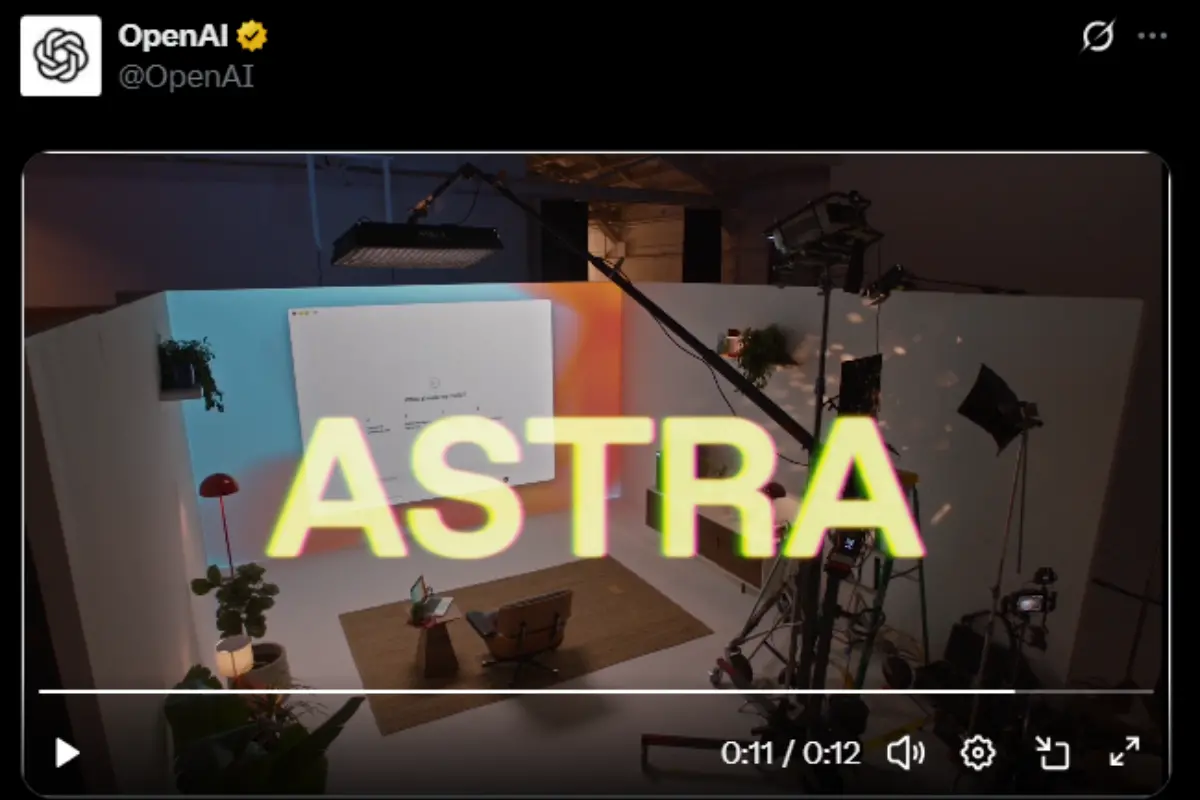
OpenAI’s promotion of its upcoming Astra model was met with frustration on X as users reported ChatGPT and API disruptions, with many mocking the contrast between the company’s futuristic messaging and the immediate problems affecting their work.
OpenAI’s star- and space-themed promotion for Astra became the subject of widespread commentary on X after users reported problems accessing ChatGPT and the OpenAI API.
Astra has attracted attention because OpenAI has described it as reaching a “critical” cybersecurity risk threshold under its Preparedness Framework. The model’s promotion therefore arrived amid discussions about advanced AI capabilities, safety and cybersecurity.
However, the reported service disruption quickly shifted the online conversation from Astra’s capabilities to platform reliability.
Users turn OpenAI's space theme into a joke
Several users drew a direct connection between the star-themed Astra promotion and the outage.
One post said, “WE ARE HUMANS WE GONNA BUILD THE UNIVERSE,” echoing the cosmic tone of the promotional material.
Others were considerably less enthusiastic. One frustrated user demanded that OpenAI restore the API so developers could return to work, while another wrote, “I don’t care about Astra. Get your servers back online you cut me off mid-work.”
The contrast between ambitious AI announcements and an unavailable service became a recurring theme across the reactions.
Developers highlight dependence on AI platforms
The outage was particularly frustrating for developers using OpenAI services as part of their daily workflows.
One user wrote, “Please be fast. I need to finish my todo app asap,” while another responded to the futuristic messaging with the remark, “yeah but your servers, not so much.”
The reactions underline how AI services have moved beyond experimentation for many users. Developers increasingly rely on APIs, coding assistants and AI models as components of products and working processes, meaning service interruptions can directly affect ongoing projects.
Other AI services also enter the conversation
The discussion expanded beyond OpenAI, with some users claiming that other AI products, including Anthropic, Gemini and Grok, were also experiencing problems or behaving unexpectedly around the same period.
One particularly sarcastic post listed several services and concluded that the user might as well “get some paper and a pen.”
Another user asked whether “all AI” services were down, naming OpenAI, Grok and Gemini.
These comments contributed to a broader discussion about the reliability of AI infrastructure and the extent to which users have become dependent on a relatively small number of major platforms.
Humour becomes a response to the disruption
Alongside anger, X users responded with jokes about Astra’s branding.
One user said they should have recreated the Star Wars opening to showcase the release, while another described the situation as “Software-as-a-Sofference”, parodying the term software-as-a-service.
Another post noted that Astra is also the name of a beer brand in Germany, providing a deliberately mundane contrast to OpenAI’s space-themed presentation.
Safety and alignment questions surface
The disruption also prompted users to connect Astra’s development with broader debates about AI safety and alignment.
One user asked, “So when are they gonna be fully aligned,” while another jokingly imagined a scenario in which OpenAI announced that a security incident meant Astra could no longer be released.
Those reactions reflect wider interest in Astra because of its reported cybersecurity risk classification and the challenges associated with developing increasingly capable AI systems.
The X response illustrates a growing tension in the AI industry: capability announcements increasingly compete with expectations of infrastructure reliability.
For consumers, a temporary chatbot disruption can be inconvenient. For developers building applications around an API, however, an outage can interrupt production systems, development work and business operations.
That makes uptime and reliability an increasingly important part of the AI-platform competition alongside model intelligence, pricing and new capabilities.
The Astra episode also demonstrates how quickly promotional narratives can change during a service disruption. A campaign built around stars, space and advanced AI can generate excitement when services are functioning normally, but the same imagery can become material for satire when users are unable to access the underlying products.
The reactions should not, however, be treated as evidence that Astra itself caused the outage. The posts show user perception and frustration, not a confirmed technical connection between the model announcement and the reported service problems.
More broadly, the episode highlights the growing dependency on AI infrastructure. As coding, research, customer service and other workflows become increasingly integrated with AI platforms, outages can have consequences beyond individual users being unable to chat with a model.