NASA opens its powerful simulation tool ‘LAVA’ to the world | VIDEO
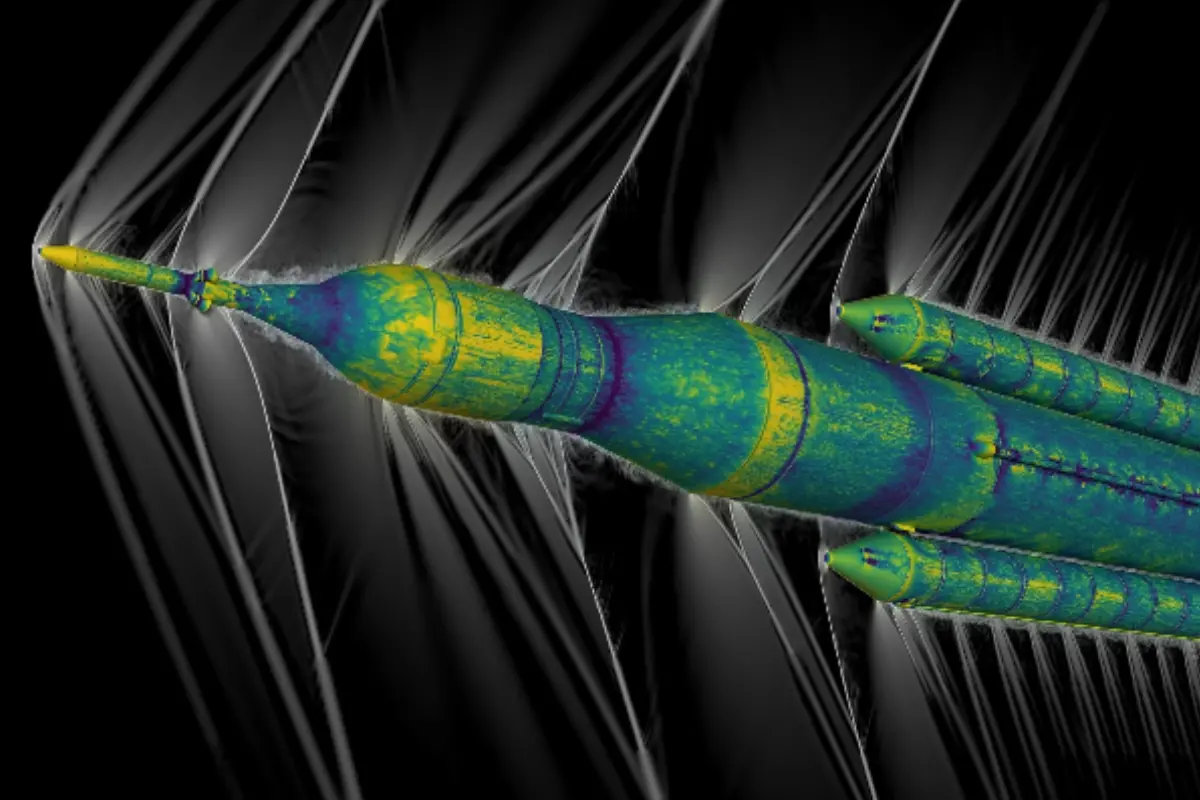
NASA is all set to put its behind-the-scenes tool in the spotlight. For years, some of NASA’s most complex missions, from launching rockets into space to landing spacecraft on Mars, have relied on a powerful but little-known software tool. Now, NASA has made that tool, called Launch Ascent and Vehicle Aerodynamics (LAVA), available to the wider aerospace community.
In simple terms, LAVA helps engineers understand how air moves around rockets, aircraft, and spacecraft. While that may sound straightforward, these airflow patterns can make the difference between a smooth flight and a mission failure.
What exactly does LAVA do?
Whenever a rocket blasts off or a spacecraft re-enters Earth’s atmosphere, it faces extreme conditions like intense heat, pressure, and powerful air currents. LAVA uses advanced computer simulations to predict how these forces will behave.
Think of it like a highly detailed weather forecast, but instead of predicting rain or wind, it predicts how air will flow around a moving object at very high speeds. This allows engineers to test designs virtually, long before anything is physically built or launched.
Big leap in speed
In the past, running such complex simulations could take days or even weeks on powerful computers. LAVA has changed that dramatically. Thanks to modern computing technology, including specialised processors known as GPUs, these simulations can now be completed in just a few hours.
As Jared Duensing, LAVA team lead at NASA’s Ames Research Centre, puts it: “This is not only about releasing software; it is about accelerating innovation.” Faster simulations mean engineers can test more ideas, fix problems quickly, and improve designs at a much faster pace.
One of LAVA’s biggest strengths is its ability to simulate situations that are difficult or nearly impossible to recreate in real life.
For example, when NASA needed to understand how parachutes would open in the thin atmosphere of Mars, it couldn’t simply test this on Earth. Instead, LAVA provided detailed insights into how the parachute would behave, helping ensure a safe landing.
Similarly, the software has been used to study how ice forming on an aircraft wing affects flight performance, something that is critical for aviation safety.