‘Most powerful AI chip in China today’: Alibaba unveils Zhenwu V900
Hong Kong: China’s Alibaba has unveiled a new artificial intelligence chip and plans to develop a much larger AI model, as the technology race between Beijing and Washington takes centre stage ahead of a meeting between Chinese President Xi Jinping and US President Donald Trump.
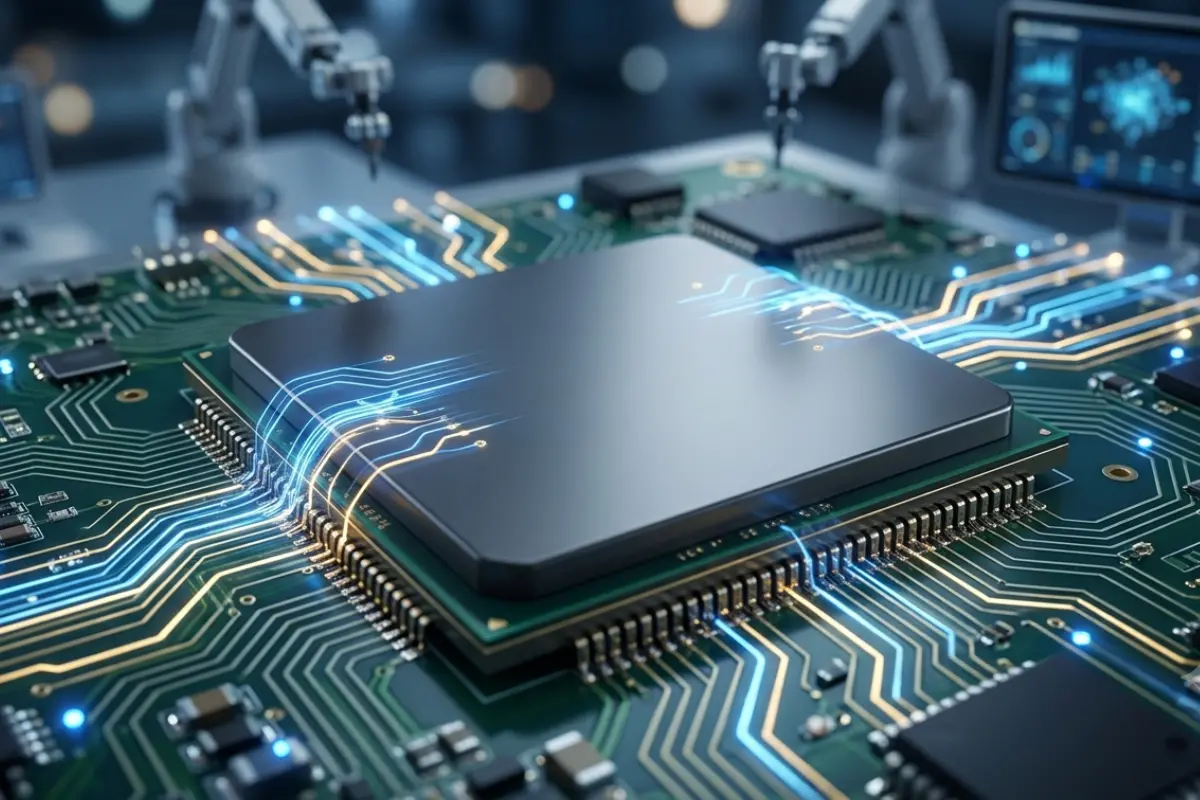
At its annual flagship conference in Hangzhou on Tuesday, Alibaba introduced the Zhenwu V900 AI chip, which CEO Eddie Wu described as the “most powerful AI chip in China today”. The company said the new chip can deliver three times the performance of its previous-generation Zhenwu M890.
AI chips are used to train advanced models and for “inference”, the computing process through which trained AI systems generate responses to users. Alibaba deploys its Zhenwu chips in its data centres to power its own operations and cloud customers.
The company also outlined plans for a next-generation AI model with between five trillion and 10 trillion parameters. Parameters measure the capacity through which an AI model learns and processes information.
Alibaba’s latest Qwen3.8-Max, the most powerful model in its Qwen series, has 2.4 trillion parameters. Chinese AI company Moonshot has said its Kimi K3, released in July, is the world’s largest open model, with 2.8 trillion parameters.
Alibaba’s latest announcements come as AI is expected to feature prominently in talks between Xi and Trump during the Chinese leader’s state visit to Washington, beginning Wednesday. Trade, tariffs and the competition over AI technology are also expected to be discussed.
The developments also come amid warnings from US AI leaders, including Anthropic CEO Dario Amodei, about the pace of China’s AI development and calls for greater restraint in the development of the technology.
Alibaba said it plans to significantly expand the data-centre infrastructure supporting its cloud business as demand for AI computing grows “exponentially”. The company expects to have more than 20 gigawatts of computing capacity by 2032.
SpaceX had approximately 1.4 gigawatts of AI computing capacity as of the middle of this year and has said it aims to exceed 10 gigawatts in 2027.
China has been accelerating efforts to build a self-reliant AI ecosystem amid US restrictions on the export of advanced AI chips and semiconductor manufacturing equipment. Analysts say recent advances by Chinese companies could give Beijing additional leverage in its negotiations with Washington.
Chinese open AI models have also expanded their presence internationally, helped by their relatively lower costs compared with some leading closed models developed by US AI companies.
Huawei, another major Chinese technology company, unveiled new chip technologies last week as it seeks to compete with global players such as Nvidia. Analysts said Nvidia chips remain widely used for frontier AI model training in China, although domestically designed alternatives are gaining ground.
Alibaba CEO Wu said the company is “mobilizing every resource” to meet growing customer demand for AI.
He also pointed to shortages across the global AI data-centre supply chain, saying they “are currently limiting the speed at which we can scale our compute infrastructure” for AI.
Wu compared the rapid expansion of AI with the industrial revolution and said “machine intelligence” would rapidly surpass human thinking capacity.
While “machine intelligence today is not a substitute for human intelligence,” Wu predicted that machines could eventually produce more than 1,000 times as much “thinking” as all of humanity combined, compared with less than 3% currently.