ISRO’s 2025: From Axiom highs to a rare setback in a landmark year
India’s space journey reached a decisive moment in 2025. The Indian Space Research Organisation (ISRO) delivered major scientific achievements, strengthened ties with the United States, advanced indigenous technology, and prepared for future human missions. The year also brought a rare setback, reminding the country that space exploration carries risks. As 2026 approaches, ISRO’s performance in 2025 stands out as one of its most defining phases.
What made 2025 a landmark year for India in space?
ISRO worked closely with NASA on one of the world’s most important Earth-monitoring satellites and launched major communication, navigation and climate missions. India also contributed to deep-ocean exploration, built home-grown space microprocessors and supported an Indian astronaut who completed a historic stay on the International Space Station (ISS).
Beyond space, ISRO engineers helped construct a human-rated submersible structure for dives as deep as 6 km under the sea, strengthening India’s ambitions in the Samudrayaan project.
How did India’s astronaut shape the country’s human spaceflight future?
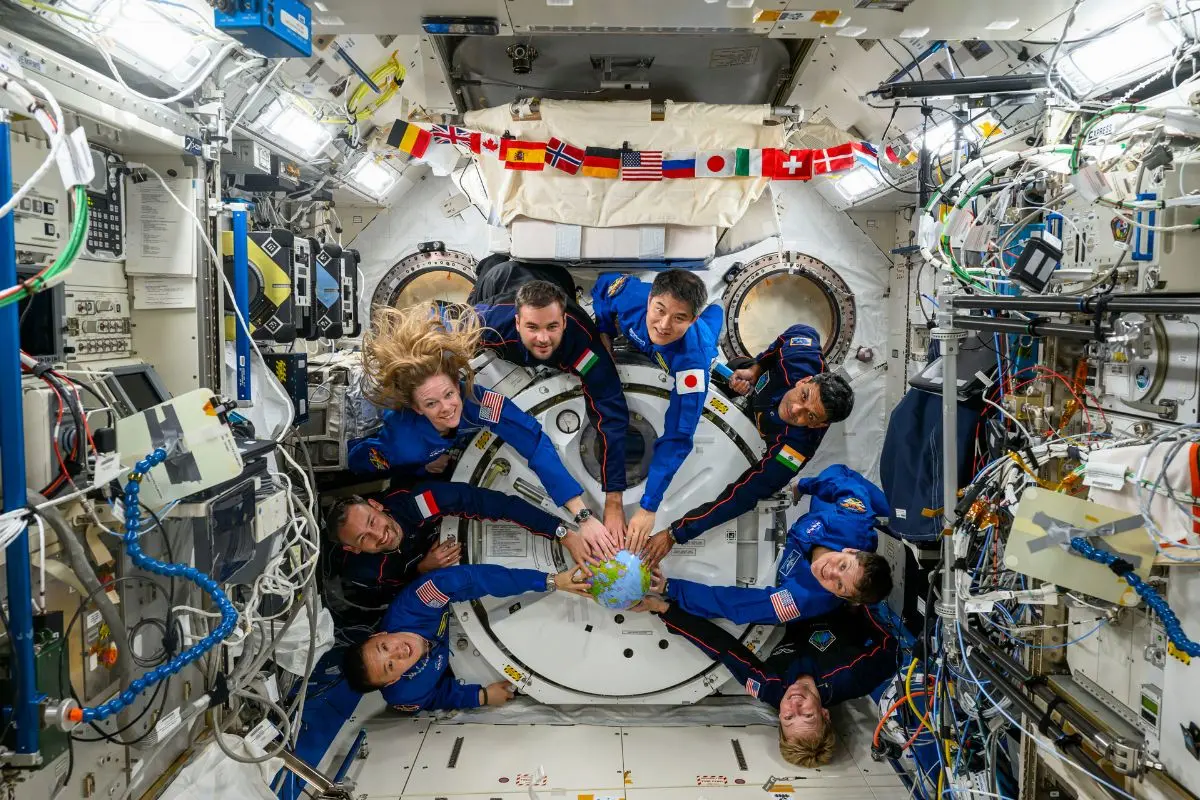
Shubhanshu Shukla’s Axiom-4 mission became a national milestone when he returned safely in July after 18 days on the ISS. He travelled about 12 million km, orbited Earth nearly 280 times and lived in microgravity while completing seven Indian science experiments. These studies explored muscle repair, algae behaviour, seed growth, tardigrades and neurological responses.
His mission also connected India to space in real time. He interacted with the Prime Minister and schoolchildren across the country. ISRO teams working in the US gained crucial training with NASA and Axiom controllers, sharpening India’s readiness for Gaganyaan and for the planned Indian space station.
Which satellite missions defined ISRO’s year?
NVS-02: Strengthening navigation
ISRO opened 2025 with the NVS-02 navigation satellite on 29 January. Although the GSLV-F15 rocket performed perfectly, a valve issue kept the satellite in an elliptical orbit. Engineers are still assessing whether it can broadcast useful signals. The mission marked the 100th launch from Sriharikota.
EOS-09: A rare setback
On 18 May, PSLV-C61 faced a third-stage anomaly that stopped EOS-09 from reaching its polar orbit. The satellite was meant to provide radar images for agriculture, disaster management and national security. The mission ended PSLV’s long success streak.
NISAR: A landmark Indo–US mission
Launched on 30 July, NISAR combines Indian and American radar technology to monitor forests, crops, ice and coastlines every 12 days. After nearly 10 years of development, the mission entered its science phase and will operate for at least five years.
CMS-03: India’s heaviest communication satellite
On 2 November, LVM3 placed CMS-03 into orbit. The satellite will boost telephony, television and data services across India and nearby ocean regions.
How did ISRO push indigenous technology in 2025?
ISRO and the Semiconductor Laboratory introduced India’s first fully home-grown space-grade microprocessors—VIKRAM3201 and KALPANA3201. One chip is already space-tested, while the other uses an open-standard architecture for wide compatibility. The teams also developed four miniaturised avionics systems and agreed to co-develop tiny pressure sensors for wind-tunnel studies.
What role did ISRO play in India’s deep-sea mission?
For the Samudrayaan project, ISRO and NIOT built a 2.26-metre titanium sphere for 6-km-deep dives. The structure can withstand pressure 600 times higher than at sea level. Achieving this required upgrading welding systems, enhancing X-ray checks and completing nearly 700 trials.
What lies ahead with ISRO’s next major launch?
ISRO will launch its heaviest American commercial low-Earth orbit satellite—BlueBird-6—on 15 December using the LVM3 rocket. The 6.5-tonne satellite carries the largest commercial phased array in low-Earth orbit and delivers ten times the data capacity of its predecessors. It aims to bridge the digital divide by offering direct-to-device mobile broadband in areas without strong networks. The mission is being handled by New Space India Limited.
With BlueBird-6, ISRO closes 2025 on a powerful note, heading into 2026 with renewed confidence, stronger global ties and a sharper technological edge