India unveils DHRUV64, its first indigenous 64-bit dual-core microprocessor
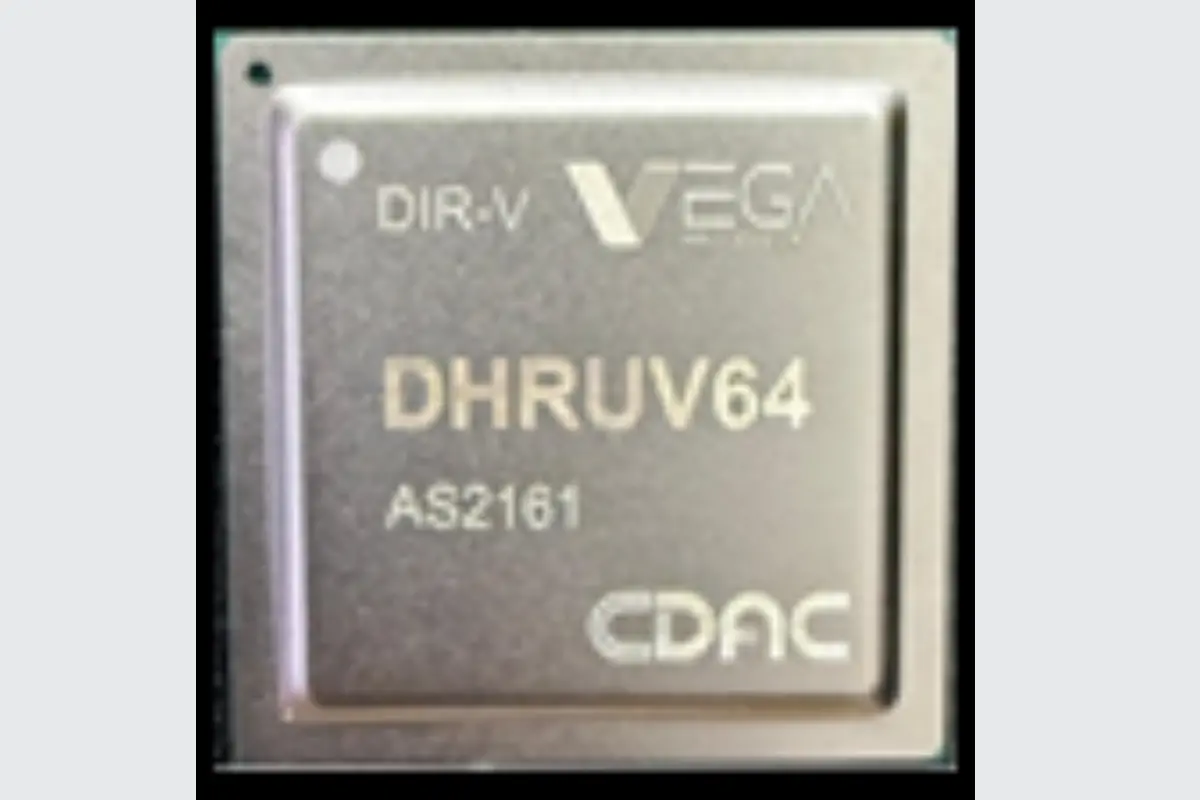
India has marked a decisive milestone in its semiconductor ambitions with the launch of DHRUV64, the country’s first fully indigenous 1.0 GHz, 64-bit dual-core microprocessor.
Developed by the Centre for Development of Advanced Computing (C-DAC) under the Microprocessor Development Programme (MDP), DHRUV64 represents a significant stride in building a secure, self-reliant and future-ready processor ecosystem aligned with the vision of Aatmanirbhar Bharat.
At a time when microprocessors power everything from smartphones and automobiles to satellites and defence systems, owning such core technology has become a strategic necessity. DHRUV64 provides India with a reliable, homegrown processor platform capable of supporting both strategic and commercial applications, reducing long-term dependence on imported chips.
Built for modern applications
Designed with modern architectural features, DHRUV64 delivers higher efficiency, enhanced multitasking and improved reliability. Its advanced design allows seamless integration with a wide range of external hardware systems, making it suitable for emerging and high-growth sectors such as 5G infrastructure, automotive electronics, consumer devices, industrial automation and the Internet of Things (IoT).
Fabricated using contemporary technologies employed in high-performance chips, DHRUV64 is positioned as a versatile processor that can meet the demands of today’s digital and industrial ecosystems while remaining scalable for future innovations.
Strategic significance for India
India consumes nearly 20% of the world’s microprocessors, yet has historically relied heavily on foreign suppliers. The development of DHRUV64 strengthens the country’s indigenous capability in advanced processor design and supports critical digital infrastructure.
It also builds on a growing lineage of homegrown processors developed in recent years, including SHAKTI (IIT Madras), AJIT (IIT Bombay), VIKRAM (ISRO–SCL) and THEJAS64 (C-DAC). Together, these initiatives are laying the foundation for a comprehensive Indian processor ecosystem, spanning strategic, industrial and commercial use cases.
Boost to R&D, Startups and Talent
Beyond strategic autonomy, DHRUV64 plays a key role in accelerating research and innovation. It provides startups, academia and industry with a cost-effective indigenous platform to design, test and scale computing products without relying on foreign processors.
With India already accounting for about 20% of the world’s chip design engineers, DHRUV64 further strengthens the talent pipeline by offering a modern, real-world processor platform for training and experimentation. Its success has also fast-tracked the roadmap for the next-generation Dhanush and Dhanush+ processors, which are currently under development.
Powered by the Digital India RISC-V Vision
DHRUV64 is a key outcome of the Digital India RISC-V (DIR-V) Programme, launched by the Government of India to establish the country as a global hub for Electronics System Design and Manufacturing (ESDM). The programme aims to build a complete portfolio of RISC-V–based microprocessors for use across industry, strategic sectors and consumer technologies.
RISC-V’s open architecture, which eliminates licence costs, enables shared innovation among startups, industry and research institutions. This openness encourages collaboration, accelerates development and supports long-term deployment across platforms.
Under DIR-V, DHRUV64 is the third chip fabricated:
- THEJAS32 was fabricated at Silterra in Malaysia,
- THEJAS64 was manufactured domestically at SCL Mohali,
- DHANUSH64 and DHANUSH64+ SoC variants are currently under development.
Strong institutional backbone
India’s indigenous processor journey is supported by a coordinated institutional ecosystem led by the Ministry of Electronics and Information Technology (MeitY). Through flagship initiatives such as the India Semiconductor Mission (ISM), Chips to Startup (C2S) Programme, Design Linked Incentive (DLI) Scheme, and INUP-i2i, the government has strengthened design infrastructure, research capacity and industry participation.
C-DAC remains at the centre of this effort, leading processor IP creation, SoC development, boards and tools, while advancing the next phase of the RISC-V roadmap with Dhanush and Dhanush+.