No job is safe? Microsoft report lists roles AI may soon overtake
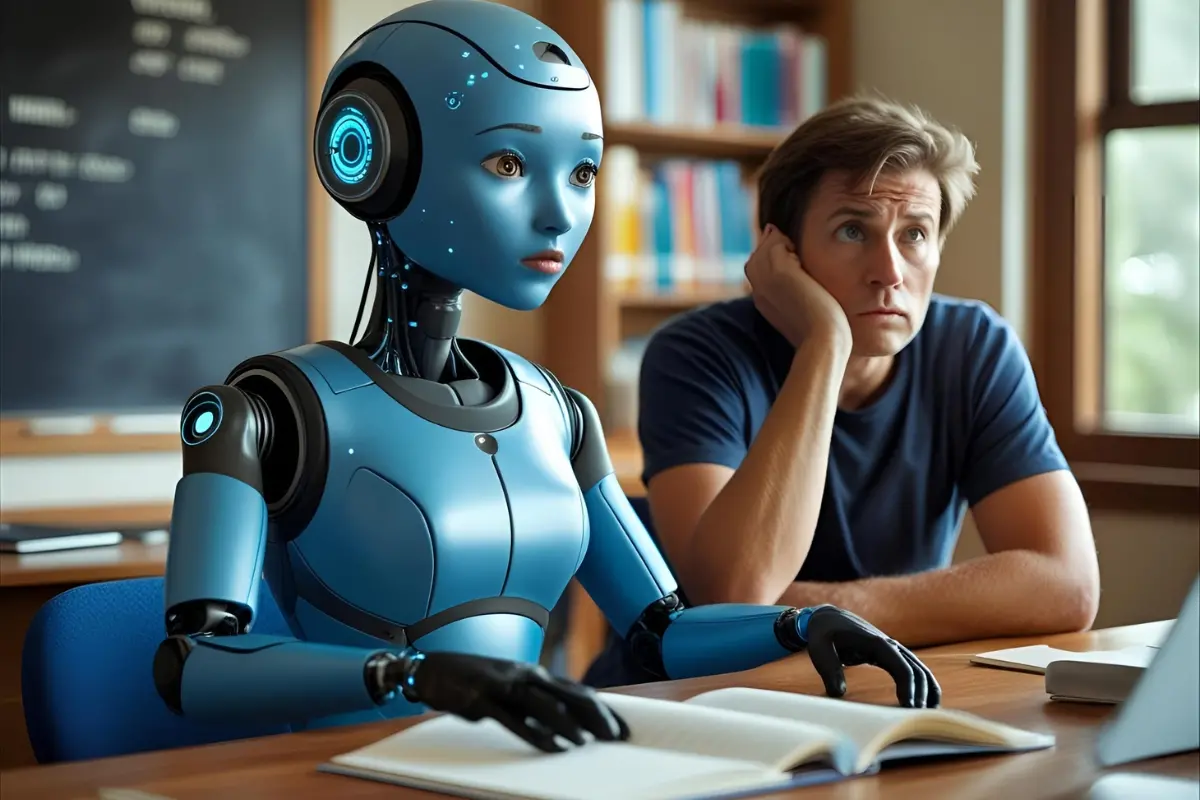
Microsoft researchers have unveiled a sobering list of 40 occupations most susceptible to being replaced—or significantly reshaped—by generative AI technologies.
According to Microsoft Research Report contrary to earlier assumptions that physical labour jobs were at greater risk, the study shows that knowledge workers, including teachers, translators, writers, and analysts, face higher exposure. This shift signals a new chapter in the labour disruption narrative—one where education and a desk job no longer guarantee stability.
What does Microsoft’s AI exposure report say?
The research team at Microsoft studied over 200,000 real-world Copilot user sessions and cross-referenced them with occupational task data to generate what they term “AI applicability scores.” These scores indicate how much of a job's daily function can be handled by generative AI models like GPT-based systems.
The outcome? A startling revelation: occupations requiring a Bachelor’s degree had significantly higher AI applicability than jobs without such academic requirements. Roles like interpreters, historians, writers, and sales representatives scored the highest—many of which form the backbone of today's office-based workforce.
Analysis of Copilot usage and occupational applicability conducted on 200,000+ real-world sessions and research also notes that AI isn’t simply automating routine admin tasks. It’s actively replacing creative, analytical, and educational roles, previously assumed to be safe.
Even educators are at risk—are AI teachers on the horizon?
Among the most surprising findings is the vulnerability of teaching roles—particularly in postsecondary education. According to Microsoft’s data, business, economics, and library science educators are facing “relatively high AI applicability.” While the widespread use of AI tutors in classrooms may still be a few years away, institutions may increasingly lean on AI tools to design curricula, automate grading, and deliver personalised learning at scale.
Even farm and home management educators, a niche but vital category, were flagged for high AI overlap.
The 40 most affected jobs by generative AI:
Here are the top occupations with the highest exposure to generative AI, according to Microsoft’s 2025 report:
- Interpreters and Translators
- Historians
- Passenger Attendants
- Sales Representatives (Services)
- Writers and Authors
- Customer Service Representatives
- CNC Tool Programmers
- Telephone Operators
- Ticket Agents and Travel Clerks
- Broadcast Announcers and Radio DJs
- Brokerage Clerks
- Farm and Home Management Educators
- Telemarketers
- Concierges
- Political Scientists
- News Analysts, Reporters, Journalists
- Mathematicians
- Technical Writers
- Proofreaders and Copy Markers
- Hosts and Hostesses
- Editors
- Business Teachers, Postsecondary
- Public Relations Specialists
- Demonstrators and Product Promoters
- Advertising Sales Agents
- New Accounts Clerks
- Statistical Assistants
- Counter and Rental Clerks
- Data Scientists
- Personal Financial Advisors
- Archivists
- Economics Teachers, Postsecondary
- Web Developers
- Management Analysts
- Geographers
- Models
- Market Research Analysts
- Public Safety Telecommunicators
- Switchboard Operators
- Library Science Teachers, Postsecondary
Which jobs are least exposed to AI?
In stark contrast, jobs that require physical presence and involve complex manual tasks remain relatively immune—for now. These roles typically involve specialised machinery or environments unsuitable for digital automation.
Top 10 least exposed jobs include:
- Dredge Operators
- Bridge and Lock Tenders
- Water Treatment Plant Operators
- Foundry Mold and Coremakers
- Rail-Track Maintenance Workers
- Pile Driver Operators
- Floor Sanders and Finishers
- Orderlies
- Motorboat Operators
- Logging Equipment Operators
Why having a degree may no longer be enough
For decades, a college degree was considered a reliable shield against automation. But Microsoft’s report flips that assumption. The majority of high-risk occupations identified require advanced education and strong analytical or communication skills—traits previously thought to be uniquely human.
“As we analysed the interaction patterns of Copilot users,” the researchers noted, “we observed that AI is highly capable of performing information-sharing, synthesis, and reporting tasks, which are central to many white-collar roles.”
Should Gen Z be worried about their career paths?
According to the report those entering saturated fields like journalism, political science, or business education should be worried. While many Gen Z graduates have recently turned to “stable” professions like teaching after waves of tech layoffs, the Microsoft study suggests these careers could soon be restructured by AI-driven tools and platforms.
Even if schools do not deploy AI-powered teachers outright, significant parts of the teaching workflow—like lesson planning, grading, and communication—could be outsourced to generative models, thereby reducing the demand for full-time human staff.
Not losing your job to AI—but to someone who uses it
As Nvidia CEO Jensen Huang aptly put it: “You’re not going to lose your job to an AI, but you’re going to lose your job to someone who uses AI.”
This quote, cited in the Microsoft report, captures the essence of the coming shift. While AI may not replace every worker, it will significantly reshape how work is done—and those who adapt will thrive, while others may struggle to stay relevant.
The AI revolution in white-collar professions is no longer theoretical—it’s underway. For those in fields like education, journalism, translation, or customer service, it’s time to reconsider how to integrate AI into daily tasks rather than resist it. Upskilling, flexibility, and digital literacy will be the new pillars of career resilience.