Leaked results from Indian lab drop explosive claims on Olympic boxer Imane Khelif’s biological sex
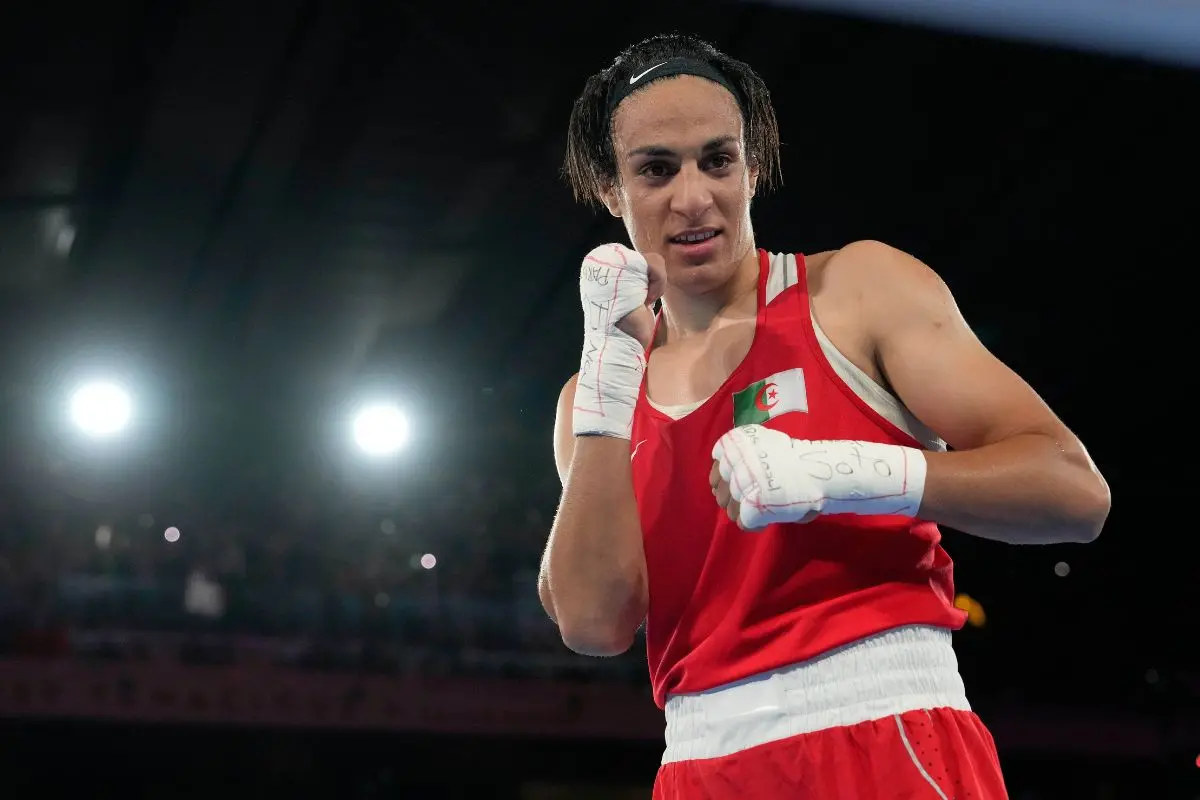
Newly surfaced documents have reignited the controversy surrounding Algerian Olympic boxing champion Imane Khelif’s eligibility to compete in the women’s division. The leak involves chromosome test results conducted in 2023 at a well-known Indian laboratory and reportedly shows that Khelif is biologically male. The disclosure has triggered renewed debate around fairness in women’s sports and the integrity of international boxing governance.
The alleged results, which surfaced through American journalist Alan Abrahamson and 3 Wire Sports, come just days after World Boxing introduced mandatory sex testing for athletes over 18. Though the Olympic gold medallist has denied all accusations regarding her biological sex, the controversy continues to escalate.
Medical test in India shows ‘Male Karyotype’
The chromosome analysis in question was carried out at Dr. Lal PathLabs, a New Delhi-based facility accredited by the American College of Pathologists and certified by the International Organisation for Standardisation (ISO). According to the published document, the test, conducted in March 2023, found that: “Chromosome analysis reveals male karyotype.”
The results were allegedly sent to the International Olympic Committee (IOC) and served as the basis for Khelif’s suspension from the 2023 Women’s World Boxing Championships held in India. At the time, the boxing event was still under the jurisdiction of the International Boxing Association (IBA), an organisation currently led by Russian official Umar Kremlev and no longer recognised by the IOC due to long-standing concerns over ethical and financial governance.
Despite the test’s findings and the IBA ban, Khelif was permitted to fight in the 2024 Paris Olympics, where she won gold in the women’s category. Her participation was based on her female passport status, as she had not been officially disqualified by the IOC. However, the IOC appeared unconvinced by the validity of the chromosome report. During a press conference at the Games, IOC spokesperson Mark Adams stated the results were “ad hoc” and “not legitimate.” President Thomas Bach echoed the sentiment and suggested the findings could be part of a “Russian-led misinformation campaign.”
Abrahamson, who first reported on the test during the Olympics, said the IOC had been warned over a year earlier about Khelif’s chromosome status. The official documents now in the public domain reportedly confirm that Khelif’s chromosome pattern is XY, a genetic marker typically associated with males.
Boxers describe overpowering experiences in the ring
Reactions from fellow boxers who have competed against Khelif offer a personal dimension to the ongoing controversy. Italian fighter Angela Carini, who was defeated by Khelif in a match that lasted only 46 seconds during the Paris Olympics, said: “I feared for my life during that fight.”
Mexican boxer Brianda Tamara Cruz, who had fought Khelif back in 2022, recalled a similarly intense experience: “I don’t think I had ever felt like that in my 13 years as a boxer, nor in my sparring with men.”
The perception of physical dominance in the ring has added weight to calls from several boxing bodies demanding stricter biological regulations in women’s categories. Latin American federations have been especially vocal, with the Honduran Boxing Federation stating in communication with the Women’s Rights Network that “necessary measures should be taken so that only women by birth can compete in women’s competitions.”
The latest developments also bring back concerns surrounding Taiwanese boxer Lin Yu-ting, who, like Khelif, was previously banned by the IBA for not having XX chromosomes. Both athletes went on to win Olympic gold under IOC authority.
New world boxing rules could impact Khelif’s future
Following the Paris Olympics, World Boxing introduced a new regulation requiring all athletes aged 18 and above to undergo polymerase chain reaction (PCR) genetic testing to verify their sex using samples such as blood, saliva or mouth swabs. The new policy was implemented 36 hours before the leaked test results went public, contrary to earlier suggestions that the rule change was in response to the publication.
Khelif has not provided additional evidence to counter the 2023 medical findings, and her eligibility in upcoming competitions is now under review. World Boxing has made it clear that she cannot compete in future women’s events unless she undergoes the new genetic screening and proves compliance with the updated regulations.
Despite the ongoing dispute and public pressure, Khelif remains resolute. She has denied all claims that she is biologically male, stating firmly that she was raised as a girl and has always identified as a woman. The 26-year-old has expressed her intention to continue competing at the highest level, declaring plans to pursue a second Olympic gold at the 2028 Los Angeles Games.