India remains world leader in anti-doping violations, AIU data reveals
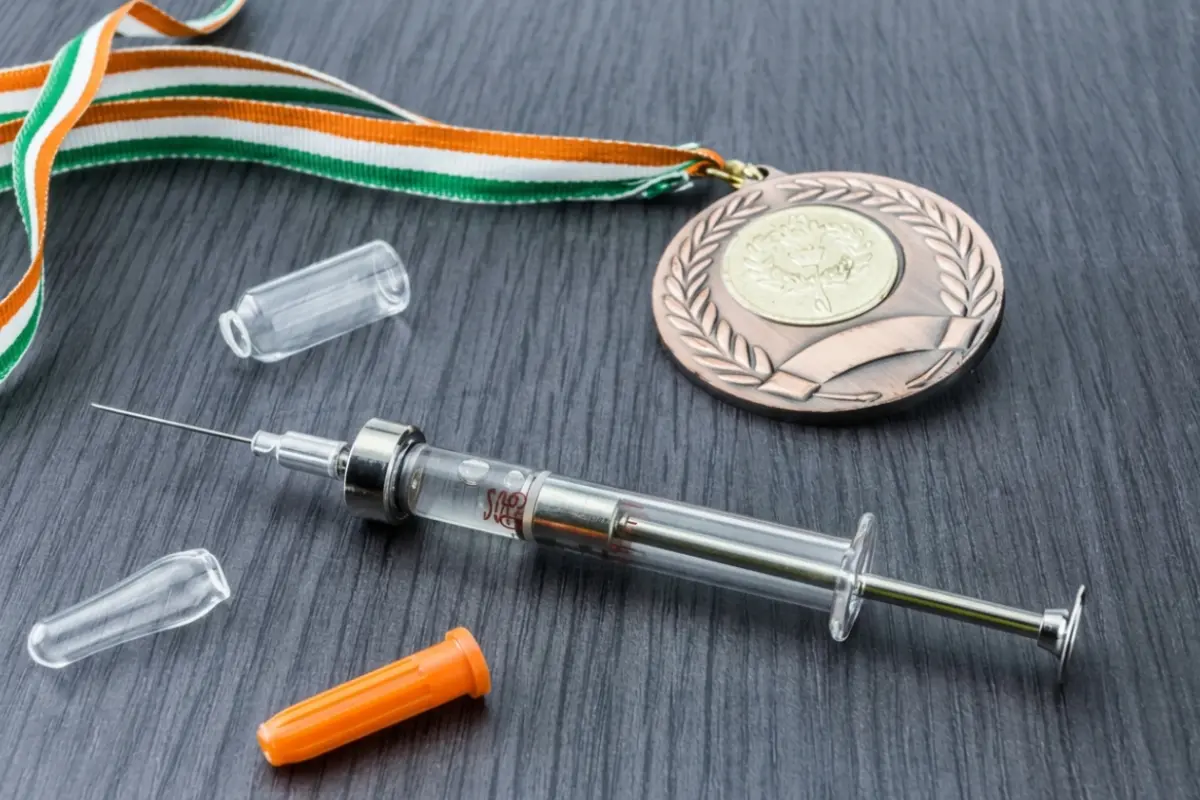
New Delhi: India yet again maintained its position at the top of the Athletics Integrity Unit’s global list of anti-doping rule violators with 162 individuals, further illuminating the vast scale of the performance-enhancing drug problem affecting the country's sports environment.
Kenya occupied the second position with 148 individuals on the registry, followed by Russia with more than 60 documented cases.
The index comprises individuals currently serving suspensions for direct doping infractions. It additionally encompasses those who have committed non-analytical violations—such as tampering with samples, evading testing, trafficking banned substances, or incurring whereabouts failures—which carry identical disciplinary sanctions as a standard doping offence.
The Athletics Integrity Unit operates as an autonomous anti-doping oversight body founded by World Athletics. It holds disciplinary jurisdiction over international-calibre competitors and their associated support personnel.
India initially overtook Kenya in April of this year, and that ranking remained unaltered through June.
In April, World Athletics officially labelled India a nation with an "extremely high" doping risk after the country led the world in anti-doping violations over the preceding two years.
Following a recent ruling by the AIU board, the Athletics Federation of India has been shifted from a Category B classification to a Category A status under Rule 15 of the World Athletics Anti-Doping Rules.
"Unfortunately, the quality of the domestic anti-doping programme is simply not proportionate to the doping risk," AIU Chair David Howman stated in an official release.
India consistently ranked among the top two nations for the highest volume of Anti-Doping Rule Violations in track and field between 2022 and 2025.
According to AIU data, India documented 48 violations to rank second in 2022, 63 violations to finish second in 2023, 71 violations to claim first place in 2024, and 30 violations to hold the top spot in 2025.
Per the World Athletics framework, the AIU board classifies all member federations based on the level of doping risk they pose to track and field. Category A member federations represent the highest tier of risk and are bound to more rigorous compliance mandates, which include comprehensive testing of their national team competitors.
Category B federations represent a moderate level of doping risk, while Category C federations denote a low risk.
The AIU board re-evaluates and determines the classification of each member federation every three years, analysing the historical doping record of its athletes and support staff alongside other systemic factors. However, the AIU retains the authority to adjust a federation's designated category at any point during that three-year cycle.
A federation designated under Category A must guarantee that an efficient, annual testing regimen is established and executed within its borders in strict alignment with the International Standard for Testing and Investigations.
The mandated testing protocol must ensure that national team athletes slated for any World Athletics Series event, the Olympic Games, or the World Athletics Ultimate Championship—who are not already included in the International Registered Testing Pool—undergo adequate drug testing.
With inputs from PTI