Bearman’s Suzuka F1 horror: FIA orders urgent technical review after violent 50G crash | VIDEO
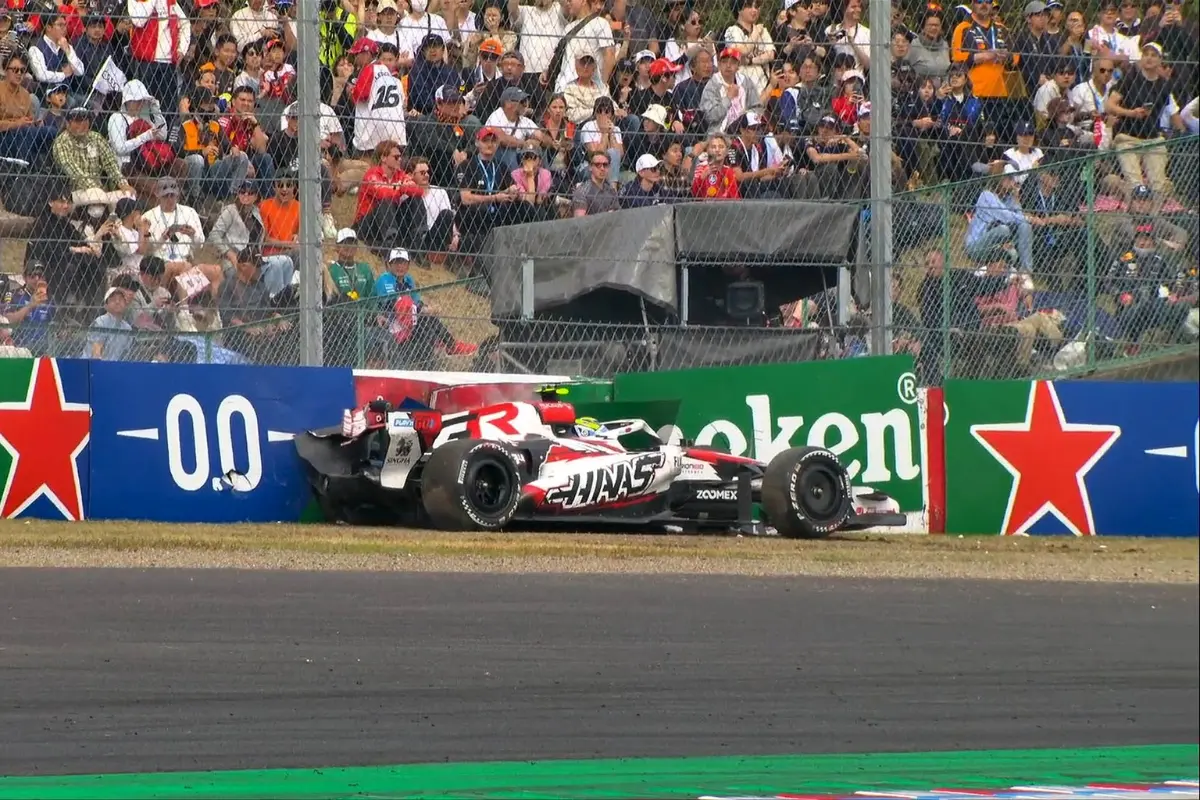
Suzuka: The FIA has issued a formal clarification regarding Formula 1’s 2026 technical regulations following a violent 50G accident involving Haas driver Oliver Bearman during Sunday’s Japanese Grand Prix.
The governing body confirmed Sunday that it will conduct a structured review of energy management parameters after drivers, including Carlos Sainz and Max Verstappen, raised urgent safety concerns over extreme "closing speeds" caused by the new hybrid power units. The incident occurred on Lap 22 at the high-speed Spoon Curve when Bearman was forced into evasive action while trailing Franco Colapinto’s Alpine, which was harvesting electrical energy.
Following the accident involving Oliver Bearman at the Japanese Grand Prix and the contribution of high closing speeds in the accident, the FIA would like to provide the following clarifications.#FIA #F1 #JapaneseGP pic.twitter.com/STFLrtkT9x
— FIA (@fia) March 29, 2026
Technical Review and Energy Management
In its statement, the FIA clarified that the 2026 regulations were designed with "adjustable parameters" specifically to allow for optimisation based on real-world racing data. The current power units feature a 50/50 power split between the internal combustion engine and electrical deployment. This has led to "super-clipping," where a car suddenly loses significant velocity at the end of a straight to recharge its battery, creating a speed delta that drivers claim can exceed 50 km/h.
"It has been the consistent position of all stakeholders that a structured review would take place after the opening phase of the season," the FIA stated. A series of technical meetings are now scheduled for April to determine if refinements to energy deployment maps are required to prevent unpredictable deceleration on the racing line.
Driver Safety and Future Adjustments
The accident has intensified the debate over the 2026 "active aero" and energy recovery systems. Grand Prix Drivers’ Association director Carlos Sainz noted that the grid had "been warning" the FIA about these scenarios since pre-season testing. Drivers have expressed frustration that the current system forces them to react to battery algorithms rather than traditional wheel-to-wheel racing.
While the FIA maintained that the opening rounds of 2026 have been "operationally successful," it acknowledged that safety remains a core mission. Any potential adjustments to the energy store or deployment limits will require detailed simulation before being implemented, with the Miami Grand Prix targeted for the first potential updates to the regulatory framework.