Floating paradise or maritime nightmare? The real story aboard Costa Serena
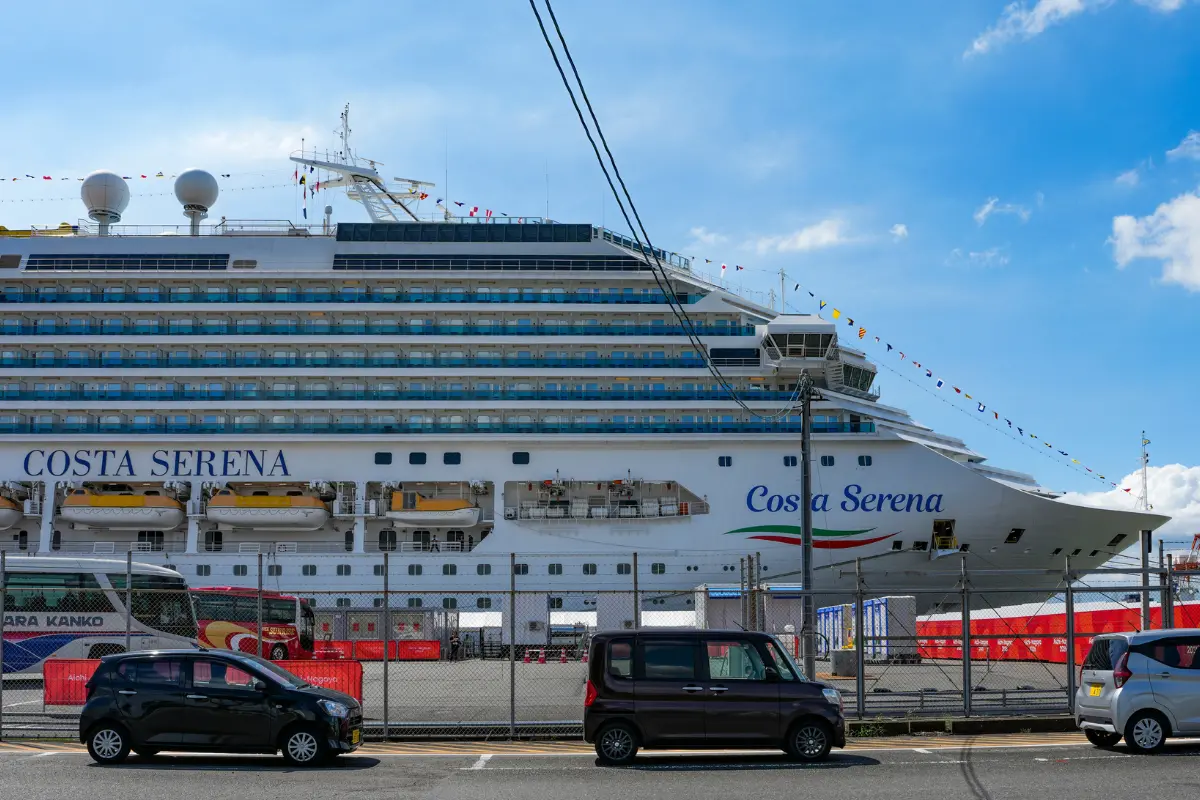
Nagoya: Marketed as a revolutionary, cost-effective alternative to a traditional Athletes’ Village, the 290-metre Italian cruise liner Costa Serena docked at Nagoya Port’s Kinjo Pier on 15 September 2026 to house up to 4,000 participants for the 20th Asian Games. The Aichi-Nagoya Asian Games Organising Committee (AINAGOC) chartered the 114,000-tonne vessel for 280 crore yen ($28 million) to avoid the massive capital outlay of building permanent accommodation. However, as thousands of international athletes arrived ahead of the opening ceremony, the promised maritime luxury quickly dissolved into severe dockside bottlenecks and operational confusion.
Twelve-Hour Bottlenecks and Floor-Sleeping
The transition from arrival gates to shipboard cabins proved disastrously slow. Members of India’s rowing, shooting, and wushu contingents were left waiting for over 12 hours at the maritime registration hub on 16 September due to severe credential activation failures. Athletes who arrived at 9:00 am were only assigned cabins near midnight, relying on packed snacks brought from home while organisers supplied only water. Members of the Thai delegation were reduced to sleeping on the floor of the welcome centre while awaiting cabin clearances.
ALSO READ: Asian Games chaos? Athletes face long waits, accommodation woes in Japan
Cabin Cramming and Room-Allocation Blunders
Once inside the vessel's 1,500 staterooms, living conditions triggered further outcry. Twin-occupancy cabins were routinely squeezed to fit three athletes, forcing competitors to contend with severe space constraints. Automated numerical quota allocations caused widespread administrative blunders, resulting in forced cohabitation between male and female athletes, as well as coaches being erroneously assigned to share cramped quarters with their competitors.
National Delegations Scramble for Alternatives
The logistical disruption extended far beyond visiting Asian teams, impacting the host nation as well. Japan’s Deputy Chef de Mission Hisashi Mizutori acknowledged that domestic competitors suffered significant delays and room-sharing blunders, prompting the Japanese Olympic Committee to activate contingency plans and transfer displaced athletes to external hotels in downtown Nagoya. Indian Chef de Mission Sahdev Yadav confirmed widespread "mismanagement" by local organisers, noting that support staff and athletes faced additional strain travelling over 30 kilometres to reach designated competition venues.
ALSO READ: OCA slams social media outcry over Asian Games housing woes
Organisers Defend Concept Amid Capacity Saturation
Facing mounting international criticism, local organisers attributed the dockside saturation to a sudden influx of accredited participants. AINAGOC officials explained that total participant numbers swelled from an initial estimate of 15,000 to 17,000 following the late inclusion of additional sports disciplines. Despite the widespread friction, AINAGOC President Hideaki Ohmura maintained that the cruise ship model remains a viable blueprint for sustainable multi-sport events, guaranteeing that every delegation will ultimately be housed safely before competition begins.