Legend Pierluigi Collina defends World Cup officiating integrity amid Argentina-Egypt controversy
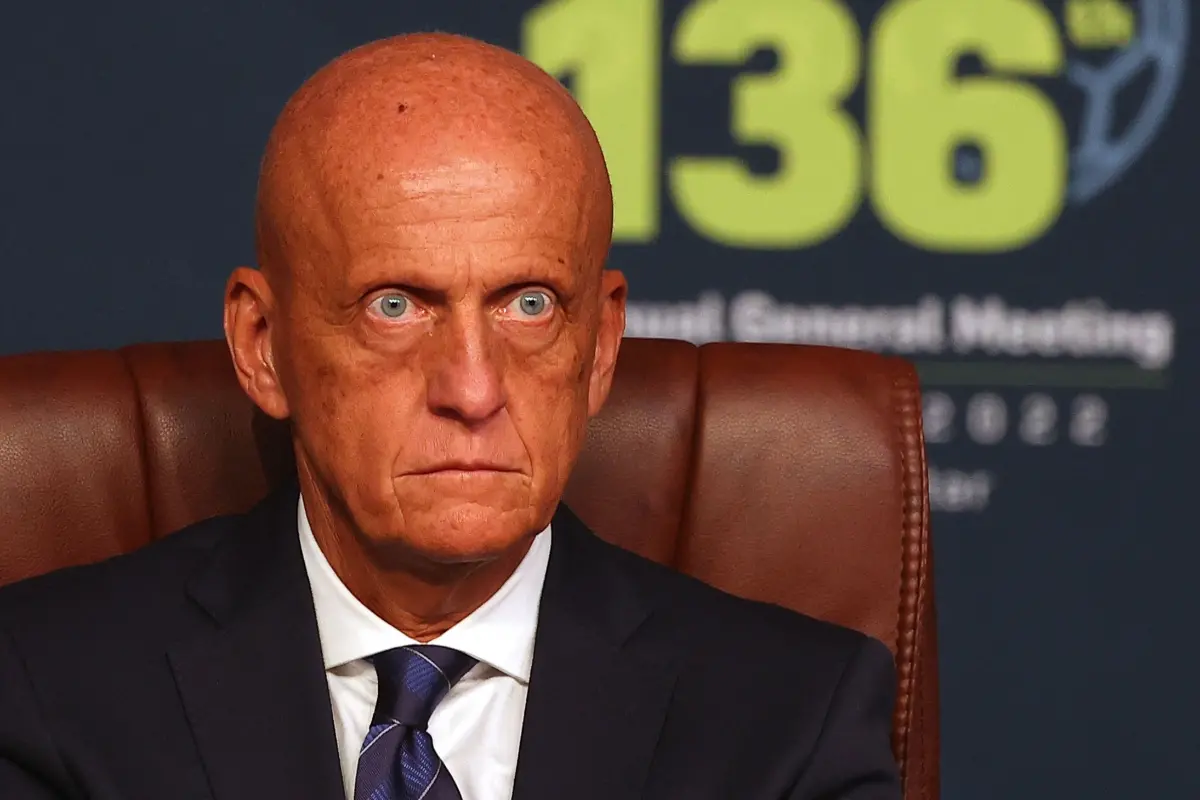
Washington DC: FIFA Chief Refereeing Officer Pierluigi Collina has strongly defended the integrity and independence of match officials at the 2026 World Cup, insisting that referees are immune to outside influence as controversies persist over tournament decisions, including a contentious round-of-16 tie between Argentina and Egypt.
Speaking to FIFA following the conclusion of the round of 16, Collina dismissed allegations of external pressure on officials and backed the rulings made by FIFA's refereeing team throughout the competition.
"Overall, we are happy. However, with such a high number of matches played in a relatively short period of time, it is normal that some things do not go as expected. When that happens, they are ready to work even harder to ensure they are fully prepared for the next match," Collina said, as quoted by FIFA.
ALSO READ: François Letexier: From World's Best Referee to World Cup Controversy
He acknowledged that officiating choices would always spark debate but drew a firm line against accusations that question the integrity of the referees.
"Of course, constructive discussion about decisions will always be part of football, but unfounded allegations have no place in our sport. Nobody can question the integrity of the FIFA World Cup match officials. When this happens, it may provoke reactions that lead to threats against them and their families. This is not right," he said.
"Equally, nobody can claim that FIFA Refereeing can be influenced by anyone, not even by the FIFA President [Gianni Infantino]. He has always shown his full support for FIFA Team One while trusting us to work with complete independence. Match officials make honest decisions and, just like players and coaches, they always try to do their best," he added.
ALSO READ: FIFA World Cup 2026 Quarter-Finals
Collina's remarks follow Egypt's dramatic 3-2 defeat to reigning champions Argentina, a match that triggered widespread argument over refereeing standards.
Egypt believed they had established a decisive advantage when they scored a second goal, only for the referee to overturn the decision following an on-field VAR review. Officials determined that Egyptian midfielder Marwan Attia had fouled Argentine defender Lisandro Martinez during the attacking phase by stepping on his foot prior to the goal.
Explaining the ruling, Collina stated that FIFA's interpretation of the Laws of the Game had been applied consistently.
"After every goal is scored, the VAR checks the attacking possession phase (APP). If a foul is identified in the build-up and is deemed to have had an impact on the goal, the VAR will recommend an on-field review. There is no defined limit regarding either the distance from goal or the amount of time between the incident and the goal," he said, according to FIFA.
"An example of this came in the Argentina v Egypt game, where Egypt No. 19 Marwan Attia clearly treads on the foot of Argentina No. 6 Lisandro Martinez. We believe that a foul is a foul. Regardless of whether the foul appears 'obvious', if the referee did not see it on the field of play, the VAR can intervene," he added.
ALSO READ: FIFA President Infantino faces potential IOC investigation over Trump ties
He further noted: "Equally, if no foul is identified in the build-up to a goal, the VAR will advise the referee accordingly. Stepping on an opponent's foot is a foul, whereas a defender who touches the ball first and then makes normal football contact has not committed a foul. Again, an example of this came at the end of the same game. The referee and the VAR deemed it normal football contact between Egypt No. 10 Mohamed Salah and Argentina No. 10 Julian Alvarez."
"Of course, there will always be an element of subjectivity in some decisions, but we are happy with how this principle has been applied throughout the tournament," he concluded.
The disallowed goal marked a turning point in the highly dramatic encounter. Egypt subsequently went 2-0 ahead before Argentina launched a late comeback, with Cristian Romero scoring in the 79th minute, Lionel Messi equalising four minutes later, and Enzo Fernandez netting a stoppage-time winner to send the holders into the quarter-finals.
The outcome prompted a fierce reaction from Egypt, with head coach Hossam Hassan accusing FIFA of abandoning "fair play" and implying that Argentina had received preferential treatment.
The controversy has also added to broader criticism of FIFA after United States striker Folarin Balogun was cleared to play in the round of 16 despite initially receiving an automatic one-match ban for a red card in the previous round.
That decision occurred after FIFA suspended the implementation of the suspension, with US President Donald Trump later stating he had spoken to FIFA President Gianni Infantino to request a review of the case.
Against this backdrop, Collina reiterated that FIFA's refereeing department functions with complete autonomy and maintained his confidence in the officiating standards across the expanded 48-team tournament.
ANI