1938 World Cup disaster: When Nazi Germany’s forced ‘Anschluss’ team crashed out
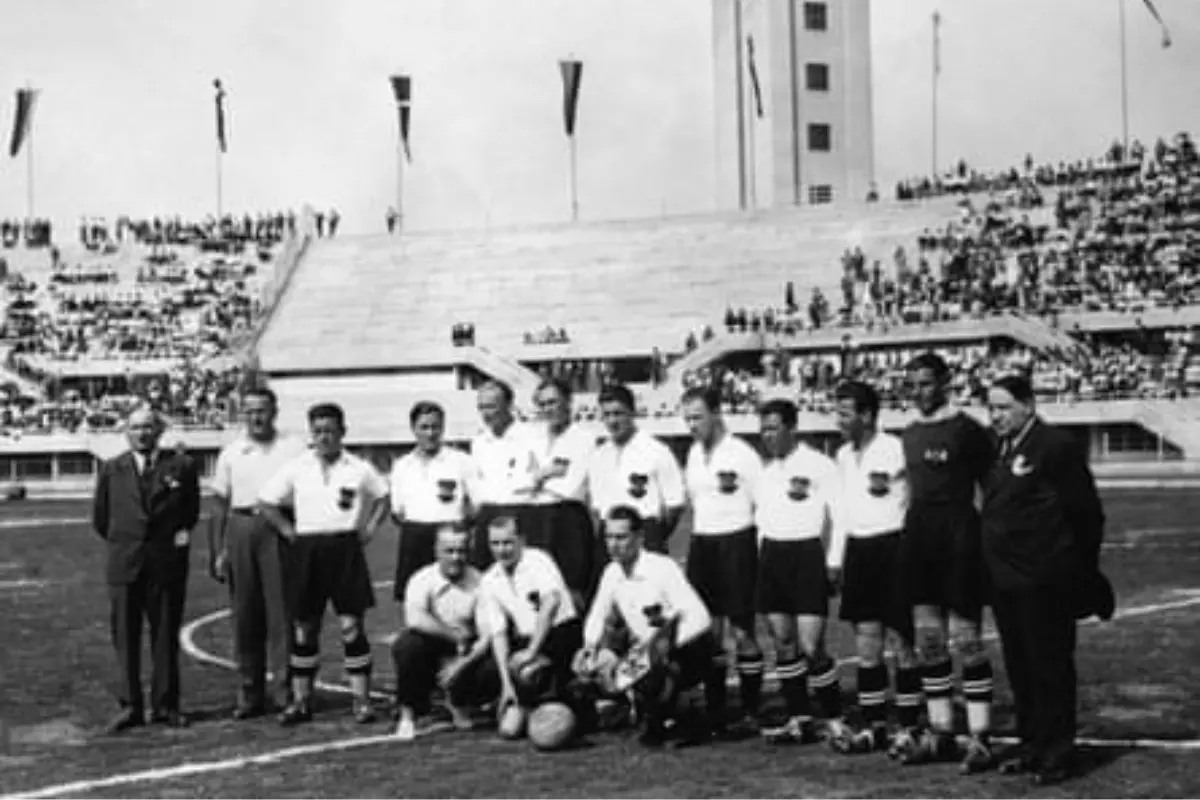
As the footballing world counts down the final hours to the 2026 FIFA World Cup kickoff, sports historians are revisiting one of the tournament's most politically charged and tactically disastrous chapters: the 1938 World Cup in France, where Nazi Germany forcibly absorbed the Austrian national team, only to suffer a humiliating first-round exit.
The Forced Annexation of the 'Wunderteam'
In March 1938, a mere three months before the tournament commenced, Adolf Hitler’s regime enacted the Anschluss—the geopolitical annexation of Austria into Nazi Germany. At the time, Austria possessed one of the finest and most innovative squads in world football, affectionately dubbed the Wunderteam. Having comfortably qualified for the World Cup, the Austrian football association was immediately dissolved, and its players were ordered to represent the unified German Reich team (Großdeutschland).
This forced integration proved a logistical and psychological failure. The Reich Sports Office demanded that German coach Sepp Herberger field a politically balanced lineup consisting of a strict combination of German and Austrian players. This bureaucratic mandate completely disregarded on-pitch chemistry, pitting the physical, disciplined German style against the fluid, short-passing philosophy of the Viennese players.
ALSO READ: Brazil at 2026 World Cup: Record 5 Titles & Unbroken Attendance
Defiance and Tactical Collapse
Furthermore, the regime faced quiet but defiant resistance from Austria’s greatest star, Matthias Sindelar. Known as "The Paper Man" for his slight build and elegant play, Sindelar famously refused to pull on the swastika-adorned jersey, officially citing advanced age and a chronic knee injury. Sindelar’s high-profile refusal dealt a massive psychological blow to the regime's sporting propaganda.
Without their talisman, the fractured squad collapsed under the weight of political pressure during the opening round in Paris. Facing Switzerland on 4 June 1938, the hybrid German-Austrian team struggled to a 1-1 draw after extra time. Under the tournament rules of the era, a replay was organised for 9 June.
Despite taking an early 2-0 lead, Germany’s forced tactical experiment completely unravelled. The Swiss team capitalised on the obvious lack of cohesion amongst the Reich's players, scoring four unanswered goals to secure a historic 4-2 victory.
ALSO READ: The Group F curse at FIFA World Cup: 44 years without a winner
The defeat marked the first time in history that a German-led team was eliminated in the opening round of a World Cup. For a regime that envisioned the tournament as a showcase of geopolitical dominance, the pitch instead delivered a stark lesson: political coercion cannot manufacture sporting triumph.