Antonio Rattín, whose 1966 World Cup defiance led to introduction of yellow & red cards, dies at 89
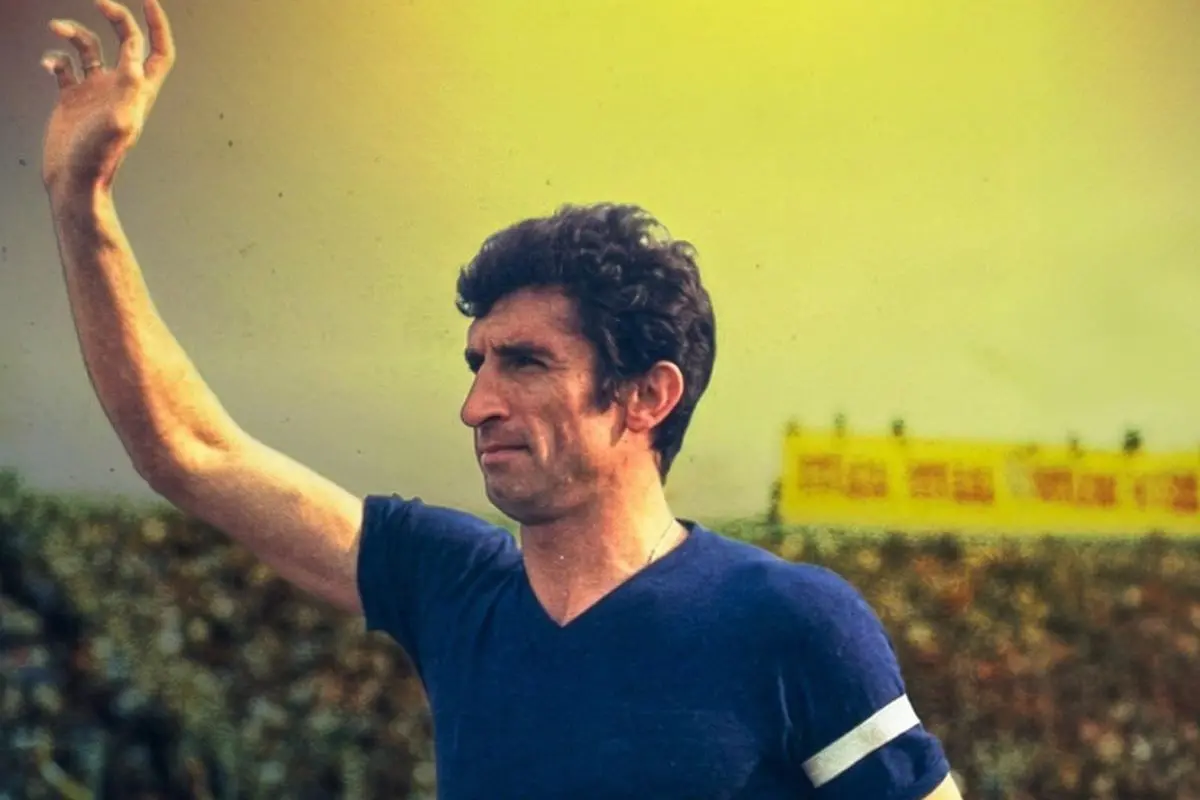
Antonio Rattín, the legendary Argentine midfielder whose dramatic expulsion at the 1966 World Cup sparked the creation of yellow and red cards, has passed away at the age of 89. The Argentine Football Association (AFA) confirmed his death in Buenos Aires on Saturday, expressing its “deepest sorrow at the passing of a historic symbol of Boca Juniors and the national team,” for whom he featured in two World Cups.
A one-club icon and fierce competitor
Renowned for his commanding physical presence and aggressive tackling style as a defensive midfielder, Rattín spent his entire 14-year professional career with Boca Juniors. During his illustrious club tenure, he secured six domestic league championships and reached the final of the Copa Libertadores in 1963.
Paying tribute to his loyalty, Boca Juniors stated:
“Rattín was one of us and loved these colours so much that they were the only ones he chose to defend throughout his 14-year career. A leader, an Argentine and forever a Bostero,”
On the international stage, Rattín represented Argentina at both the 1962 World Cup in Chile and the 1966 edition in England, while also anchoring the squads that achieved two runner-up finishes in the Copa América.
The Wembley protest that changed football history
The defining moment of Rattín's career occurred during the 1966 World Cup quarterfinals, where Argentina clashed with hosts England at Wembley Stadium. In the 36th minute, Rattín vigorously argued a foul and was ordered off the pitch for “verbal dissent.” Because modern penalty cards did not exist yet, referees had to verbally notify players of their ejection.
Furious with the decision, Rattín staged a memorable protest as he walked off the field. He crumpled a corner flag bearing the Union Jack and proceeded to sit directly on the royal red carpet reserved exclusively for Queen Elizabeth II. His actions incited the crowd, prompting furious home fans to pelt him with missiles from the stands.
Also read: Did a camera cable affect Bellingham’s goal? FIFA responds after England-Norway match controversy
The birth of card cautions and an international rivalry
The chaotic incident, combined with a broader desire to curb escalating on-field violence, forced FIFA to reevaluate how match officials communicated discipline. Ken Aston, the head of FIFA's refereeing committee, found an elegant solution in everyday traffic signals. In 1967, he officially introduced the universal system of yellow and red cards to ensure clear, language-barrier-free communication during matches.
Rattín’s fiery exit at Wembley also sowed the seeds for the fierce, decades-long football rivalry between England and Argentina. This competitive animosity reached its zenith twenty years later during the 1986 World Cup quarterfinals in Mexico, a match immortalized by Diego Maradona’s dual goals: the controversial "Hand of God" and his breathtaking solo run through the English defense.
Argentina is set to face England in the semifinals of the FIFA World Cup 2026 in what is expected to be a blockbuster clash. (AP)