England beats Australia by 4 wickets to break 15-year Ashes curse
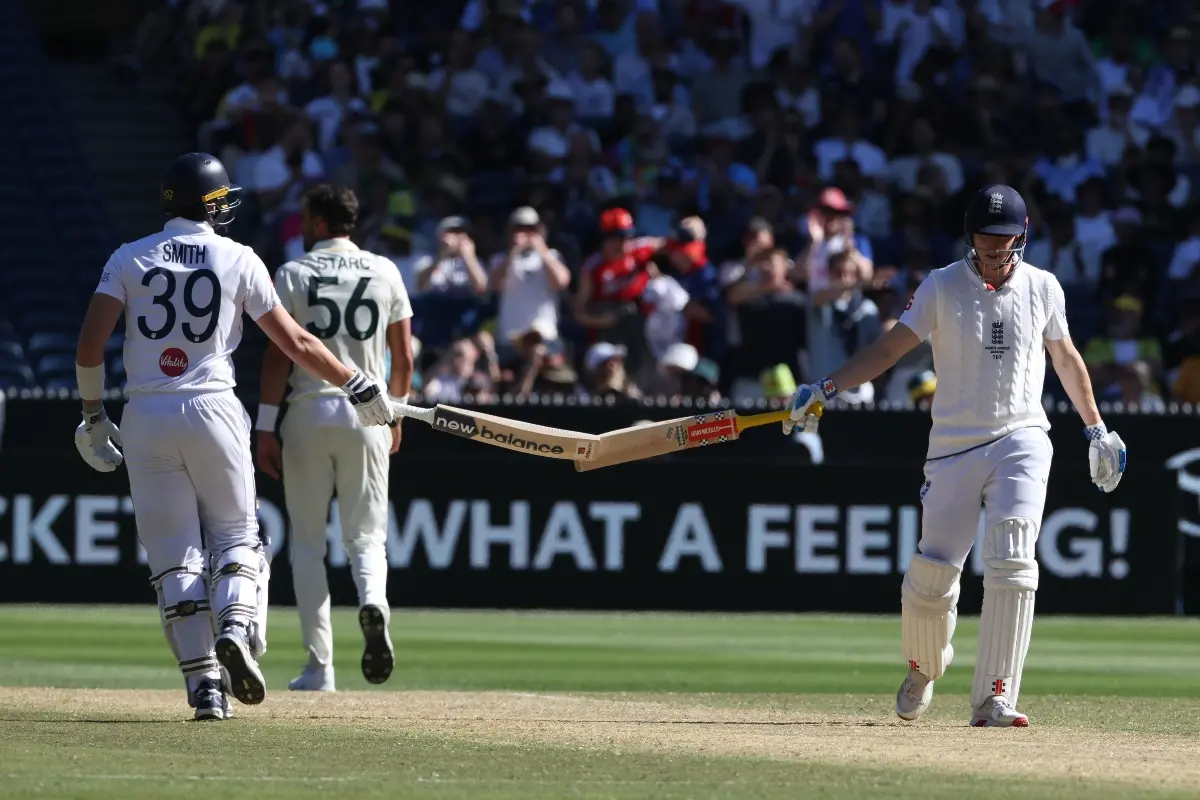
Melbourne: England snapped a 15-year drought on Australian soil Saturday, defeating the hosts by four wickets in a chaotic fourth Ashes Test at the Melbourne Cricket Ground that concluded in just two days.
The victory ended an 18-match winless streak in Australia that began after England's 2010-11 series win. In the intervening years, England had suffered 16 losses and two draws. While Australia had already retained the Ashes by sweeping the first three Tests in Perth, Brisbane, and Adelaide, England found redemption at the MCG in a match where 30 wickets fell in just four and a half sessions.
Chasing a target of 175, England required 98 runs after the tea interval. They reached 178-6 to secure the win, sparking wild celebrations among the "Barmy Army" faithful in a crowd of 92,045, the second-largest Test attendance in Australian history.
Earlier Saturday, the Australian second innings crumbled for 132 shortly after lunch. On a pitch that heavily favoured seam bowlers, the Australian lineup faltered in the morning session, sliding from 82-3 to 88-6 after Travis Head was dismissed for 46, followed immediately by Usman Khawaja and Alex Carey. Ben Stokes led the charge after lunch, taking 3-24 including the key wicket of Cameron Green, while Brydon Carse dismantled the tail to finish with 4-34.
The rapid conclusion followed a dramatic opening day where Australia was bowled out for 152 and England for 110. England’s Josh Tongue claimed a career-best 5-45 on Friday, while Michael Neser took 4-45 for the hosts.
The brevity of the match, concluding inside two days for the second time this series, prompted a sharp response from Cricket Australia chief executive Todd Greenberg, who suggested the governing body may take a more direct role in pitch preparation.
“Historically, we have taken a hands-off approach in all of our wicket preparation and allowed the staff and the conditions and those characteristics to be presented,” Greenberg told SEN Radio on Saturday. ”But it’s hard not to get more involved when you see the impact on the sport, particularly commercially." He added that "short tests are bad for business."
With inputs from AP