'Delhi buries, not confronts, trauma': Sudeep Chakravarti revisits 'The Fallen City' at MBIFL 2025
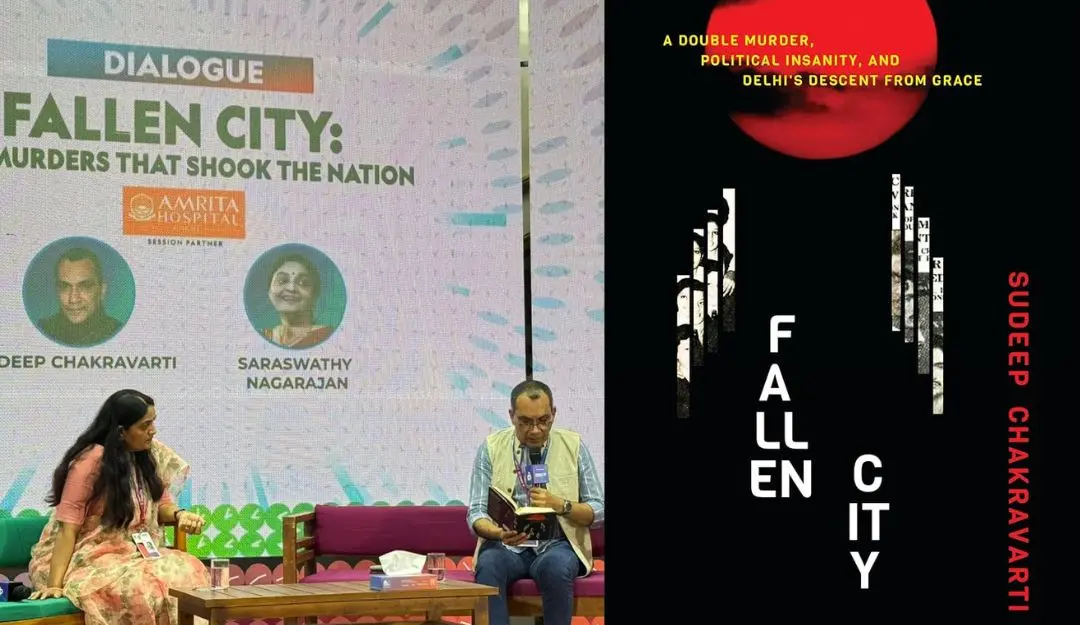
In August 1978, the brutal abduction and murder of Geeta (17) and Sanjay Chopra (15) shook the whole of India. The siblings, children of Madan Mohan Chopra, a naval officer, were kidnapped in broad daylight by Ranga and Billa, two criminals who initially sought ransom but ended up murdering the children after discovering their father was not wealthy. The shocking crime became one of the most infamous cases in India's criminal history, sparking protests, political outrage, and widespread public outcry.
Sudeep Chakravarti’s book, The Fallen City: The Murders That Shook the Nation, looks into this dark chapter, bringing not just the crime to light but also the broader political, social, and cultural landscape of the time. The book explores the tragic event's aftermath, the societal trauma, and the systemic failures in the criminal justice process.
Chakravarti discussed the themes of his book in a session titled The Fallen City: The Murders That Shook the Nation at the Mathrubhumi International Festival of Letters (MBIFL) in Thiruvananthapuram, offering a glimpse into his process of researching and writing this powerful narrative.
"I had lived with this trauma for many years. I belonged to that generation. We read about it in the newspapers," he said.
Chakravarti, a seasoned journalist, spent months and years researching the case, retracing the steps of the Chopra siblings and immersing himself in the world they lived in. He walked the streets of Delhi, piecing together the events and speaking to witnesses, examining old police records, and exploring archives to build a complete picture of the crime.
"To write this book, I married my journalistic training to my novelistic passion. It was important for me to recreate the time. I travelled to Delhi and went deep inside their universe. I walked several hundred kilometres in Delhi, walking along the route of the crime, walking the route to their home."
During his research, Chakravarti came across a crucial point of sensitivity: the grieving Chopra family. Despite having access to detailed case files, Chakravarti approached the parents only to hear an absolute no from their side. The family, understandably unwilling to revisit the tragedy, shut the door on his attempts to connect. “The story had to protect their dignity, so I did not press any further,” he explained.
Chakravarti’s careful handling of this subject mirrors the trauma that the family, and indeed, a generation of Indians, carried silently for years. "It took me years to write this. I did not just want to recreate the story, I wanted to address the trauma. After so many years, I could finally confront the incident. It became a catharsis for a generation,” he said during the session.
The event, like many others, was quickly forgotten as the public moved on to the next crisis. As Chakravarti reflects, “Delhi buries, not confronts, trauma.”
The book not only sheds light on the horrific crime itself but also examines the lingering impact of such tragedies on a nation. Drawing unsettling parallels between the Chopra case and more recent events like the Nirbhaya gang rape case, Chakravarti underscores the cyclical nature of violence and trauma in India.
In The Fallen City, Chakravarti challenges readers to confront the truths of a dark past and forces us to reflect on how we respond to crime, trauma, and justice in contemporary India.