MBIFL 2025: 'Mother India' and the evolving notions of nationalism in digital age
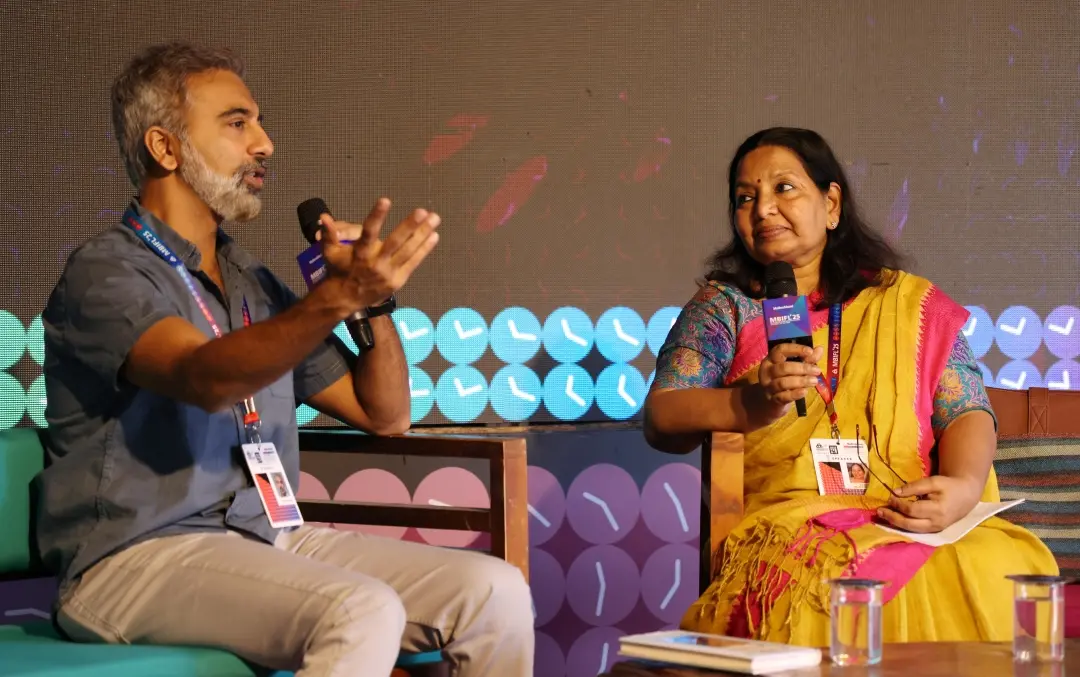
At the ongoing sixth edition of the Mathrubhumi International Festival of Letters (MBIFL), author and journalist Prayaag Akbar had an interesting conversation with journalist Suneetha Balakrishnan about his latest book, 'Mother India'. The discussion revolved around how digital culture fuels new forms of nationalism and how social media's algorithms, influencers, and viral content dictate our understanding of identity and nationhood.
The aberrant boom of social media and digital narratives transformed the traditional rootedness of nationalism in collective memory, shared history, and cultural identity into something more fragmented, individualised, and market-driven. Akbar underlined the ways in which political influencers, media figures, and content creators on YouTube, Instagram, and X repackage national symbols and sentiments for mass consumption. Under such a situation, patriotism now becomes a commodity that can be monetised by engagement.
His novel, 'Mother India', captures this reality. The story follows two characters: Mayank, a young man working for a right-wing YouTube commentator, and Nisha, a salesperson at a luxury chocolatier in a Delhi mall. When Mayank is assigned to create a viral meme of Mother India, he stumbles upon Nisha's Instagram profile and, without her knowledge, uses her image to complete the task at hand. This one act alone triggered a chain reaction of unintended consequences. Through the novel, Akbar probes into how modern media manipulate everything from the person's image to nationalist symbols to provoke reactions and drive engagement.
The session also covered how algorithms control public discourse. Akbar referenced Kyle Chayka's Filterworld, a comparison of the algorithms to the historical "Mechanical Turk," a machine that seemingly passed for a chess grandmaster but was controlled at the hands of a human. Similarly, he noted, “social media channels give the illusion of organic discussions and engagement while powered by a handful of pivotal tech figures like Elon Musk and Mark Zuckerberg.”
The session concluded with reflections on how social media continues to redefine nationalism and one’s sense of identity. Akbar observed that in today’s world, one does not need original ideas -- just enemies. He pointed out that many Indian commentators have adopted tactics from American media, leveraging controversy to grow their influence. As a result, symbols like Mother India are no longer static representations of patriotism.
Ideas and symbols of nationalism are continuously repurposed to provoke emotions, mobilise support, and sustain digital engagement. This reveals a fundamental shift in how nationalism is both constructed and consumed. As social media continues to evolve, understanding its role in shaping political and cultural identities will be crucial in navigating the future of nationalism, and thereby, the nation.