Is civil service going off track?
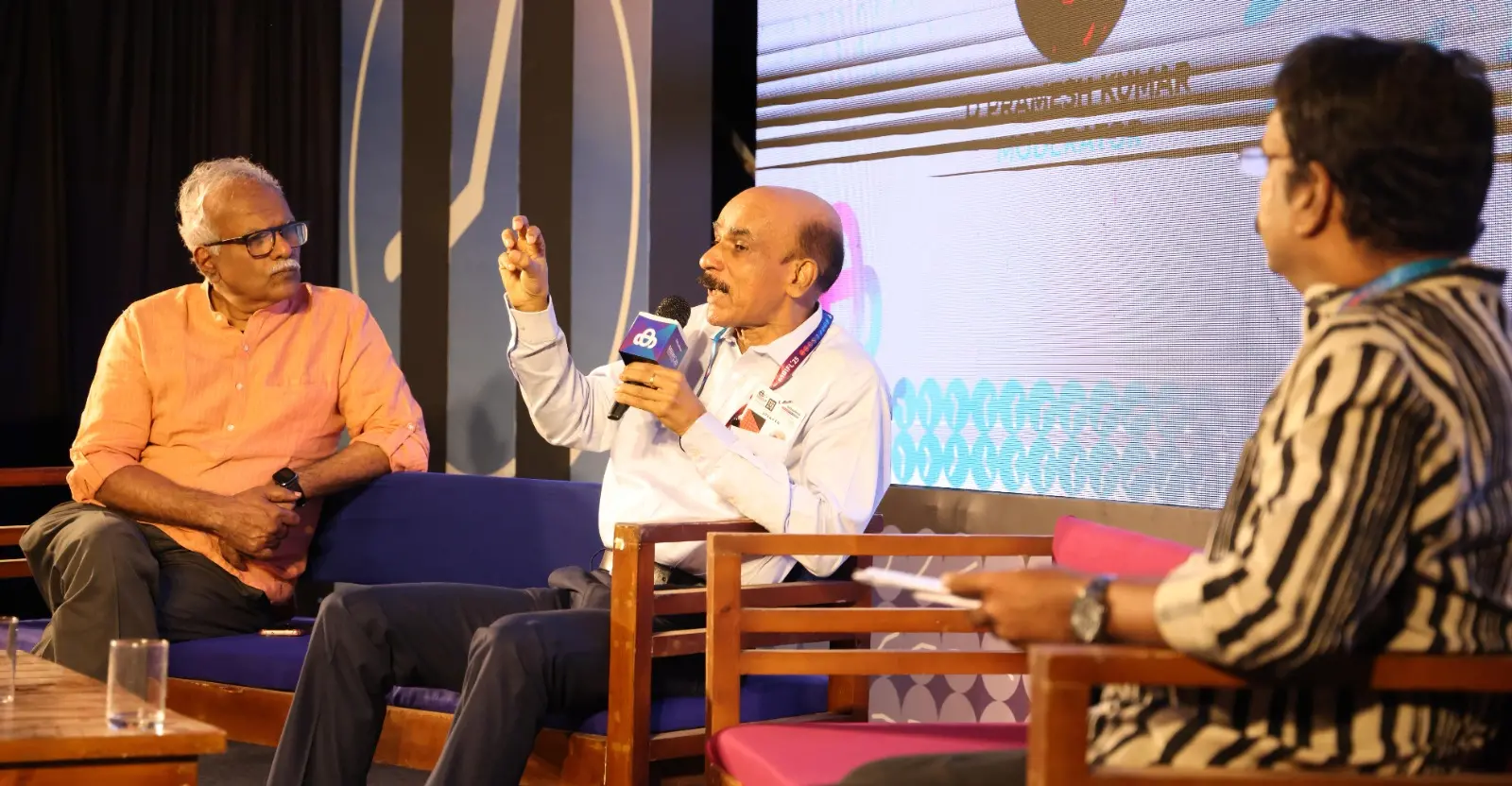
The third day of the Mathrubhumi International Festival of Letters (MBIFL) 2025 at Kanakakunnu Palace witnessed a thought-provoking discussion on the erosion of civil services. Retired Director General of Police (DGP) A Hemachandran and noted journalist MG Radhakrishnan spoke on how All India Civil Services have eroded in recent times.
Hemachandran brought out the recent controversies that have shaken the civil services. He mentioned the recent social media dispute between two IAS officers—N. Prasanth, who openly criticized his senior, Additional Chief Secretary A. Jayathilak, in a Facebook post. Such public disagreements, he pointed out, shows growing discord within the administrative framework.
Hemachandran also discussed the controversy surrounding an IAS officer who allegedly created a WhatsApp group exclusively for Hindus. This incident only raises concerns about communal divisions within the bureaucracy. He said that Kerala’s civil service should set a model for others and questioned whether these incidents suggest that civil services are going off track.
“When the world is changing, the changes will reflect in Kerala as well,” he said. He recalled how the core values of honesty, secularism, and integrity, established during the earlier times are now under threat. Even Jawaharlal Nehru had once criticized the bureaucracy, he said. However, given the current scenario, he stressed the need to evaluate whether civil services are losing relevance.
MG Radhakrishnan pointed out that in earlier times, civil services were dominated by the elite class or the upper class. However, after the Mandal Commission and reservation policies, opportunities have expanded to people from lower socio-economic backgrounds. “In the past, only the privileged class joined civil services, but now, in 2025, we see candidates from all sections of society making it to the top,” Radhakrishnan said. States like Uttar Pradesh and Bihar have seen people from backward communities into the civil services. While this is a positive step, he acknowledged that it has also brought challenges. "Many aspirants undergo intensive training to crack entrance exams, but this does not necessarily equip them to make deep policy decisions." The evolving nature of recruitment, he suggested, has both positive and negative consequences, which contribute to the perception that civil services are being derailed.
Hemachandran reiterated his concerns about the integrity of civil services going down. He stressed the importance of maintaining honesty and secularism in administration.
The discussion ended with both speakers agreeing that while civil services have evolved, there is an urgent need for introspection and reform. The core values of governance must be safeguarded to ensure that civil services continue to function effectively.